


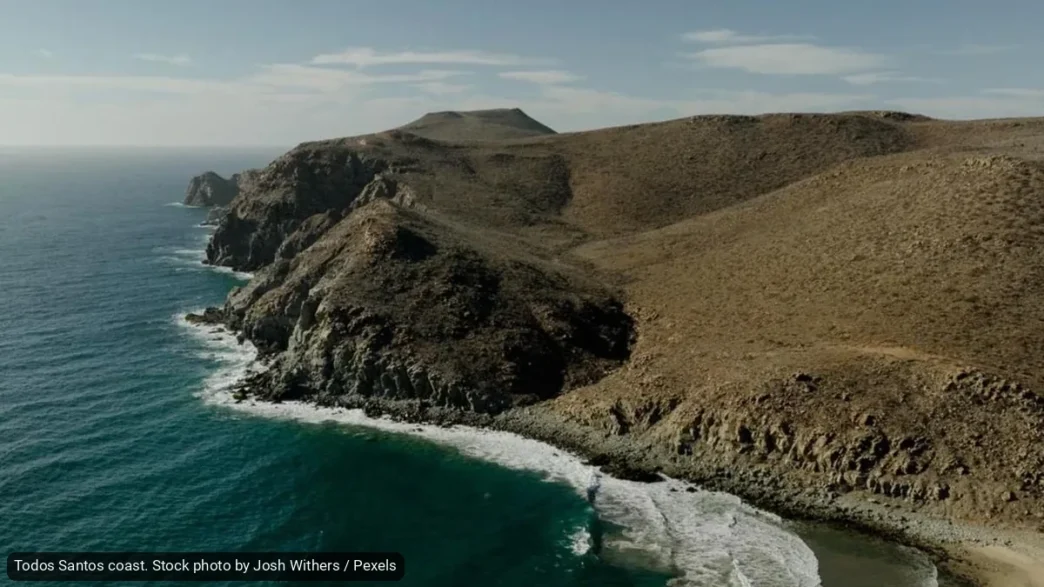
Mexico’s federal environmental enforcement agency, Profepa (Procuraduría Federal de Protección al Ambiente), is reviewing permit records for Hotel San Cristóbal at Playa Punta Lobos, the fishing beach just south of Todos Santos, after demolition work and construction debris at the beachfront property drew scrutiny. The agency has already conducted two site inspections, on November 13 and November 19, and the paperwork is now sitting with its legal department.
This is not the first time the sea has gotten involved at this address. Waves and coastal erosion previously damaged structures at the hotel, and the current demolition work stems directly from that damage. What Profepa wants to know now is whether the cleanup, and a related effort to shore up the eroding ground, happened within the bounds of Mexican environmental law.
What Inspectors Found
During the first visit, inspectors documented crews removing and hauling away demolition debris, plus the installation of escollera-style rock armor — large boulders placed with heavy machinery to stabilize ground that had partially collapsed into a sinkhole. According to Profepa, the person overseeing the work on site said the rocks were meant to slow erosion and that debris was being hauled to the municipal landfill, not dumped on the beach.
The catch: at that point, no one produced a federal environmental impact authorization for the work. The hotel did present a permit from the Todos Santos municipal delegation allowing landfill disposal, along with letters notifying both Profepa and Semarnat (Secretaría de Medio Ambiente y Recursos Naturales, Mexico’s environment ministry) about the project. Profepa says the debris removal itself has since been completed.
The second inspection, on November 19, focused on something more specific: the hotel’s Zofemat concession, the federal permit that governs use of the Zona Federal Marítimo Terrestre, or federal maritime-terrestrial zone — essentially the strip of beach and shoreline that belongs to the nation, not to any private owner. Because of how far the sea has advanced, part of both the concession area and the hotel’s private property is now underwater at points.
Crucially, Profepa’s inspectors confirmed that the rock barriers and demolition materials sat within the private portion of the property, not inside the federally concessioned beach zone. No materials were found on the federal strip itself. That distinction matters, because it separates a dispute over private construction permitting from a more serious violation involving federal beach land.
What Happens Next
With the inspection reports now in Profepa’s legal office, the agency says it will open what Mexican regulators call an emplazamiento — a formal notice process that lays out the alleged irregularities and gives the hotel’s owners a chance to respond before any penalties or corrective orders are issued. Profepa says it will keep monitoring the site and the hotel’s ongoing activity to confirm compliance with environmental rules.
The case lands in a part of the coast that regulators have already been watching closely. State officials signaled earlier this year that beachfront permitting near Punta Lobos could face broader review after erosion problems at the site, and the beach itself earned Playa Platino status in July under La Paz’s platinum beach certification program. For now, there’s no order to halt construction and no fine on the table — just a paper trail Profepa says it intends to finish reading before deciding what comes next.