


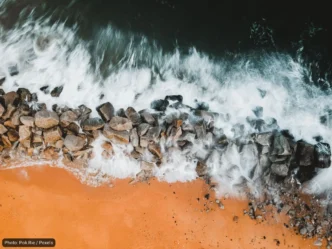
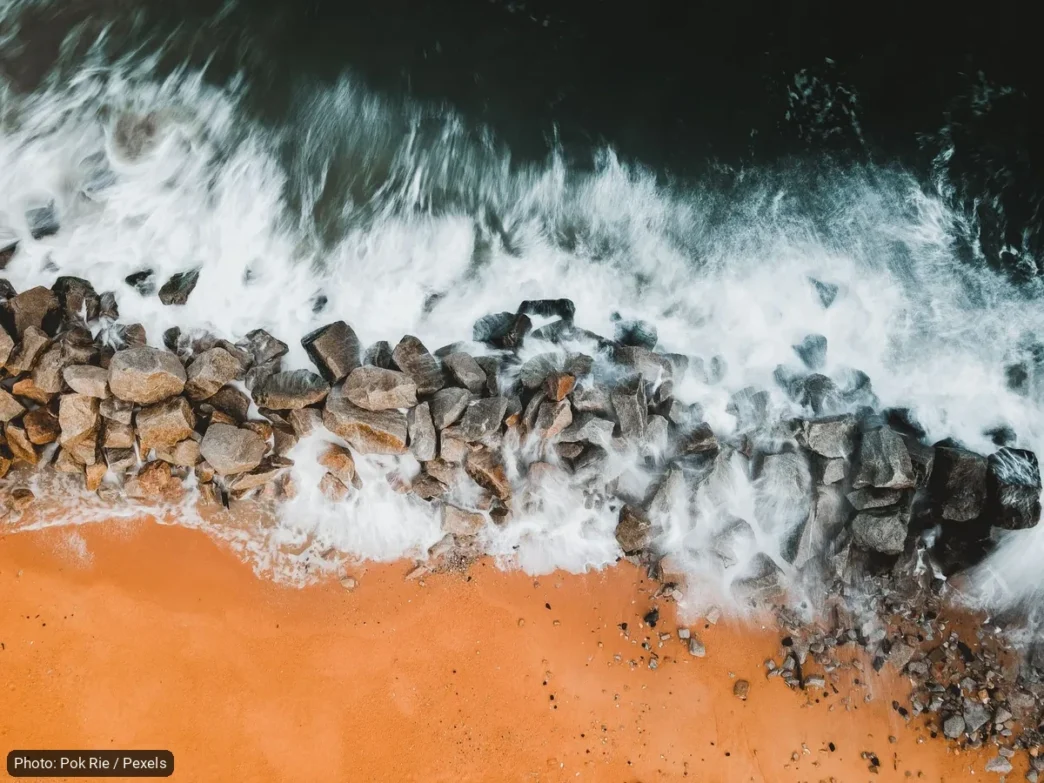
Crews with heavy machinery tore down part of Hotel San Cristóbal on Nov. 10 after an early-November swell destroyed the property’s seawall and seawater damaged the building. The hotel, operated by Bunkhouse Hotels, sits on Punta Lobos beach just south of Todos Santos, a stretch of Pacific coastline long used by local fishermen to launch their boats.
Scientists at the Universidad Autónoma de Baja California Sur (UABCS) linked the damage to a ground swell combined with an unusually strong astronomical tide cycle, producing waves of roughly three meters, according to reporting from Zeta Tijuana. Mexico’s environmental enforcement agency, Profepa (Procuraduría Federal de Protección al Ambiente), supervised the demolition to make sure debris didn’t end up damaging the surrounding marine and coastal ecosystem.
What Happened at Punta Lobos
Local fishermen say the trouble started well before this month’s storm. They told Zeta Tijuana that the breakwater-style wall, built to protect the hotel, sits on federal maritime-terrestrial zone land, known as ZOFEMAT, and that it redirected wave energy toward their boat landing, gradually eating away at the sand they use to pull up their pangas.
A video shared on social media and reported by Posta shows waves striking the rock wall, with stones shifting toward the area where boats are kept. “We don’t have any space left,” fishermen say.
Could Other Beachfront Properties Face Review?
The Punta Lobos case has raised a bigger question. According to Colectivo Pericú, Mexico’s federal environment ministry, Semarnat (Secretaría de Medio Ambiente y Recursos Naturales), is analyzing whether dozens of coastal developments across Baja California Sur — many built under environmental permits issued years ago, under different coastal conditions — could eventually be subject to review. Officials have not said which properties might be examined or on what timeline.
No general review of coastal permits has been announced, and no demolition orders have been announced for other properties. There is also no final ruling on whether the hotel’s own permits were in order. Profepa has shut down projects in the state before, including six developments near Cabo Pulmo.
What Owners and Buyers Should Check
Even without a formal review underway, the Punta Lobos case is a reminder of how coastal paperwork works in Mexico. Coastal projects generally need an environmental impact authorization from Semarnat, and any use of the federal beach zone requires a ZOFEMAT concession. According to Colectivo Pericú, the permits that could come under scrutiny are ones issued years ago, under different environmental conditions.
Owners of beachfront homes, condos and hotels can ask their property manager or notario público to confirm that both documents are current and on file. Buyers evaluating coastal property should request copies of the same paperwork before closing.
What’s Next
Semarnat’s state office is in contact with its headquarters following the Punta Lobos demolition, according to Colectivo Pericú, but no formal review process has been opened.
