


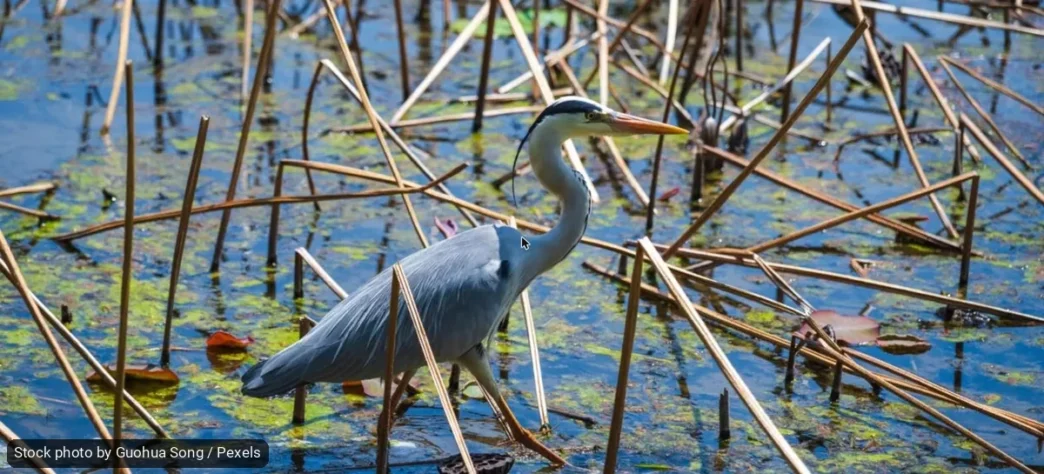
The San José del Cabo estuary, a protected wetland popular with birders and kayakers just behind the hotel zone, is about to get something it has never had before: its own heavy machinery.
City officials say a fleet of specialized equipment is expected to arrive as soon as next week, dedicated solely to maintaining and restoring the 589-hectare (1,455-acre) ecological reserve. Until now, crews working on the estuary have had to borrow machines from other municipal departments whenever cleanup or dredging work was needed.
What’s Arriving and When
Jorge Armando López Espinoza, director of Ecology and Environment for the municipality of Los Cabos, said the incoming equipment covers a wide range of tasks. “We are practically about to receive machinery next week — not just a machine to remove water hyacinth, but also a dredger to restore depth to the water surface. A dump truck, a backhoe, vehicles, tools, chainsaws, and wildfire pumps are coming, and it’s a lot of equipment,” he said, according to Tribuna de México.
López Espinoza called it a historic moment for the wetland. “This is the first time in history that the San José estuary will have its own machinery; this was a deeply felt need,” he said, per the same report.
Why the Funding Stands Out
The equipment is being paid for through the Fideicomiso de Saneamiento Ambiental (FISAM), an environmental sanitation trust fund that has allocated 98.5 million pesos — roughly $5 million USD — to the estuary’s Regeneration Plan, according to Tribuna de México. That works out to more than 166,000 pesos (about $8,400 USD) per hectare, far above the roughly 15 pesos per hectare the federal Comisión Nacional de Áreas Naturales Protegidas typically allocates this year to federally protected natural areas.
The project moved forward after the estuary’s Management Plan — its first update in two decades — won approval, clearing the way for an executive project tied to the FISAM funds. Readers who followed earlier coverage of proposed actions to protect the estuary will recognize this as the next concrete step after months of planning.
Six Months of Hands-On Cleanup
The new machinery builds on six months of manual recovery work already underway at the wetland, according to the municipal Ecology and Environment office, cited by Posta. Crews, along with the Navy, National Guard, army personnel and civic groups, have hauled out tons of invasive water hyacinth and duckweed that at one point covered as much as 90 percent of the water’s surface — work documented in earlier reporting on the estuary’s replanting efforts.
Officials say the reserve is showing visible improvement in vegetation and water surface area, though problems with trash, reduced stream flow and habitat loss remain. The city has also opened a formal request to relocate the Fonatur wastewater treatment plant next to the wetland, considered one of the biggest sources of contamination.
What to Watch For
State governor Víctor Castro Cosío has asked the federal government for additional support to strengthen the rescue of what is officially classified as a State Ecological Reserve, with plans to coordinate further with the Los Cabos city government. For now, the arrival of dedicated dredging and debris-removal equipment means maintenance crews should no longer have to wait on borrowed machines to clear invasive plants or restore water depth — a practical change that visitors to the estuary’s birding trails and kayak launches may start to notice in the water’s clarity and flow over the coming months.
