


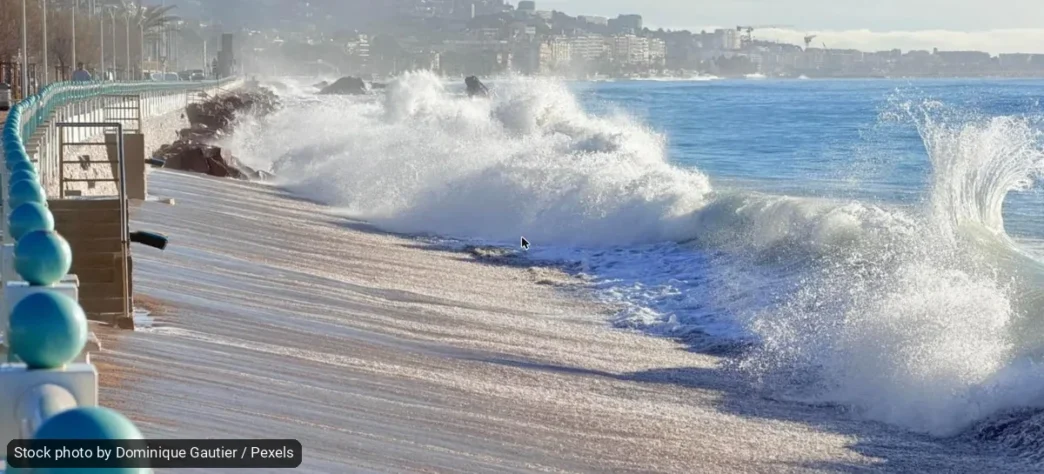
The high tides forecast for this week arrived right on schedule. Tuesday morning, Nov. 24, seawater pushed onto the Malecón in both La Paz and Loreto, with similar reports coming from La Ribera in the municipality of Los Cabos, according to local reports.
The flooding matches what researchers had been warning about for weeks. Gringo Gazette South first flagged the risk in our Nov. 2 story on La Paz flooding risk. This week, that forecast held.
What Happened Tuesday Morning
In La Paz, seawater rose along the coastal zone of El Comitán and climbed noticeably along the Malecón, the city’s waterfront boardwalk. Residents shared photos and video of the water’s advance in both La Paz and Loreto, according to Meganoticias, and Colectivo Pericú reported the sea pushing into coastal areas at Punta Lobos, near Todos Santos, as well.No official damage figures have been reported for these areas as of this writing.
Puerto San Carlos: The Area of Greatest Concern
The most serious situation remains in Puerto San Carlos, a fishing community on Bahía Magdalena in the municipality of Comondú. Residents there have dealt with recurring seawater flooding for weeks, and on Tuesday they reported water seeping through the earthen containment berms that protect the town.
“The containment berms are leaking, and with the high tides expected today and tomorrow, we’re afraid they could collapse and the water could reach our homes,” resident Liliana Guadalupe Montañez Cruz said, according to Colectivo Pericú. She called for dump trucks loaded with soil and heavy machinery to reinforce weak points before the next high tides arrive.
Puerto San Carlos has struggled with seawater intrusion since Hurricane Polo damaged the berm in late September, sending hundreds of residents to temporary shelters at the time. State officials say technicians from Conagua, Mexico’s national water commission, will study the site to determine whether new protective works are feasible or whether some homes should be relocated to higher ground, Governor Víctor Manuel Castro Cosío said, according to Posta.
Why UABCS Says the Risk Continues Through Friday
The Laboratorio de Investigación en Gestión Integral del Riesgo (LIGIR), a risk research lab at the Universidad Autónoma de Baja California Sur (UABCS), warned on Nov. 20 of a high-tide episode running from Nov. 22 through 27, with levels peaking on Nov. 24 and 25. Starting Nov. 25, increased wave activity is expected to push sea levels even higher and intensify coastal erosion, according to BCS Noticias.
Projected tide heights vary by location: La Paz is expected to see 1.7 to 1.9 meters (roughly 5.6 to 6.2 feet), San Carlos between 2.17 and 2.7 meters (about 7.1 to 8.9 feet), and Laguna San Ignacio and the North Pacific coast 2.1 to 2.5 meters (6.9 to 8.2 feet). Researchers linked the pattern to a sea-level anomaly of up to 0.55 meters (about 1.8 feet) tied to El Niño conditions documented by NOAA. Baja California Sur saw a related surge earlier this fall, detailed in our story on how La Paz Bay hit a 33-year sea-level high in 2026.
What La Paz Officials Are Doing
In late October, La Paz’s Protección Civil, the municipal civil protection office, said it was still building a case file to produce a formal risk diagnosis and response plan. “We’re building a case file so we can put together a diagnosis and then carry out a plan,” director Francisco Cervantes Navarro said, according to Posta.
Cervantes Navarro named El Conchalito, Chametla, San Juan de la Costa and Puerto Chale among the low-lying areas most exposed. “Those zones that are right at sea level are susceptible — when there’s a high tide, these situations happen,” he said. He also warned that these episodes could become more frequent going forward.
What Residents Should Watch For
Until the tides ease, it makes sense to avoid low-lying stretches of the Malecón around high tide and to skip overnight parking along the waterfront in flood-prone spots. UABCS also advised coastal residents to take preventive measures and follow updates from official authorities.With UABCS forecasting bigger waves and elevated seas through Nov. 27, the coming days are worth watching.
