


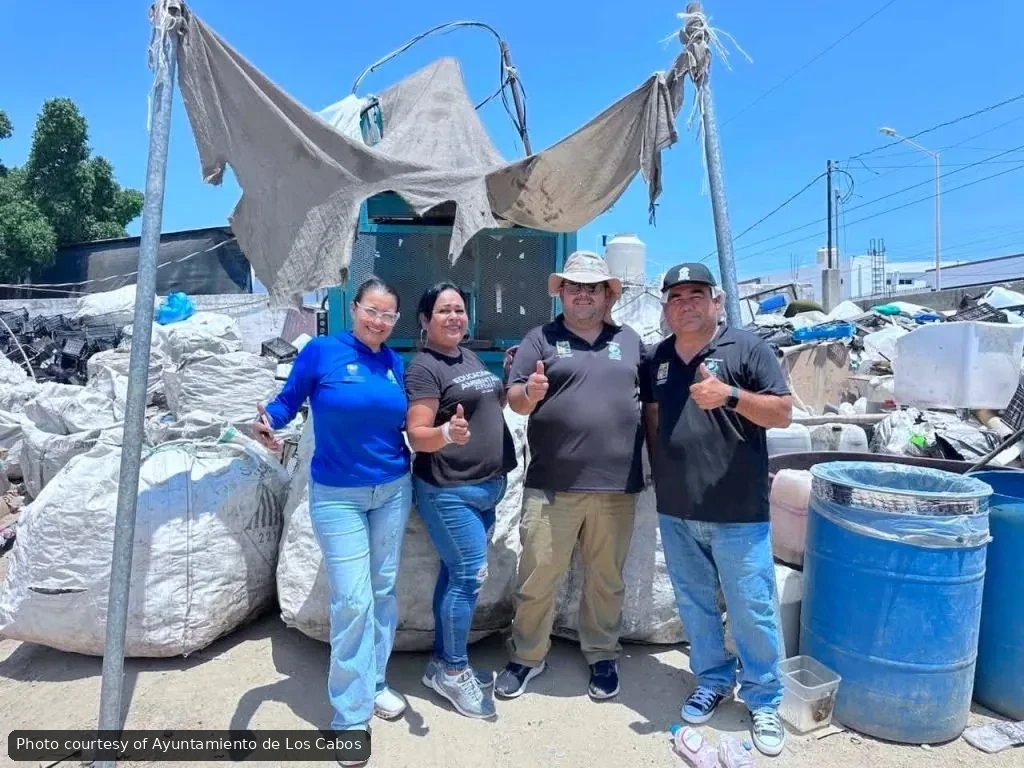
Municipal crews removed 125 kilograms — roughly 275 pounds — of recyclable plastic from El Chileno beach this week as part of the Los Cabos government’s ongoing coastal cleanup program.
The operation was carried out by Zofemat, the municipal agency charged with managing Mexico’s federal maritime zone along the coast. According to Zofemat director Héctor Hugo Agúndez Cota, the recovered material consisted entirely of PET plastic — the type used in most single-use bottles — and has been set aside for recycling.
El Chileno, one of the Corridor’s most popular swimming beaches, sees steady visitor traffic year-round. The cleanup reflects Zofemat’s broader effort to maintain usable beach conditions while promoting environmental responsibility among residents and tourists.
How the Program Works
Zofemat’s environmental education team monitors recycling bins placed along the municipality’s beaches. When containers fill up, crews collect the material, separate recyclables, and send them to processing facilities. The effort is designed to keep plastic out of the ocean and redirect it into productive reuse.
The agency has been stepping up beach maintenance campaigns in recent months as tourism returns to pre-pandemic levels. Similar volunteer-led cleanups at Médano Beach have also drawn community participation.
What Beachgoers Can Do
Officials are asking residents and visitors to help by using the designated recycling bins correctly. That means separating plastic bottles, aluminum cans, and other recyclables from general trash before disposal.
Beachgoers should also avoid leaving waste on the sand, especially in high-traffic areas like El Chileno, Médano, and Santa María. Even small items can wash into the water or accumulate along the shoreline.
Anyone who notices illegal dumping or abandoned waste along the coast can report it directly to Zofemat by calling the Los Cabos municipal switchboard or visiting the agency’s office near the San José marina.
Why It Matters
Coastal plastic pollution is a persistent problem in Baja California Sur, where ocean currents and seasonal storms deposit debris along beaches used heavily by tourists and marine life alike. PET plastic, while recyclable, can linger in the environment for decades if not collected.
Keeping beaches clean isn’t just about appearances. Sea turtles, dolphins, and seabirds that frequent the waters around Los Cabos can mistake plastic fragments for food, leading to injury or death. Removing large volumes of recyclable material before it breaks down into microplastics helps protect marine ecosystems that drive the region’s tourism economy.
Zofemat emphasized that ongoing cooperation from the public is essential to maintaining progress. The agency plans to continue regular monitoring and collection at beaches throughout the municipality.
