


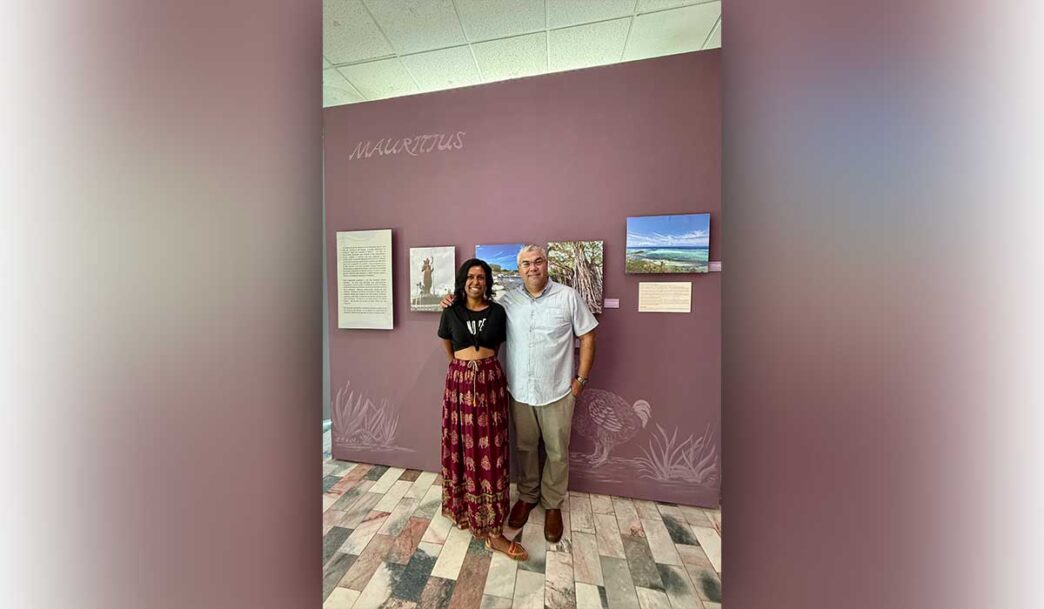
This month, La Paz celebrates it’s 491th anniversary. Join me in my conversation with Dr. Luis Alberto Trasviña, Director of the Regional Museum of Anthropology and History of BCS, about its historical evolution.
Naailah: “In honor of La Paz’s 491st anniversary, what historical milestones have most defined the city’s identity from its founding to today?”
Dr. Trasviña: “The history of our port city of La Paz, originally known as Bahía de la Santa Cruz, is not a continuous line, but rather a succession of ruptures, adaptations, and redefinitions. First (1535): The arrival of explorers such as Hernán Cortés marked the first attempt at colonization. This began nearly 17 decades of Spanish penetration attempts, all of which remained largely unsuccessful and exploratory in nature. Second (1539): Francisco de Ulloa discovered that Baja California was not an island, as previously believed, but a peninsula. Third (1596): Admiral Sebastián Vizcaíno renamed Bahía de la Santa Cruz to Bahía de La Paz because of the peaceful nature of the Indigenous Guaycura people inhabiting the region. Fourth (1683): Admiral Isidro de Atondo y Antillón, accompanied by the Jesuit priest Eusebio Kino, attempted to establish a colony and mission called Nuestra Señora de La Paz. However, the lack of water and conflicts with local Indigenous groups forced them to abandon the effort. Fifth (1720): Jesuit missionaries established the Mission of Nuestra Señora del Pilar de La Paz Airapí. It operated for decades until it was abandoned in 1749, with its inhabitants relocated to Todos Santos.”
Naailah: “Which historical event served as a major turning point in the evolution of La Paz?”
Dr. Trasviña: “The transfer of the capital to La Paz (1828–1830). After a devastating hurricane destroyed Loreto, the former capital, in 1828, the government permanently relocated to La Paz. This shift boosted its growth as an administrative, commercial, and port center. The city gained strategic importance, attracting population, trade, and industries such as pearl fishing, which transformed it from a small town into the peninsula’s primary urban center.”
Naailah: “How have international collaborations shaped the development of modern La Paz?”
Dr. Trasviña: “It is essential to understand that our city’s history cannot be explained without looking outward. Its commercial, cultural, and urban identity has been woven through international connections that left deep marks at different stages. Rather than isolated influences, these are intertwined historical processes.
During the colonial period, Bahía de La Paz was indirectly linked to global trades such as the Manila Galleon. While not a primary port, the bay served as a strategic stop for expeditions, minor trade, and exploration of the Sea of Cortez. This created early contact with Asian and European influences, including products, nautical ideas, and worldviews, connecting the peninsula with the Philippines, China, and Spain.
Later, the arrival of missionary orders, the Society of Jesus (Jesuits), followed by Franciscans and Dominicans, introduced European models of social organization, education, and territorial management. These missions transformed Indigenous life and integrated the region into global debates on evangelization, natural science, cartography, and imperial administration.
By the 19th century, the mining boom in areas like El Triunfo brought foreign investment and technology, primarily from Britain and the United States. Mining companies introduced machinery, engineering, and labor systems that transformed the regional economy. During this same era, the port of La Paz solidified its status as a commercial node linked to California, Central America, and the Asia-Pacific region. Today, La Paz continues to redefine itself through new forms of international collaboration, most notably through global tourism.”
Naailah: “What unique cultural traditions or historical elements distinguish La Paz from the rest of the region and Mexico as a whole?”
Dr. Trasviña: “Of course, La Paz is not a city defined by grand ‘national symbols,’ so to speak, but rather by living, subtle practices deeply tied to the natural environment. Together, these create a distinctive cultural identity and historical legacy shaped by peninsular geographic isolation, a missionary past, and the pearl industry.
For example, among the city’s traditions is the commemoration of the arrival of Hernán Cortés in 1535. More than a colonial celebration, this event has become a reaffirmation of local identity through cultural, historical, and community activities.
We also have our traditional Carnival celebrations, which, although sharing traits with other Mexican carnivals, maintain a more family-oriented and community-centered style. The parades, floats, and concerts reflect contemporary life in La Paz.”
Naailah: “Finally, from your perspective as a historian, what essential aspects should a non-Spanish speaker understand to grasp the history and essence of La Paz truly?”
Dr. Trasviña: “Well, to truly understand the essence of our beautiful city of La Paz, it is not enough to admire its landscapes; one must delve into a history shaped by the elements I described in the previous responses. We are a city forged through resistance, isolation, and adaptation, where nature has always dictated the rules.
To understand La Paz from outside the Spanish-speaking world means going beyond dates and names: it means understanding the processes, landscapes, and ways of life that have given meaning to this place for centuries.”
To dive deeper into the history and identity of our city, I invite you to visit the Regional Museum of Anthropology and History of Baja California Sur in La Paz. (Calle Ignacio Altamirano s/n, Zona Central, 23000 La Paz, B.C.S. ) – Naailah Auladin for more on my work: www.naailahauladin.com or reach me on WhatsApp at: +52 612 141 8002
Naailah Auladin is a life and relationship doula in La Paz, specializing in guiding individuals and families during periods of emotional trauma, crisis, and mental unrest. She focuses on teaching and inspiring individuals to take responsibility and ownership in participating in their civic duties, prioritizing the well-being of “self” first, as she believes that fostering and maintaining well-managed emotional, mental, and physical health is our primary civic duty.