


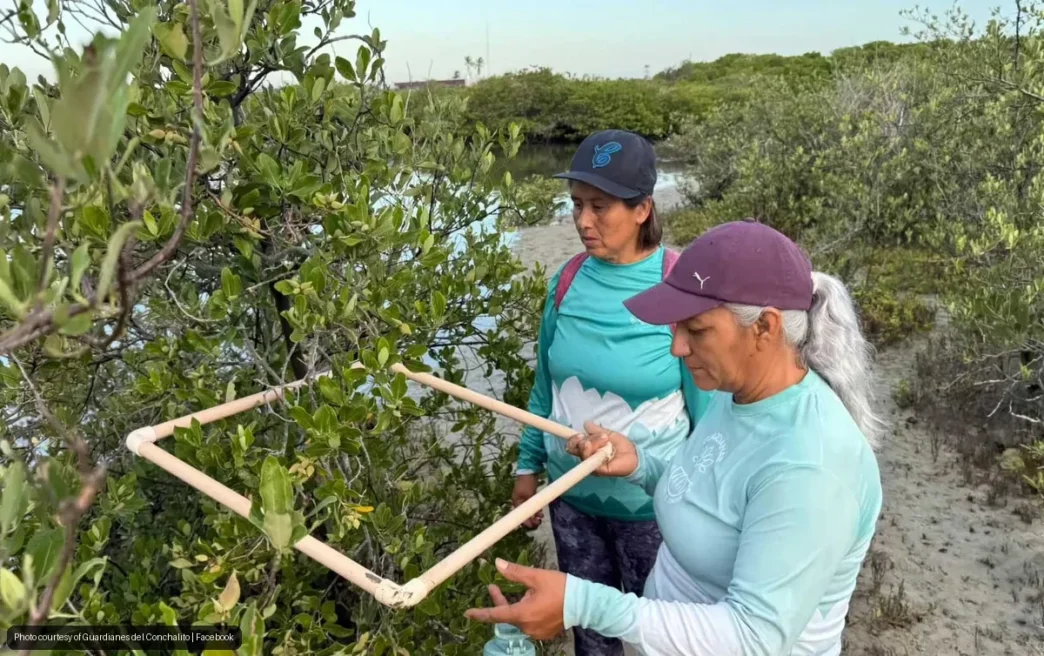
In a sprawling coastal zone just outside La Paz, a group of twelve women has spent more than fifteen years transforming a degraded wetland into one of Baja California Sur’s most important community conservation projects. Known as Guardianas del Conchalito, the women from the community of El Manglito have turned the 40-hectare estuary—14 of which are protected mangrove—into a living example of grassroots environmental stewardship.
The story began more than a decade ago when members of the group faced illegal fishing, garbage-filled wetlands, and collapsing ecosystems. They responded by patrolling the area at night, confronting poachers, and organizing cleanups that removed everything from old mattresses to dead animals. What started as vigilance evolved into restoration, education, and economic empowerment.
From Degradation to Restoration
Estero El Conchalito was once a vital nursery for commercial species like oysters and scallops. But years of overexploitation and neglect had pushed the ecosystem to the edge. The Guardianas took it upon themselves to reverse the damage. They began by securing the area and removing accumulated trash, then moved into active restoration—planting mangroves, monitoring water quality, and managing oyster beds.
According to La Jornada, the women now cultivate oysters in the estuary’s clear waters and have turned sustainable fishing into a steady income source for their families. The mangroves they protect serve as critical habitat for migratory birds, juvenile fish, and other marine life, making the estuary both an ecological treasure and an economic engine.
A Nursery for the Future
The group opened a community nursery to support their restoration work. Four members—Rosa María Romero, María Dionisia Avilés, Graciela Olachea Higuera, and Adriana Méndez—now manage the facility every third day, tending to red, black, and white mangrove seedlings along with mesquite and beach grass.
The nursery feeds restoration projects across La Paz, including sites at El Mogote and near the Centro de Estudios Tecnológicos del Mar. Seedlings spend nearly a year under careful supervision before being transplanted into degraded zones. The women prepare specialized soil mixes using compost, saltwater-tolerant earth, freshwater soil, and leaf litter. They also conduct monthly field surveys to collect seeds from mature mangroves, documenting the origin of each batch to ensure genetic diversity.
Government Recognition and Support
On August 14, 2026, Baja California Sur Governor Víctor Manuel Castro Cosío met with members of the group to publicly recognize their work. During the meeting, Castro Cosío committed state support for equipment and materials needed to sustain their conservation activities.
“The most important thing is that government institutions work together with citizens so that future generations can enjoy our natural beauty,” the governor said. Martha García Juárez, representing the Guardianas, thanked the administration for its backing and said the support had given members confidence to expand their work in the community and surrounding ecosystems.
A Model for Community Conservation
The Guardianas have become a reference point for community-led environmental action across Baja California Sur. Their work demonstrates how local groups can protect critical ecosystems without waiting for government intervention—and how that protection can generate real economic benefits for residents.
The estuary now supports sustainable fisheries, ecotourism opportunities, and educational programs. It also provides natural flood protection for nearby neighborhoods and improves water quality along La Paz’s urban coastline. Mangroves are among the most carbon-rich ecosystems on the planet, meaning the Guardianas’ restoration work contributes to climate resilience as well.
For the women of El Manglito, protecting the mangroves means defending their territory, their history, and their livelihoods. It also means ensuring that the next generation inherits a coastline worth protecting.
