


La Paz’s La Buena Mujer water treatment plant has stopped operations again, leaving at least twelve neighborhoods without municipal water supply and forcing the city back to its previous distribution scheme. The facility, which only came online last November after receiving federal health certification, went offline in early June due to what officials described as a national shortage of water treatment chemicals.
According to local reports, the Organismo Operador Municipal del Sistema de Agua Potable, Alcantarillado y Saneamiento (Oomsapas) La Paz issued a notice explaining that the plant suspended operations temporarily while awaiting delivery of essential chemical supplies needed to remove impurities and treat the water for safe consumption. The agency said it would revert to the distribution system used before the plant came online, serving neighborhoods including Laguna Azul, Márquez de León, Villas de Guadalupe and Vista Hermosa.
In Baja, a project is never just a project. It is a promise, a budget, a ribbon-cutting photo and, eventually, a test of whether anyone remembered the maintenance plan.
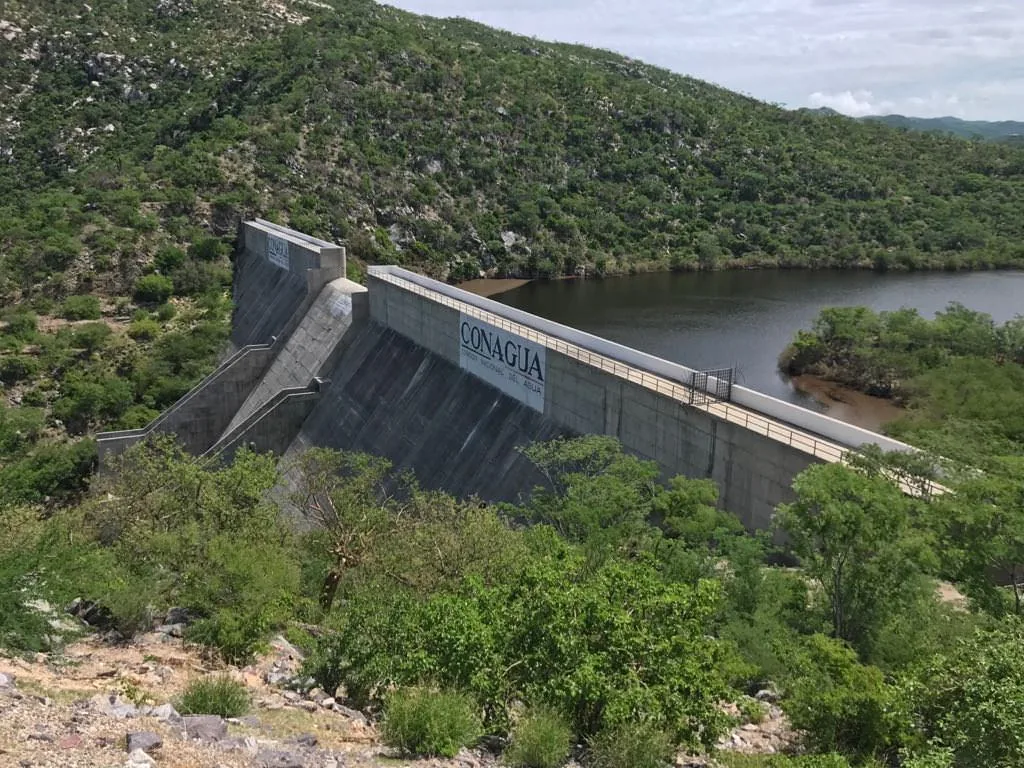
Residents in some areas say they have now gone a full month without receiving water through the municipal system. One woman in Ampliación Agustín Olachea told local media in late June that her neighborhood had been waiting for scheduled water delivery rotations that never arrived. Meanwhile, the dam itself shows visible signs of depletion, with water levels significantly lower than when the plant began operating.
A resident living near the reservoir documented the drop on June 9, pointing out white mineral deposits on exposed rocks that had been underwater just months earlier. The extraction rate required to supply twelve urban neighborhoods appears to have drawn down the dam faster than anticipated, raising questions about long-term sustainability even when the treatment chemicals are available.
For expats and long-term foreign residents, the shutdown highlights the fragility of La Paz’s municipal water infrastructure. Many households in affected zones rely on a combination of municipal delivery, private water trucks and stored reserves. The recurring failures of new infrastructure complicate planning for anyone living full-time or seasonally in the city.
Oomsapas officials said chemical supplies had been ordered and were expected to arrive soon, but as of late June no delivery date had been confirmed. Until the plant restarts, neighborhoods will continue receiving water under the old rotating schedule, which some residents say has also been inconsistent.
The La Buena Mujer facility was certified under Mexican federal health standards and was intended to ease pressure on other treatment plants serving the capital. Its shutdown after just seven months of operation suggests that operational planning, not just construction, remains a weak point in the region’s water supply chain.
The question now is not just when the chemicals arrive, but whether the plant’s operating budget and supply agreements are stable enough to prevent future interruptions. In a state where water scarcity is a structural reality, infrastructure that works only part of the time is infrastructure that does not work at all.