


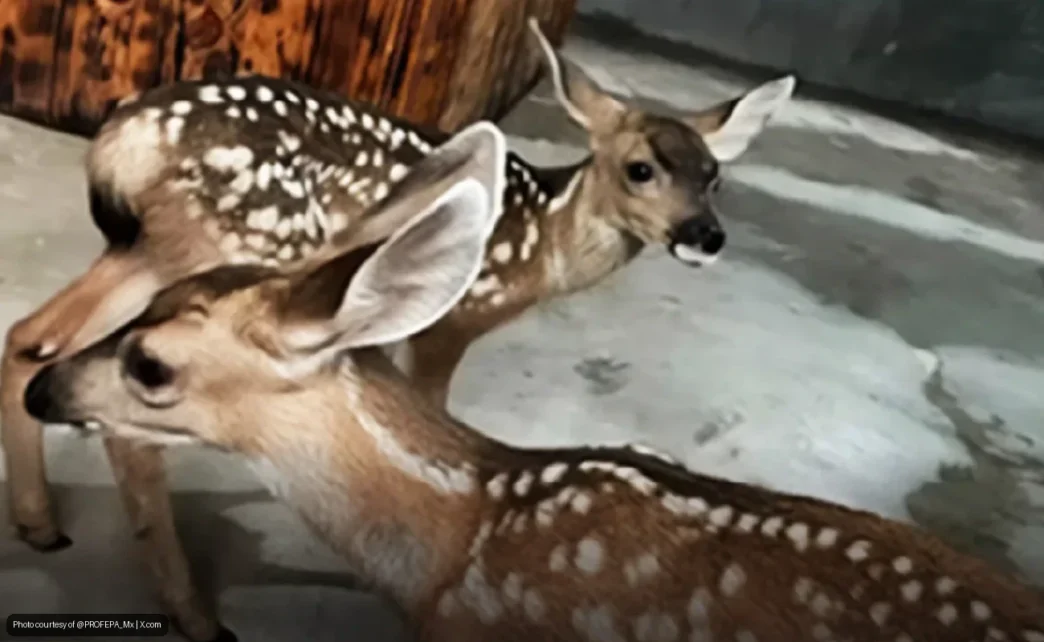
Three mule deer fawns have been rescued from separate residential developments in Cabo San Lucas after being found dehydrated and weak, according to Mexico’s federal environmental protection agency, Profepa. The agency, whose full name is the Procuraduría Federal de Protección al Ambiente, handles cases involving protected wildlife across Mexico, including Baja California Sur.
The fawns were discovered on different properties, a detail that points to how often wildlife now turns up inside the footprint of Cabo’s newer neighborhoods. Each animal was initially left in place and monitored in case its mother returned, a standard first step wildlife handlers use before intervening with young animals found alone.
Why Developments Keep Turning Up Wildlife
When none of the mothers came back, Profepa crews moved the fawns to specialized care centers instead of leaving them exposed. Cabo San Lucas has been expanding fast enough that undeveloped land bordering arroyos and hillsides — the kind of terrain mule deer use for cover — keeps shrinking. The pace of that growth shows up in plenty of recent local stories, from the traffic jam that followed the opening of one of Cabo San Lucas’s newer KFC locations last year to a cruise season that wrapped earlier this year with 30 percent growth in visitor numbers. More construction and more traffic generally mean more encounters between wildlife and people, even when neither side is looking for trouble.
Mule deer, known locally as venado bura, get their name from their oversized ears, which resemble a mule’s. The species is part of the native wildlife of Baja California Sur, and Profepa treats injured or displaced individuals as a conservation priority rather than a routine animal-control matter.
What Happens Next for the Fawns
All three fawns are reportedly responding well to treatment and remain under veterinary supervision. Profepa says it will keep tracking their weight gain, feeding behavior and overall physical condition, since those markers determine when — or whether — the animals are ready for the next stage of rehabilitation.
Once the fawns reach the physical and behavioral benchmarks wildlife specialists look for, officials will assess whether releasing them back into the wild is realistic. If it is, the agency says it will look for a release site suited to their chances of survival rather than simply returning them to where they were found, since the original locations are now residential developments.
For residents near Cabo’s edges — where subdivisions meet open desert — the case is a reminder that encounters with deer, coyotes and other wildlife aren’t unusual as construction pushes further into what used to be undeveloped land. Anyone who finds an apparently abandoned fawn or other wild animal is advised to avoid handling it directly and instead contact Profepa or local civil protection authorities, since well-meaning intervention can sometimes do more harm than good.
Source Note: This story is based on original reporting by El Sudcaliforniano. It has been independently rewritten and adapted by the Gringo Gazette for our English-speaking readers, with additional context where appropriate.
