


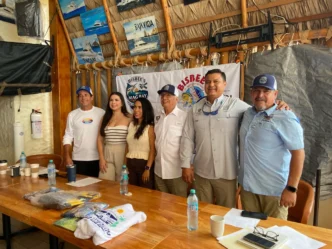
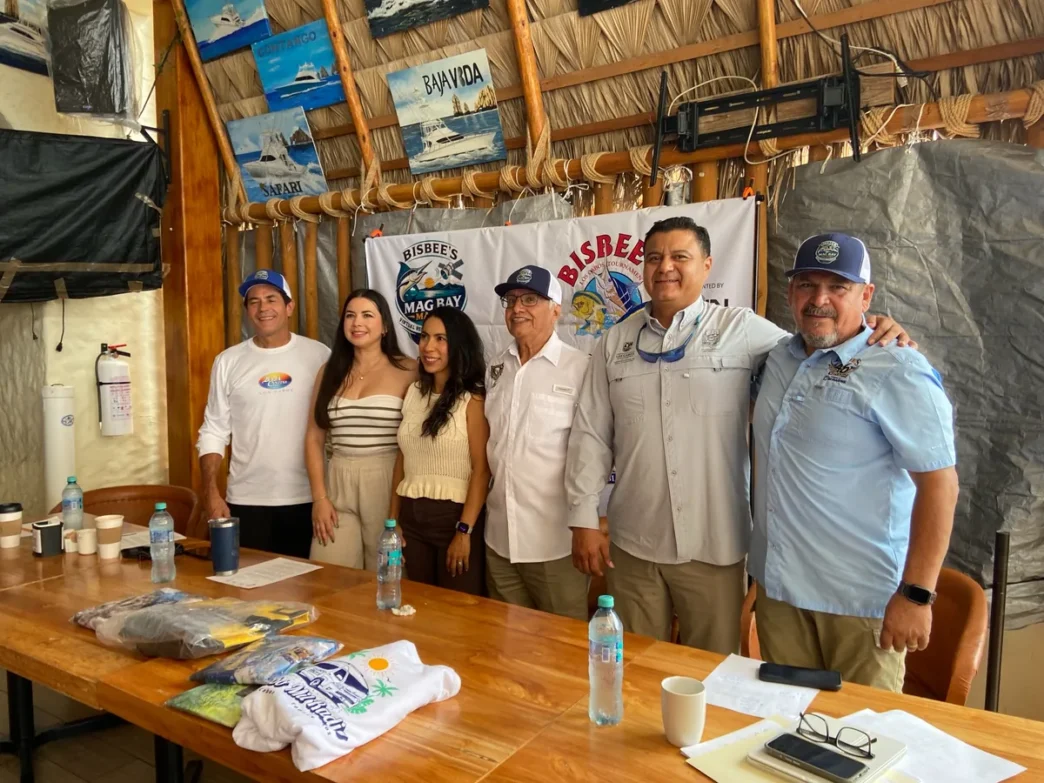
Forty-four years ago, a sportfishing tournament launched in Cabo San Lucas with no idea it would one day become part of the destination’s identity. That tournament was Bisbee’s, and in 2026, it’s entering a new chapter. What started in 1982 as a single event has spent more than four decades evolving into an international platform that draws anglers from around the world, while Cabo San Lucas remains one of its central stages. The 2026 season presentation at Baja Cantina restaurant made clear just how much is changing.
The first Bisbee’s tournament ran May 6 to 11, 1982, with a second one following months later. From there, the tournaments expanded toward East Cape and became fixtures in Cabo San Lucas through Los Cabos Offshore and the now-iconic Black & Blue. There were attempts elsewhere in Baja California Sur over the years, some that stuck and some that didn’t, but that restlessness, always looking for the next location, has never really left the organization.
Four decades in, the next generation of the Bisbee family is stepping into leadership. Wayne Bisbee still leads the tournaments, now alongside his children, Blake and Jordyn Bisbee, who have pushed new technology, new formats, and a question that eventually had to be asked: why not take Bisbee’s somewhere else?
That question became real in 2026 with the first Bisbee’s tournament held in Costa Rica, opening the door to bringing the brand to other sportfishing destinations internationally. Other locations came up during the presentation as future possibilities. Bisbee’s was born in Los Cabos, but its next chapter is being written outside Mexico too. At the same time, the organization turned its attention back to Baja California Sur, to a part it hadn’t touched before.
Mag Bay Mania Debuts As A Virtual Tournament
That would be Bahía Magdalena, or how many of us fondly calls it, Mag Bay. The first edition of Bisbee’s Mag Bay Mania runs November 1 to 30, 2026, and it’s not your traditional style tournament.
It’s fully virtual, built entirely around catch and release of billfish. Teams pick any three days in November to fish, there’s no weigh station, and participants don’t even need to be out on the water on the same dates. Every catch and release has to be documented on video with geolocation data confirming the species, the team, the time, and the place. Bahía Magdalena was chosen for a reason: it’s known for seasonal billfish, particularly striped marlin, which makes it a natural testing ground for a format built this differently.
Conservation Becomes The Foundation
Behind the new format is a conversation Bisbee’s clearly considers unavoidable: the future of sportfishing depends on the health of the ocean it depends on. Catch-and-release categories have been part of the tournaments for years, but Mag Bay Mania pushes that further, making release the entire foundation of the competition rather than an option within it. Costa Rica’s own sportfishing industry has leaned on billfish release as central to both conservation and the visitor experience, and Bisbee’s appears to be following that model while keeping the traditions that built its name in Baja California Sur. That shift doesn’t start with the anglers already competing. It starts with kids.
One of the projects Bisbee’s has leaned into most is its children’s sportfishing clinics, where kids learn everything from tying a knot and casting a line to species identification, safety, and why release matters. The Place at Cabo has hosted several of these. Project director Idania Salmón said the clinics let children move from theory into practice early enough that conservation becomes part of how they understand fishing from the start, not an idea added later. She called it an experience that leaves a mark on generations who will carry it forward.
That same approach shows up in Bisbee’s Baja Cantina Kids, a children’s tournament capped at 100 participants, where each child has to show video proof of releasing one species before they’re allowed to bring an eligible catch to the scale. Learn to conserve before you learn to compete. That’s the entire message.
October Still Belongs To Los Cabos
None of this means October stops belonging to Los Cabos. Bisbee’s Los Cabos Offshore runs October 13 to 17, followed by Bisbee’s Black & Blue from October 19 to 24, and during those weeks marinas, boats, hotels, restaurants, transportation companies, and nearly every tourism-adjacent business in town feels the tournaments’ presence. Municipal Tourism Director Ana Gabriela Navarro put it plainly during the presentation: for Los Cabos, this is history and culture, part of who the destination is. Organizers also mentioned early interest from representatives in Japan exploring what it would take to bring their own anglers into the Los Cabos experience.
It’s worth remembering how different Cabo San Lucas was when all of this started. The infrastructure, the airport connections, the marinas, the hotels, none of it looked like what exists today. Bisbee’s grew up alongside the destination, and October became one of the most recognizable stretches on Cabo San Lucas’s calendar in the process.
A new generation is now steering the organization. Technology has made a fully virtual tournament possible. Conservation has moved from a side category to a foundation. Kids are learning to fish differently than their parents did, and the brand is testing new ground both inside and outside Mexico. More than four decades after that first tournament in 1982, Los Cabos is still where Bisbee’s tells its story from. – @naailahauladin
Based on the press conference presented at Bisbee’s 2026 season announcement, Baja Cantina, Cabo San Lucas.