


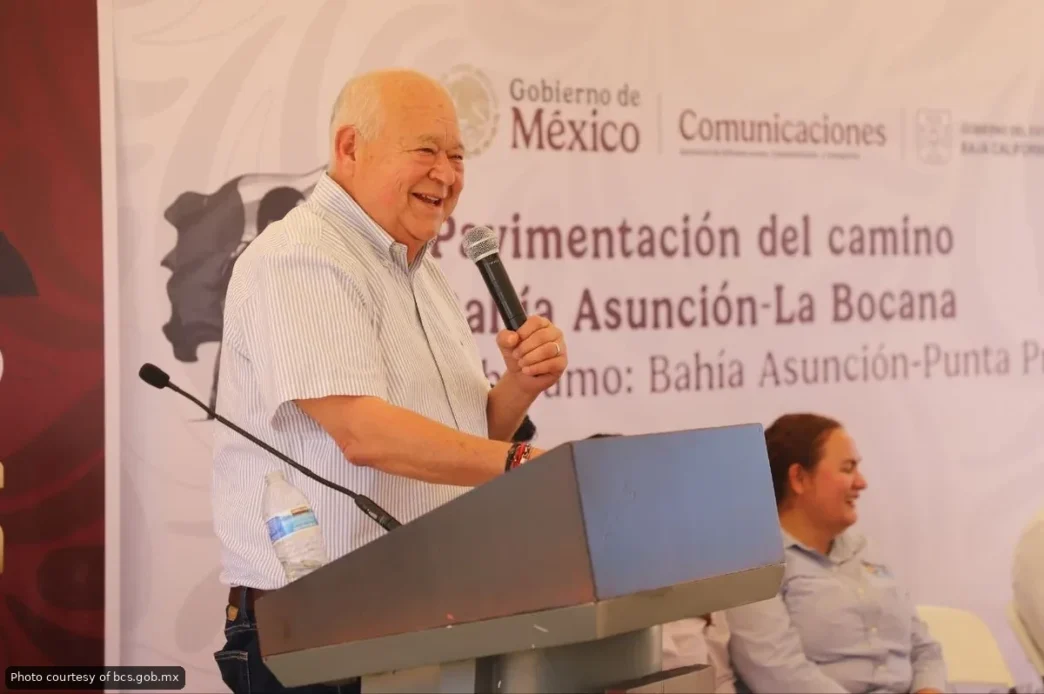
In Baja, a project is never just a project. It is a promise, a budget, a ribbon-cutting photo and, eventually, a test of whether anyone remembered the maintenance plan. This week, one of those promises became machinery, asphalt and trucks as officials broke ground on the first phase of pavement connecting Bahía Asunción to Punta Prieta, a route that has long connected fishing communities to the rest of Baja Sur only in theory.
The 10.5 kilometer stretch of new pavement comes with a total investment of 145.56 million pesos, split between federal and state coffers. Governor Víctor Manuel Castro Cosío and federal infrastructure secretary Jesús Antonio Esteva Medina made the announcement official Monday in Mulegé, framing the work as overdue recognition for a region that has been waiting for infrastructure investment longer than most towns have existed.
For residents of Bahía Asunción and the surrounding coastal communities, this is not symbolic. The dirt road between fishing zones and the Trans-Peninsular Highway has been problematic in dry weather and impossible in wet weather for decades. Fishermen, families and commerce have all operated on the assumption that the government considered the Pacific coast too remote to bother with. The new pavement does not solve everything, but it does answer the question of whether anyone in La Paz or Mexico City was listening.
According to state officials, the first phase is just that: a first phase. The plan eventually extends the paved route as far as La Bocana, strengthening access to one of Baja Sur’s most productive but underserved fishing zones. Whether the additional funding materializes, and how long it takes, remains to be seen. For now, this is 10.5 kilometers of asphalt where there was none before.
Castro Cosío made a point of saying the state does not build roads based on population size. Whether that is true or merely good messaging, the fact remains that Mulegé has seen a noticeable uptick in infrastructure attention over the past two years. The highway to San Francisco de la Sierra, the Punta Eugenia–Bahía Tortugas route and the first stretch of the Vizcaíno–Guerrero Negro corridor all received funding and construction crews in recent months. Add this Bahía Asunción project to the list and a pattern starts to emerge: remote northern Baja Sur is finally getting the roads it should have had a generation ago.
The federal government, under President Claudia Sheinbaum Pardo, has publicly backed the Baja Sur road investments as part of its broader infrastructure push. Esteva Medina, the federal infrastructure secretary, was careful to frame the groundbreaking as a commitment kept, not just a promise made. That distinction matters in a region where residents have heard plenty of announcements and seen fewer follow-throughs.
For tourists, anglers and overland travelers, the practical benefit is straightforward. A paved road means easier access to the Pacific coast’s fishing camps, whale-watching zones and off-grid beaches. It also means local fishing cooperatives can move product to market faster and with less vehicle damage. That is the kind of infrastructure improvement that quietly shifts local economics without making headlines outside the region.
The project also connects to broader conversations about road quality and maintenance across Baja Sur. Paving a road is one thing. Keeping it paved is another. Residents along other recently improved routes have already started watching for the first potholes and washouts, knowing that maintenance budgets do not always follow construction budgets. Whether the Bahía Asunción highway becomes a lasting improvement or a temporary fix will depend on what happens after the ribbon-cutting photos are filed away.
For now, the machinery is running, the asphalt is being laid and the dirt road between Bahía Asunción and Punta Prieta is finally becoming something more permanent. That is progress, even if it took longer than it should have.