


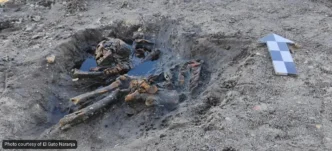
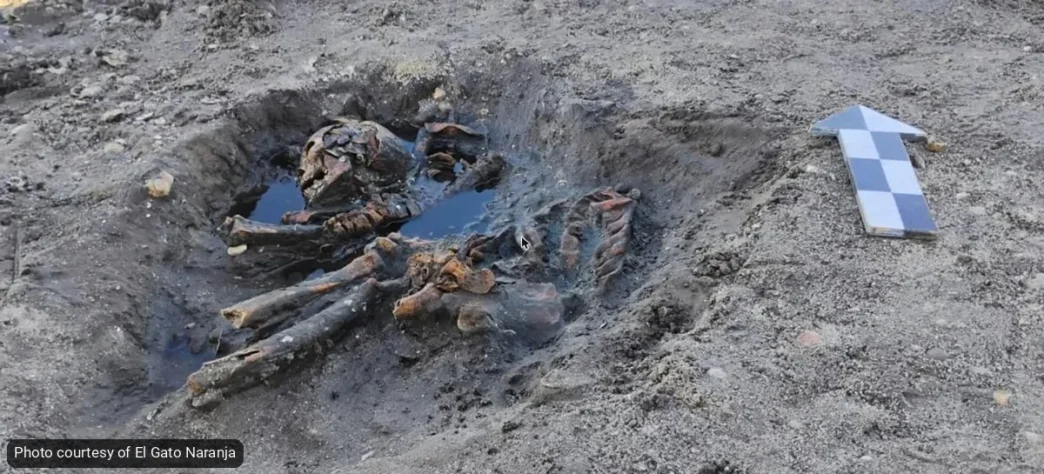
Archaeologists with Mexico’s National Institute of Anthropology and History (INAH) have recovered two more human burials from El Conchalito, the archaeological zone on La Paz’s bay. The remains, belonging to an adult man and an adult woman, were found in the high-tide zone of the beach after a phone report on November 7, according to the Centro INAH in Baja California Sur.
The remains were found with stone tools and shell remains, which help researchers establish the site’s age and occupation, according to the report. Anthropologist Alfonso Rosales López and archaeologists Carlos Mandujano Álvarez and Miguel Ángel Cruz González handled the identification and recovery, with support from the climate change office of the environment department to secure the area.
A Site With More Than 50 Known Burials
El Conchalito isn’t a new discovery. INAH says more than 50 human burials have turned up at the site since the 1980s. The beach functioned as an open-air camp across two long stretches of time: roughly 2300 to 1200 BC, and again from about 1200 BC until AD 1700.
INAH associates the site with the Guaycura and Pericú peoples, Indigenous groups native to the southern peninsula who disappeared during the Spanish colonization of the region.
What INAH Hasn’t Confirmed Yet
INAH has not released an age estimate or formal dating for the two burials found this month. The institute also recovered a burial at the same site earlier this year, after a report in April, according to Posta.
Where It Is
El Conchalito sits along La Paz’s bay, in the same area where the volunteer group Las Guardianas del Conchalito works to protect the mangroves, according to Posta.
What To Do If You Find Bones on a Beach
If you ever come across bones while walking a beach in Baja California Sur, the standard guidance is simple: don’t move or disturb anything. Note the location, step away, and report it to local authorities or the nearest INAH office so trained specialists can determine whether the find is archaeological or requires a different kind of investigation. Disturbing a site, even accidentally, can destroy the stratigraphic context archaeologists rely on to date and interpret what they find.
