


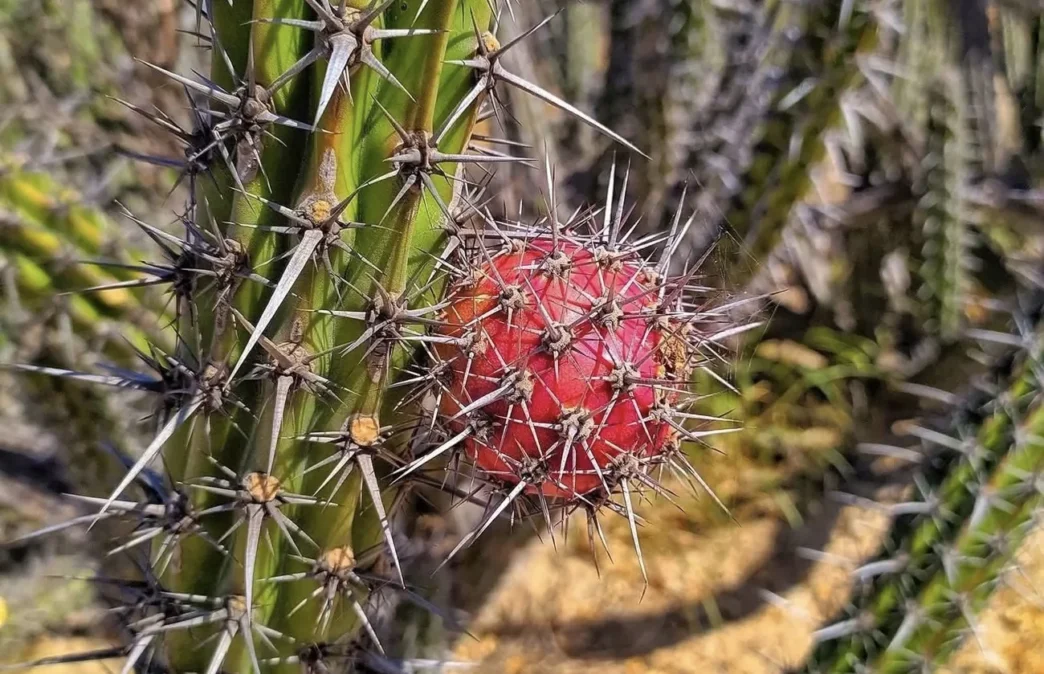
Between the desert and the sea, a small, brilliant fruit emerges each summer in La Paz. The pitaya — not to be confused with the more widely known dragon fruit — grows on cactus plants that thrive in the harsh, dry landscapes surrounding the capital. For generations, this fruit has been more than a seasonal crop. It is a symbol of regional identity, a source of local income and a reminder that some of Baja’s best flavors come from the ground beneath the cardon.
The pitaya belongs to the genus Stenocereus, a family of columnar cacti native to Mexico. While dragon fruit (from the genus Hylocereus) has become a commercial favorite in global markets, the pitaya of La Paz is smaller, more intensely colored and, many residents would argue, more flavorful. Its peak season runs from June through August, when rural communities harvest the fruit by hand, often using long poles to reach the spiny branches high above the ground.
Why Pitaya Matters in La Paz
In the rural communities around La Paz, pitaya cultivation provides seasonal work and supplemental income for families who have been growing and harvesting the fruit for decades. The fruit is sold fresh in local markets, processed into jams and ice cream, or used in artisanal beverages. It is not an industrial crop, and that is part of the appeal. The scale is small, the methods are traditional and the product is deeply tied to the land and the people who know it best.
Each year, the municipality celebrates this connection through events like the Pitaya Festival in Miraflores, where visitors can taste the fruit in various forms, meet local producers and learn about the cultural significance of this desert harvest. For residents and tourists alike, pitaya season is an opportunity to engage with the agricultural rhythms that still shape life outside the city.
What Makes Pitaya Unique
The fruit itself is striking. Depending on the variety, the flesh ranges from deep magenta to pale white, and the flavor is sweet but not overwhelming, with a texture somewhere between a kiwi and a watermelon. The skin is covered in small spines that must be carefully removed before eating. Unlike dragon fruit, which is often described as mild, pitaya has a more pronounced tartness and a flavor that lingers.
Nutritionally, pitaya is rich in antioxidants, vitamin C and fiber. It is also hydrating, which makes it particularly appealing in the summer heat. Local chefs have begun incorporating it into more creative dishes, but the most popular way to enjoy it remains the simplest: fresh, chilled and eaten with a spoon.
Supporting Local Producers
Buying pitaya from local vendors supports the families who grow it. The fruit is harvested by hand, often in remote areas where the cactus grows wild or semi-cultivated. It is labor-intensive work, and the season is short. When consumers choose locally grown pitaya over imported alternatives, they are directly contributing to the rural economy and helping to preserve a tradition that might otherwise fade as younger generations move to cities or seek steadier work.
For expats and tourists, pitaya season is also a chance to experience a side of La Paz that does not appear in most travel brochures. It is the side where agriculture, tradition and community still intersect in ways that feel increasingly rare. The fruit is not packaged for mass consumption. It is grown, harvested and sold by people who have a personal stake in the outcome.
What to Expect This Season
This year’s pitaya harvest is expected to be strong, provided the summer rains cooperate. The fruit requires specific conditions to thrive: enough moisture to support growth, but not so much that the plants become waterlogged. Too much heat can damage the flowers before they produce fruit. Too little rain, and the harvest shrinks. For producers, it is a careful balance that depends as much on experience as on luck.
Visitors to La Paz during pitaya season should look for the fruit at local markets, roadside stands and artisanal food shops. Prices are generally reasonable, especially compared to imported fruits. The flavor is at its best when the fruit is fully ripe, which means it will be soft to the touch and deeply colored. If the flesh is pale or firm, it may have been picked too early.
Pitaya is also being featured more prominently in restaurants and cafes as chefs experiment with seasonal ingredients. Ice cream shops in particular have embraced the fruit, offering pitaya-flavored scoops that highlight its natural sweetness without added dyes or artificial flavoring.
For anyone who spends time in La Paz, pitaya season is worth experiencing. It is a reminder that the region’s appeal extends beyond beaches and marinas. The desert has its own offerings, and the people who work the land have stories that are just as compelling as the scenery. Pitaya is one of those stories, told in vibrant color and handed down through generations of families who know that some traditions are worth preserving, one harvest at a time.