



The La Paz City Council has unanimously approved new Regulations for Access to Public Beaches, a measure aimed at preventing illegal beach closures and safeguarding public access to the coastline.
Mayor Milena Quiroga said the new regulations strengthen the municipality’s legal authority to remove fences, gates, and other barriers installed by private developers that obstruct access to beaches. The measure comes amid ongoing legal disputes and injunctions filed against the city’s efforts to maintain vehicular and pedestrian access to coastal areas.
According to Quiroga, the regulations were developed in coordination with civil society groups and residents advocating for environmental and public access rights. She said the framework is designed to protect municipal actions from legal challenges brought by landowners and tourism-related businesses.
“The municipality of La Paz and the City Council have the authority to defend free access to the beaches for everyone,” Quiroga said. “These are the people’s beaches. These are the nation’s beaches, and we must all defend them.”
The mayor noted that the regulations have been published in the City Council’s Official Gazette and are now in effect. She described the measure as a long-term safeguard intended to ensure future administrations maintain public access protections regardless of political changes.
Disputes at Puerto Mejía and Beyond
The regulations also address ongoing disputes in the Puerto Mejía development, an area that has generated numerous complaints from residents over the repeated opening and closing of beach access points by property owners. Quiroga said the city’s legal department has completed the necessary proceedings and expects a final court ruling in the coming days that could determine sanctions and establish permanent access measures.
Access to beaches has long been a contentious issue in Baja California Sur, where residents and advocacy groups have accused some developers of exploiting legal loopholes to restrict entry to federally protected coastal zones. Quiroga’s administration has faced legal challenges and criminal complaints stemming from efforts to reopen roads and pathways leading to the Sea of Cortez.
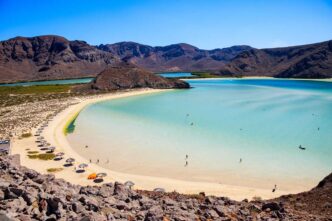
The issue has drawn increased attention following reports of access restrictions not only in Puerto Mejía but also near El Coyote and Balandra, where residents said access was limited due to claims of private ownership of adjacent land.
Permanent Easements and Enforcement Authority
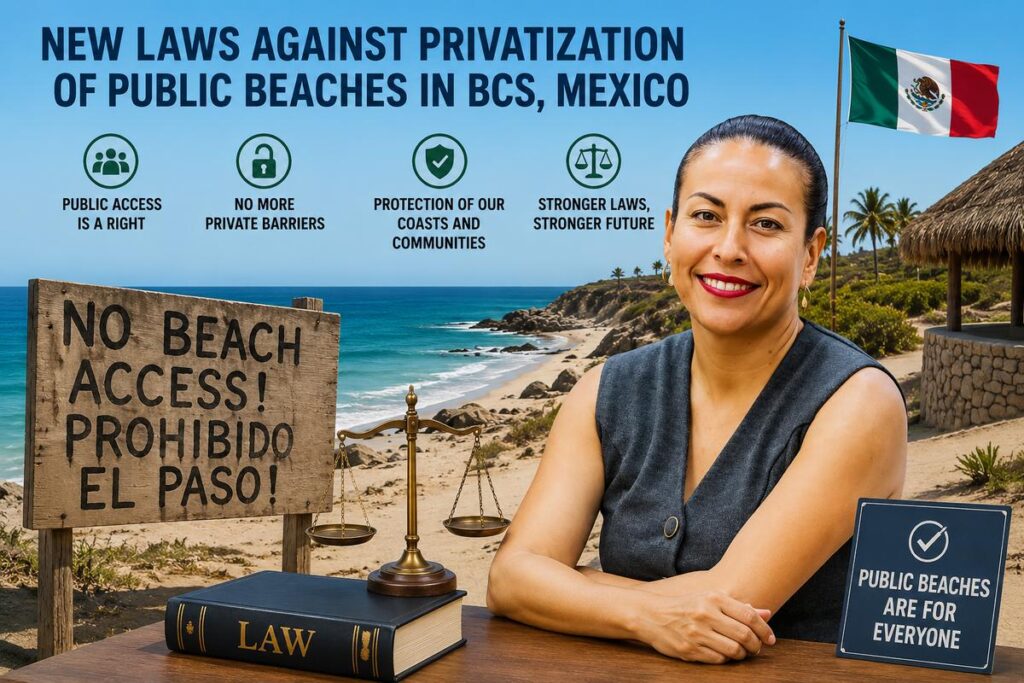
City officials say the new regulations establish a stronger legal foundation for ensuring public access and require developers of residential and tourism projects bordering the coast to provide permanent easements for public entry.
Quiroga said protecting public access to beaches and preserving community recreation opportunities will remain a priority throughout her administration. She added that beach access protections should be supported by enduring legal mechanisms rather than relying solely on the policies of a single government.
Under the new regulations, municipal authorities, including public security and urban development departments, are authorized to respond immediately to reports of blocked coastal access points.