


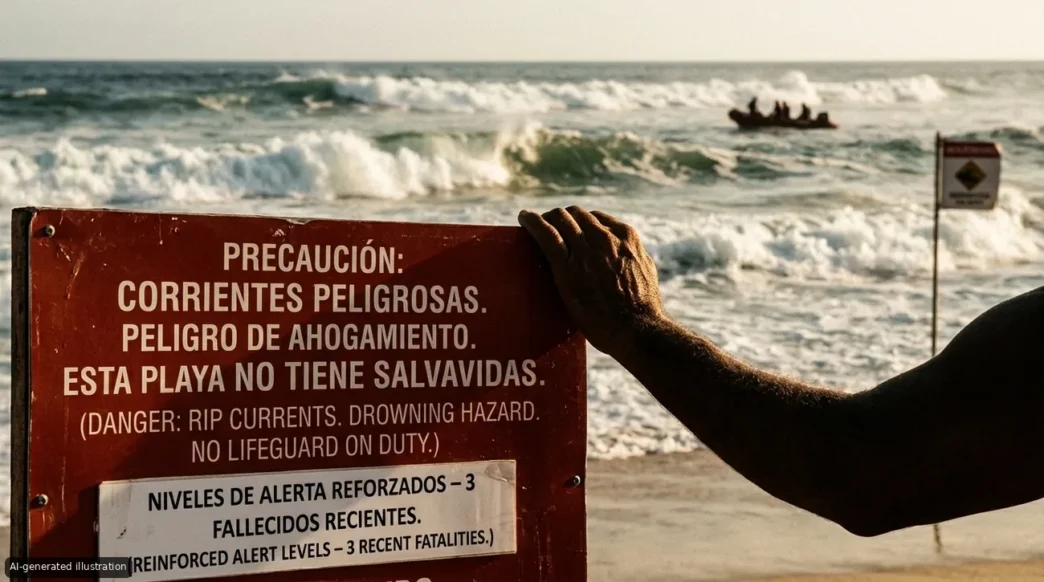
Three people died in the waters off Baja California Sur over a five-day period this week, prompting state and municipal authorities to reinforce beach safety protocols and issue urgent warnings about dangerous surf conditions across the region.
Two of the drownings occurred at Todos Santos beaches, and one body was recovered at La Playa in San José del Cabo. All three incidents happened between July 18 and July 22 during a stretch of elevated surf that continues to pose risks for swimmers, surfers, and beachgoers across the state’s Pacific coast.
The State Attorney General’s Office confirmed that autopsies conducted by the Forensic Medical Service determined both Todos Santos victims died from asphyxia by submersion — drowning. The third victim’s cause of death has not yet been officially confirmed.
What Happened at Each Incident
The first death was reported on July 18, when the body of a woman was discovered at Playa Punta Lobos near Puerto Viejo in Todos Santos. Navy personnel deployed a Defender-class patrol boat to recover the body, and forensic investigators began processing the scene.
Two days later, on July 20, authorities received another emergency call. This time, a man’s body was found floating off Playa San Pedrito de Las Palmas, also in Todos Santos. Navy crews once again assisted in the recovery, and the Ministry of Public Security opened an investigation into the circumstances surrounding the death.
The third incident took place the morning of July 22 in La Playa, San José del Cabo. Firefighters from the San José del Cabo Fire Department responded to a report of a body in the water and recovered a man estimated to be between 30 and 35 years old. He was confirmed dead at the scene. Authorities have not yet released his identity or details about what led to the drowning.
Los Cabos Officials Issue Elevated Warnings
In response to dangerous ocean conditions, the Los Cabos municipal government convened an emergency coordination meeting this week involving fire departments, public security, civil protection, ZOFEMAT, and civic judges. The session was led by Alberto Rentería Santana, the municipality’s general secretary, and focused on reinforcing prevention efforts during the summer vacation season and tropical cyclone period.
Francisco Cota Márquez, director of Municipal Civil Protection and Integrated Risk Management, explained that recent swells are generating elevated waves, rip currents, and hazardous conditions along the coast. He urged residents and tourists to stay informed and respect beach flag warnings at all times.
The Los Cabos government is now intensifying public awareness campaigns targeting both visitors and the hotel sector. Information about flag meanings and ocean safety is being posted in hotel lobbies, guest rooms, and beach access points to ensure tourists understand conditions before entering the water.
Understanding the Beach Flag System
Cota Márquez outlined the current flag system used across Los Cabos beaches:
Black flag: Beach is completely closed. Entry to the water is prohibited.
Red flag: High risk. Swimming and water activities are not allowed.
Purple flag: Warning of harmful marine life that poses a health risk.
Authorities emphasized that the flag system is updated regularly based on ocean conditions and that ignoring warnings can result in fines or worse — loss of life.
What Residents and Tourists Should Know
Summer and early fall bring a convergence of factors that elevate ocean risk in Baja California Sur. Swells originating from tropical storms and distant weather systems can generate powerful waves and dangerous currents even on days when skies are clear and beaches appear calm.
Todos Santos beaches, particularly Punta Lobos and San Pedrito, are known for strong surf and unpredictable currents. These beaches attract experienced surfers but are not recommended for casual swimming, especially during periods of elevated wave activity.
In San José del Cabo, beaches like La Playa can experience sudden changes in conditions. Even areas that seem safe can develop rip currents or undertow with little warning.
Civil Protection officials recommend that beachgoers check conditions before heading to the water, ask hotel staff or lifeguards about current risks, and avoid entering the ocean when red or black flags are posted. Visitors unfamiliar with Pacific surf should stick to designated swimming areas and avoid isolated or unmonitored beaches.
Rescue Capacity and Coordination
The recent deaths have also highlighted the importance of coordinated emergency response. Navy personnel, municipal fire departments, and civil protection teams have been working together to improve rescue readiness, but officials stress that prevention is the primary goal.
Los Cabos authorities said they will maintain heightened coordination throughout the summer season to reduce the need for emergency activations and ensure that residents and visitors can enjoy the region’s beaches safely.
The Attorney General’s Office continues to investigate the circumstances surrounding all three deaths. Families of the victims have been notified, but names have not been publicly released.
As ocean conditions remain volatile, officials are urging everyone to prioritize caution, respect warning systems, and recognize that Baja’s beaches — while beautiful — demand awareness and respect.