


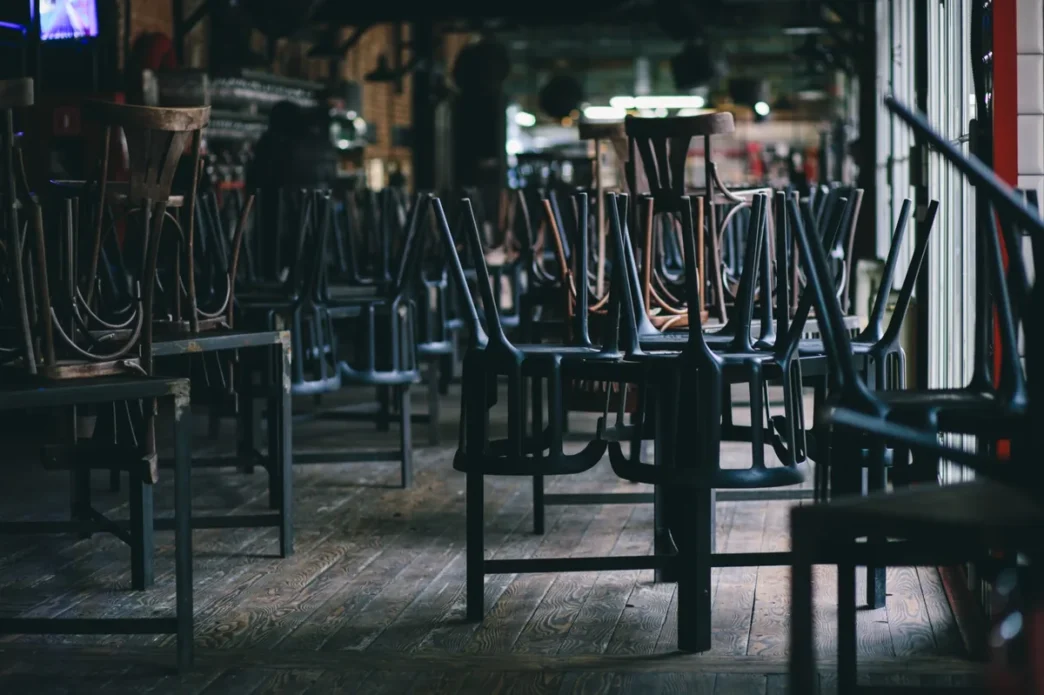
The restaurant industry in Los Cabos is navigating one of its toughest low seasons in recent memory, with sales down between 25 and 35 percent and at least 28 establishments confirmed closed, according to Óscar Morando, president of the local chapter of Canirac, Mexico’s National Chamber of the Restaurant and Seasoned Food Industry.
In an interview on the radio program Los Cabos a la Carta, Morando said the municipality is home to roughly 2,500 restaurants, though only around 140 currently belong to Canirac. The declines are hitting hardest among the majority — micro and small operators who have little margin to absorb prolonged drops in traffic.
“We have sales decreases of between 25 and 35 percent affecting all of our businesses, and most of us are micro or small enterprises,” Morando said.
Costs Keep Climbing
The sales slump comes against a backdrop of rising operating costs that shows no sign of easing. Rents for commercial space remain largely denominated in dollars, even as many operators earn in pesos. Add to that increased prices for ingredients, electricity and wages, and the squeeze becomes difficult to manage.
Morando acknowledged that the sector has also absorbed new labor and tax obligations in recent years, all of which drive up the cost of staying open. The question for many owners is not whether business will improve, but whether they can afford to wait it out.
“Every day it’s more expensive,” Morando said, noting that operators are working hard to maintain service standards despite the economic pressure.
28 Restaurants Closed, More May Follow
The most visible consequence has been closures. Canirac has identified 28 restaurants that have shut down permanently, while others have moved to temporary closures — shutting their doors for weeks or months to cut losses during the slowest stretches.
“Many of us are already implementing temporary closures,” Morando said.
For residents and tourists wondering why favorite spots have gone dark or shortened their hours, the numbers offer a straightforward explanation: demand is not covering costs, and operators are making hard choices about how long to stay in the fight.
What It Means for Diners
The wave of closures and cutbacks is reshaping the dining landscape across Los Cabos. Some neighborhoods are seeing reduced options, particularly for casual and mid-range restaurants that depend on local traffic as much as tourist dollars. High-end establishments with strong advance bookings have fared better, but even those operators are watching occupancy and adjusting menus and staffing.
The slowdown also follows broader economic trends affecting the region, including a decline in passenger traffic at Los Cabos International Airport earlier this year, which has reduced the flow of new arrivals into the restaurant market.
Morando did not offer a timeline for recovery, but noted that the industry is hoping for a stronger winter season and a return of consistent tourist and resident spending. In the meantime, operators are tightening budgets, renegotiating leases where possible and waiting to see whether the next wave of visitors will be enough to keep the doors open.
In Baja, a restaurant closing is rarely just about one bad month. It is usually the end of a long calculation — rent, power, payroll, permits, supplies — and a decision that the numbers will not improve in time. For now, the sector is holding on, but the margin for error is thin.

It’s very sad to hear. There are so many great local restaurants in Los Cabos. Do you have a list of the restaurants that closed?
What are the 28 closed?