


La Paz has quietly built a parallel water system over the past few years. It does not deliver drinking water, but it waters parks, cleans streets and irrigates playing fields without touching the city’s limited potable supply. Between January and July, the municipal Línea Púrpura program distributed 5.26 million liters of treated wastewater across dozens of public spaces, avoiding 526 truckloads of conventional water deliveries in the process.
For residents watching water policy from close range, the story is not dramatic. It is incremental, practical and mostly invisible, which is often how infrastructure works when it works. But in a state where water scarcity shapes development debates and neighborhood supply remains uneven, the expansion of reclaimed water use represents one of the few municipal strategies producing measurable results without fanfare.
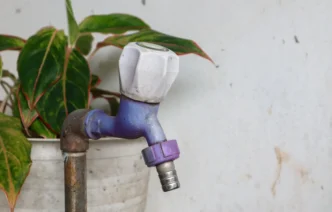
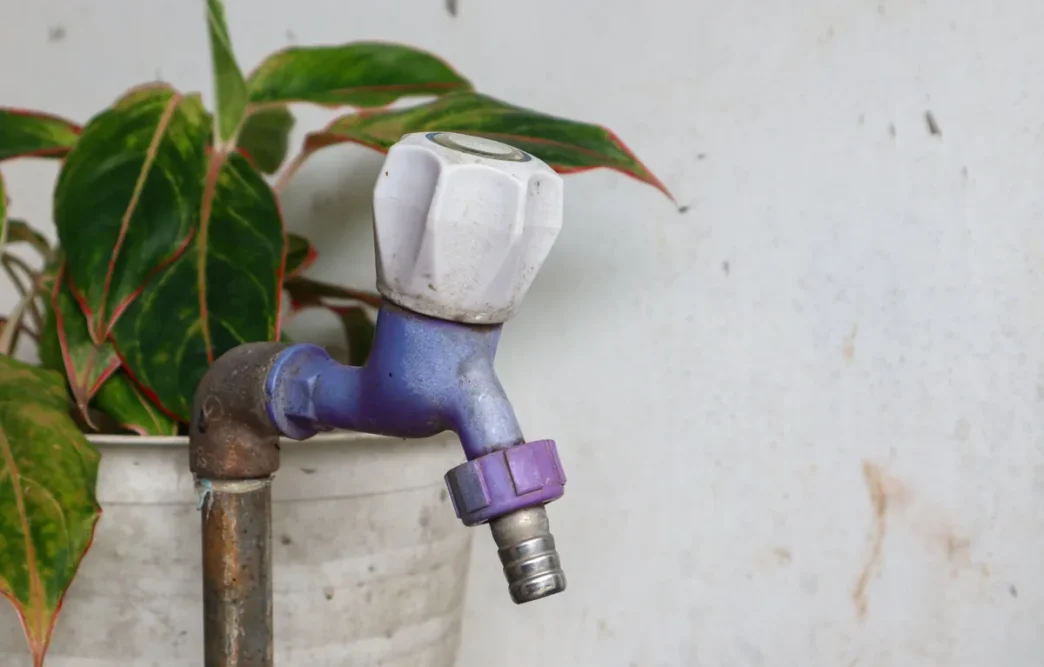
The treated water — marked by purple pipes and purple-painted valves to distinguish it from potable lines — comes from wastewater treatment plants and meets federal standards for non-potable reuse. It is not safe to drink, but it is safe enough to water a soccer field or rinse a street after a storm. Acting mayor Amor Fenech Montaño framed the program as part of a broader sustainability strategy, one that has quietly taken shape over the last several years as Baja California Sur confronts recurring supply problems and mounting pressure on underground aquifers.
Between January and July, the program allocated 2.38 million liters to unpaved access roads, including the connection between Santa Bárbara Boulevard and Pino Payas Boulevard, and the link between the Daniel Roldán bypass and Avenida de los Deportistas. Another 400,000 liters went to sports fields in neighborhoods like Tabachines, SNTE, Agustín Olachea, Santa Fe, Misiones and Olas Altas. Parks received 1.48 million liters across 27 different locations, from Centenario and Martiniano Núñez to Eco Parque and Monte Sinaí.
The remaining million liters covered a mix of operational needs: tree watering along main roads, stormwater removal after heavy rains, cleanup during Carnaval and routine maintenance at public plazas. Each use avoids pulling from the city’s potable network, which has been a recurring source of resident frustration even as overall supply improves.
The program’s impact becomes clearer when framed in truckloads. Municipally, each 10,000-liter water truck represents a logistical decision, a budget line and a moment when treated water could have been used instead. Over six months, Línea Púrpura replaced 526 such deliveries. That is not a transformation, but it is the kind of steady pressure-relief that allows other parts of the water system to function with slightly less strain.
Fenech Montaño emphasized that the initiative reflects the city’s ongoing commitment to efficient resource use and sustainable urban management. For foreign residents and expats watching municipal decisions, the subtext is familiar: promises are easy, pipelines take time and maintenance budgets disappear faster than politicians. What matters is whether the treated water actually shows up where it is supposed to, and whether the purple-line network expands beyond ceremonial gestures.
The broader context remains complicated. Annual municipal data suggests La Paz recycles over 12 billion liters of treated wastewater each year, though distribution infrastructure remains uneven and public awareness of the program is limited. Treated water does not solve the region’s aquifer depletion or fix neighborhood supply gaps, but it does reduce the volume of freshwater diverted to non-drinking uses, which is a practical baseline for any water-stressed city.
For residents, the visible impact of Línea Púrpura is relatively modest: greener parks during dry months, fewer dust clouds along unpaved connector roads and the occasional purple valve marking on neighborhood corners. The invisible impact matters more. Every liter sent through the purple network is one that does not come from a well, a desalination plant or a reservoir struggling to recharge.
As Baja California Sur continues to weigh development proposals against water availability, municipal programs like Línea Púrpura will not be the headline story. But they will be part of the answer, assuming the pipes hold, the treatment plants function and someone remembers the maintenance plan.