


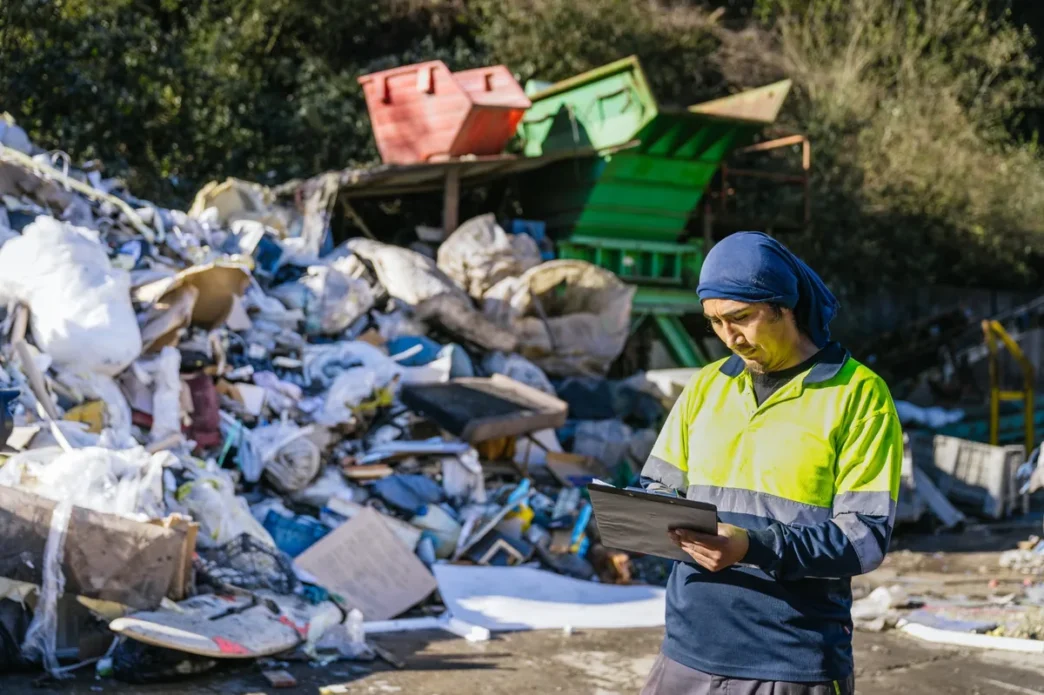
Every waste disposal site in Baja California Sur currently fails to meet federal sanitary standards, according to state environmental officials. The revelation comes as the state handles more than 700,000 tons of garbage annually through facilities that operate more like open-air dumps than properly managed landfills.
The admission follows a comprehensive waste assessment by Ponguinguiola, a local conservation organization that has been working with state authorities to map out the scale of the infrastructure gap. While Baja California Sur officially registers 14 final disposal sites, many lack basic controls, documentation, or compliance with Mexico’s environmental regulations.
Miguel Rivas Soto, project director at Ponguinguiola, told regional media that the situation is complicated by unregistered dump sites scattered throughout the state. “There are 14 registered sites, but we are certain there are others that remain outside any form of control,” he said.
Why This Matters for Residents and Visitors
For residents, tourists, and property owners in Baja Sur, the waste problem carries direct consequences beyond just unsightly garbage piles. Several uncontrolled dump sites sit near protected natural areas and coastal zones that drive the region’s tourism economy. That proximity raises concerns about contamination of groundwater, air quality, and marine environments.
Ponguinguiola’s diagnostic study found that most of the unregulated sites are located close to or within buffer zones of protected areas. Given that Baja Sur’s economic growth depends heavily on nature-based tourism, the organization is calling the waste issue a long-term threat to the state’s competitive advantage.
“Considering that the state’s economy relies on the wealth generated by having a healthy natural environment, concern about waste management is fundamental,” Rivas said.
Where the Garbage Goes Now
Official figures show that Baja Sur generates approximately 649,000 tons of solid waste each year. That number reflects only what reaches the seven controlled disposal sites—four designated sanitary landfills and three managed open-air dumps. The total does not account for waste arriving at the 14 uncontrolled sites, meaning the real volume is likely much higher.
The municipalities of La Paz and Los Cabos account for the bulk of the state’s waste generation. Ponguinguiola estimates that without intervention, Los Cabos could see waste volumes increase by 50% by 2035, while La Paz could see a 21% rise over the same period.
Most of the waste consists of organic material or items that could be recycled or repurposed. Better sorting and composting infrastructure could significantly reduce what ends up in landfills, but local governments have struggled to implement collection and separation programs at scale.
New Legislation Moving Through State Congress
State environmental authorities are backing a new waste management law currently under review in the Baja California Sur congress. The proposed legislation aims to establish enforceable standards for landfill operations, create incentives for waste reduction, and clarify municipal responsibilities for disposal infrastructure.
Officials have acknowledged that even if the law passes, closing the infrastructure gap will take years. Building compliant sanitary landfills requires significant capital investment, environmental impact assessments, land acquisition, and technical capacity that many municipalities do not currently have.
Ponguinguiola’s report also highlights coordination problems between state and municipal governments, inconsistent enforcement of existing regulations, and a lack of public education around waste separation and reduction.
What Residents Should Watch
While the state works through legislative and infrastructure upgrades, residents and businesses can expect waste collection services to remain largely unchanged in the short term. However, municipalities may begin piloting separation programs or adjusting collection schedules as pressure mounts to reduce landfill volumes.
For property owners and developers, the waste issue could become a more visible concern as environmental groups push for stricter enforcement around illegal dumping and landfill proximity to residential and tourist zones. The state’s reputation for environmental quality—often highlighted in tourism marketing—depends in part on addressing the gap between official standards and current practices.
Environmental officials say the new law represents a starting point rather than a quick fix. The real test will be whether state and municipal governments can follow through with the funding, planning, and enforcement needed to bring Baja Sur’s waste infrastructure into compliance with federal norms.