


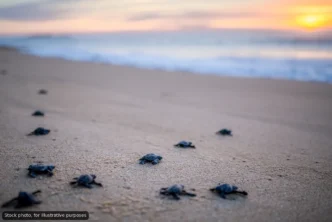
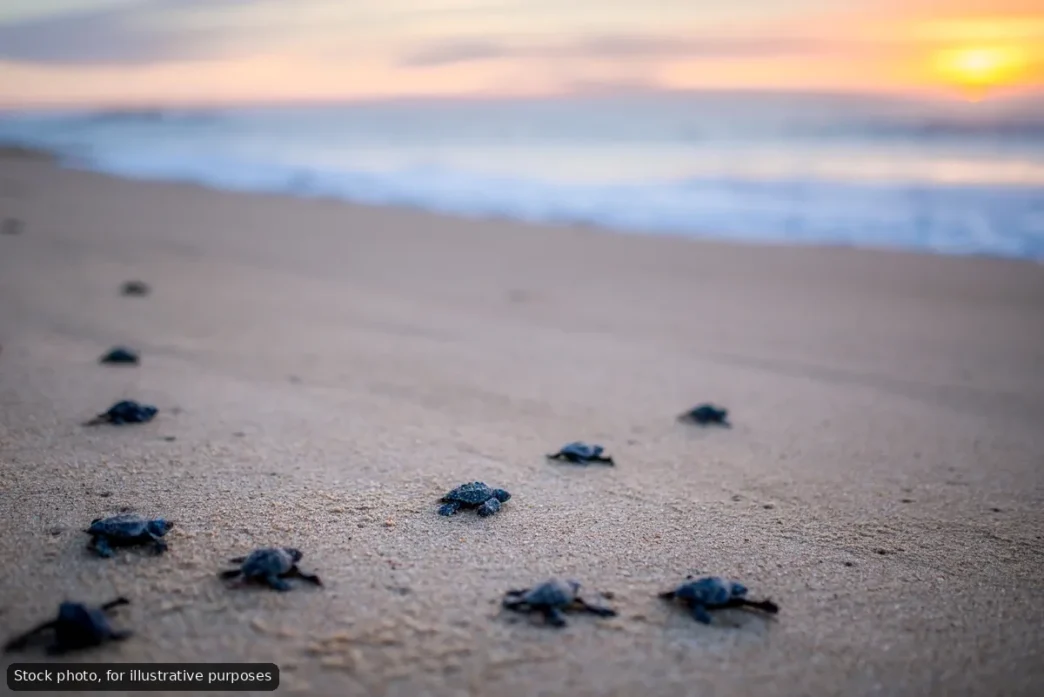
An unexpected wave of sea turtle nesting at Médano Beach in Cabo San Lucas has triggered a coordinated protection effort involving local authorities and beachfront hotels. Over three nights in early August, teams worked to safeguard more than 26,000 eggs as turtles arrived to nest during an atypical nesting period.
The operation involved reinforced surveillance along the popular beach and the careful relocation of nests to protected incubation spaces. According to local reports, the collaboration between municipal conservation teams and hotel staff helped ensure the eggs were moved safely before beachgoers arrived each morning.
Why the Nesting Is Unusual
Sea turtles in Baja California Sur typically nest during warmer months, but the timing and concentration of nests at Médano Beach this August caught conservation officials by surprise. The beach, one of the busiest tourist stretches in Los Cabos, is not a primary nesting site, making the event even more remarkable.
Authorities say the nesting may be linked to shifting ocean temperatures or changes in currents that brought turtles closer to shore. Officials are monitoring the situation to determine whether this represents a larger pattern or an isolated event.
How the Protection Effort Worked
Teams patrolled the beach each night, marking nests as they were discovered and carefully excavating the eggs for transfer to controlled incubation areas. The process is delicate — eggs must be moved within hours of being laid to avoid harming the embryos.
Hotel staff along Médano Beach played a critical role in coordinating with conservation officials and restricting access to nesting zones during the overnight hours. The three-night operation was considered a success, with no nests lost to human disturbance or predators.
What Happens to the Eggs Now
The relocated nests are now in protected incubation spaces managed by local conservation groups. The eggs will be monitored over the coming weeks, with hatchlings expected to emerge within 45 to 60 days depending on sand temperature.
Once the hatchlings are ready, they will be released back into the ocean during controlled events that minimize risks from artificial lighting and human interference. Médano Beach visitors may have the opportunity to witness a release if timing aligns with the incubation schedule.
What Beachgoers Should Know
Authorities are asking residents and tourists to remain vigilant for additional nesting activity along Los Cabos beaches. Anyone who spots a nesting turtle or a nest should avoid approaching and immediately contact local conservation officials or hotel security.
Sea turtles are a protected species in Mexico, and disturbing nests or hatchlings carries significant penalties. The success of this week’s protection effort highlights the importance of community cooperation in safeguarding the species during critical nesting periods.
Conservation teams will continue monitoring Médano Beach and other coastal areas in Los Cabos for signs of further atypical nesting as the summer season continues.
