

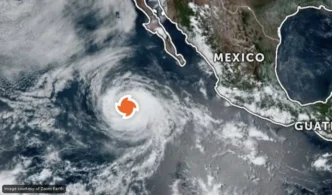
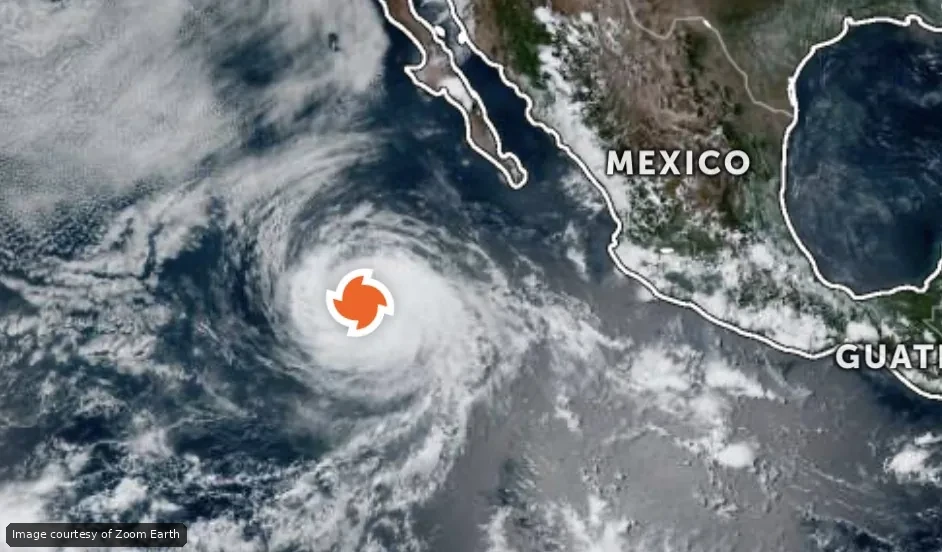
Hurricane Genevieve has intensified to Category 4 strength and is bringing dangerous conditions to Baja California Sur this week, even from more than 800 kilometers offshore. Although the storm’s center is not directly threatening the peninsula, its outer bands are driving high waves, strong swells, and isolated rain across the state.
As of Monday morning, the hurricane was located 835 kilometers south-southwest of Cabo San Lucas, moving northwest at 22 kilometers per hour with sustained winds of 250 kilometers per hour and gusts up to 305 kilometers per hour.
The storm’s most immediate impact will be felt along the coast. For English-speaking residents, tourists, and expats in Los Cabos, that means staying alert near the water and following local safety advisories issued by Civil Protection.
What Coastal Residents Should Expect This Week
The main effects will arrive as dangerous ocean conditions. Increased wave height, strong swells, and powerful rip currents are expected to make coastal waters hazardous through the week. Officials are warning beachgoers to avoid entering the water and to respect red flag warnings posted along Los Cabos beaches.
Both Los Cabos ports have been closed to smaller vessels until conditions improve. The ports of San José del Cabo and Cabo San Lucas remain restricted to navigation for small boats, pangas, and recreational watercraft as swells continue to build.
While the hurricane itself remains well offshore, its outer cloud bands are pumping moisture into Baja California Sur. That means isolated showers are likely, particularly in the mountains and higher elevations, with rainfall totals between 5 and 25 millimeters expected across the state.
Why This Matters Beyond the Beach
For expats and residents who have lived through past hurricane seasons, this pattern should be familiar. Even distant storms can generate serious coastal hazards known locally as mar de fondo—dangerous swells that arrive without warning and can sweep people off rocks, beaches, and jetties.
According to reports from Mexico’s National Water Commission, Genevieve does not pose a direct threat to the mainland, but its circulation is reinforcing rainfall across western Mexico. States like Sonora, Jalisco, Oaxaca, and Chiapas are expected to see the heaviest rain, while Baja California Sur will see lighter but still notable precipitation.
For those planning outdoor activities, the recommendation is simple: check conditions before heading to the beach, avoid entering the water entirely, and allow extra time if traveling near coastal areas where waves may affect infrastructure or visibility.
What Happens Next
Genevieve is forecast to continue moving northwest, away from the Mexican mainland. However, ocean conditions are expected to remain rough for several more days as the storm’s swells continue to radiate outward. Authorities are advising residents and visitors to monitor updates from the National Meteorological Service and local Civil Protection offices.
The closure of Los Cabos ports to smaller boats will remain in effect until wave heights subside and swells stabilize. For now, beachgoers, anglers, and anyone planning water-based activities should treat the ocean as off-limits and follow all posted warnings.
This is a developing weather event. Residents should stay informed, avoid unnecessary risks near the water, and follow guidance from local officials as conditions evolve.