


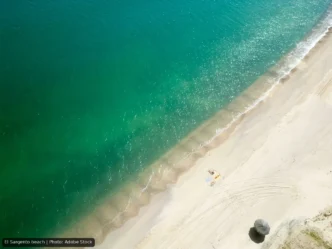
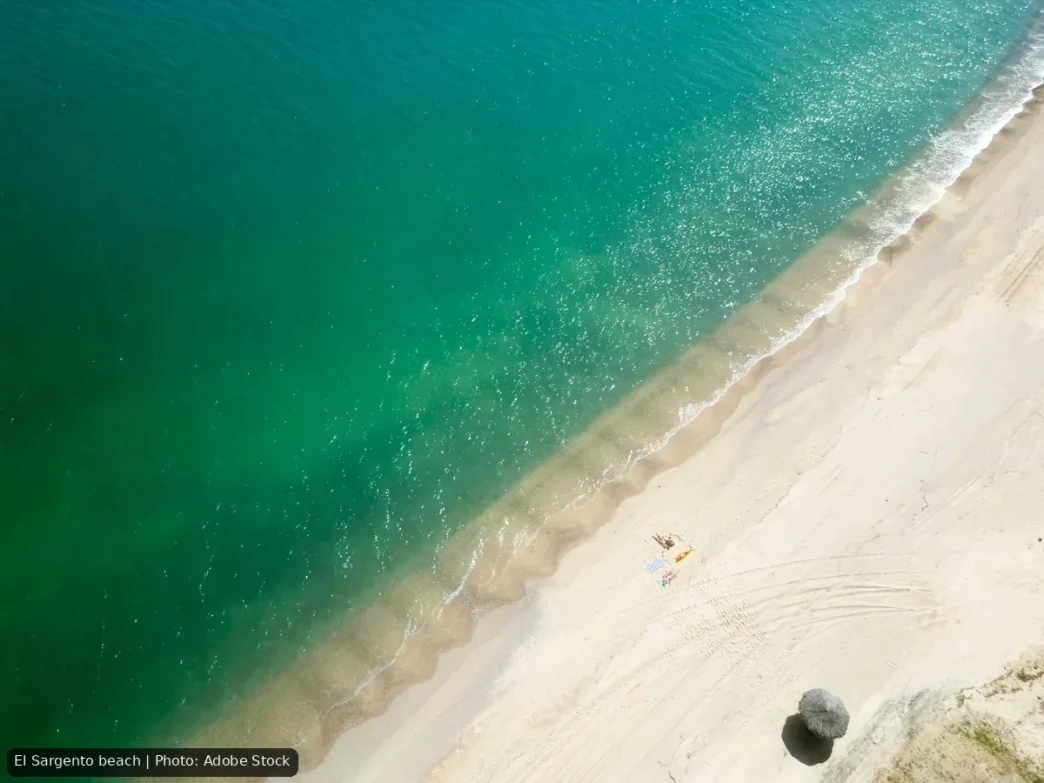
Mexico’s federal environmental watchdog has shut down construction on a coastal lot between El Sargento and La Ventana, one of the La Paz municipality’s most desirable stretches of shoreline for kiteboarders, dive operators and second-home buyers. The Procuraduría Federal de Protección al Ambiente, or Profepa, says inspectors found a build-out well beyond a casual beach camp, and none of it carried the federal environmental authorization required to put a structure that close to the water.
According to Profepa’s inspection report, the property measures roughly 1,028 square meters, about a quarter acre. On it, agents documented kitchen and dining areas, ramps, perimeter walls, carrizo-reed structures, furniture, tables and chairs, fire pits, and a pyramid-shaped storage building. It is not a small list, and it is the kind of list that tends to show up only after months of work, not a weekend project.
What none of it had was a manifestación de impacto ambiental, the environmental impact authorization that Mexico’s environment ministry, Semarnat, must issue before anyone builds on a coastal ecosystem like this one. Dunes, mangroves and the sandy berms that absorb storm surge all fall under that review, and skipping it is not a paperwork technicality Profepa tends to overlook. Finding none on file, inspectors placed two closure seals on the property and opened a formal administrative proceeding, the step that precedes fines, forced removal of structures, or both.
Why This Matters for East Cape Buyers
The El Sargento–La Ventana corridor has built its reputation on wind, not concrete — it is the stretch covered in our earlier look at La Ventana and El Sargento’s kitesurfing scene — and that popularity has steadily pulled in land buyers looking for a quieter alternative to Los Cabos. This closure is not an isolated case. Profepa has moved against unpermitted coastal projects elsewhere in Baja California Sur in recent years, including the shutdowns at Cabo Pulmo and the halted San Miguelito development further up the coast. The pattern is consistent: a buyer or developer moves ahead on a coastal lot, the environmental paperwork never gets filed, and the federal government eventually finds out.
For anyone shopping for land in this corridor, the lesson is less about this specific property and more about what to ask before signing anything. Confirm that a manifestación de impacto ambiental exists and matches the actual footprint being built, not just a permit for something smaller. Mexico’s consumer protection standard for residential land sales, NOM-247, also requires sellers and agents to disclose a property’s legal and regulatory status, including applicable land-use permits — a category that should extend to environmental authorizations if the site requires one.
Profepa says it will keep monitoring coastal sites across Baja California Sur, with particular attention to the beach communities where development pressure is highest. That means more closures like this one are a realistic possibility, not a one-time event. For a buyer eyeing a lot along the East Cape, a quiet due-diligence call to a local notario or environmental consultant before closing is a lot cheaper than finding Profepa’s seals on the gate after the fact.
Source Note: This story is based on original reporting by BCS Noticias. It has been independently rewritten and adapted by the Gringo Gazette for our English-speaking readers, with additional context where appropriate.