


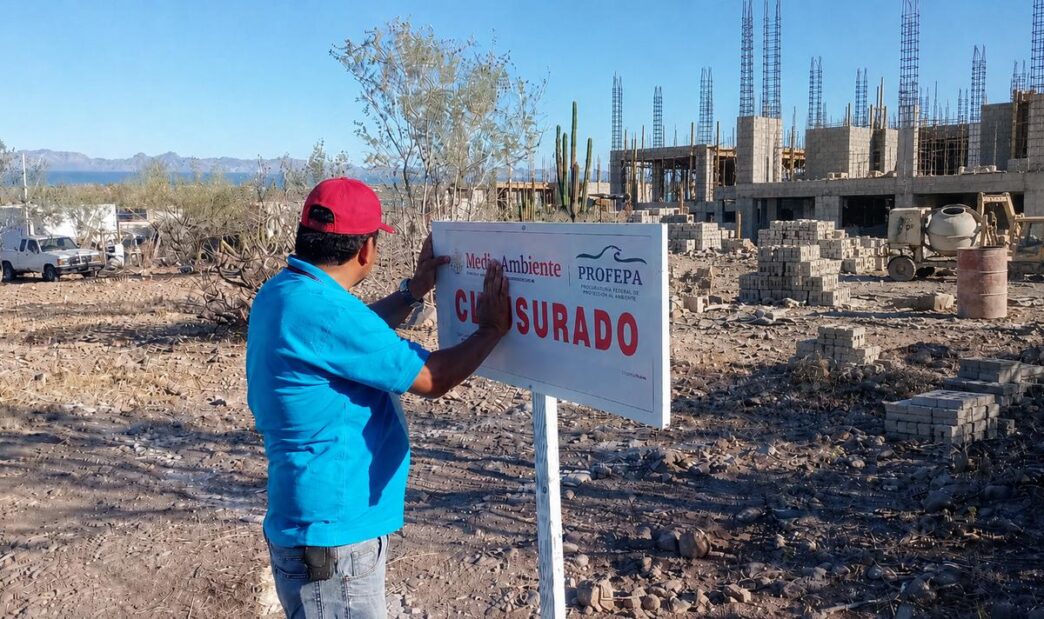
Inspections conducted by Mexico’s Federal Attorney for Environmental Protection (Profepa) in Los Cabos and Loreto resulted in temporary closures of projects linked to unauthorized construction and illegal land-use changes.
Baja California Sur participated in the National Inspection and Surveillance Operation in Coastal Ecosystems, carried out by Profepa, which identified projects operating without environmental permits, violations of corrective measures, and illegal land-use changes on forested land in Los Cabos and Loreto.
From May 11 to May 17, the federal agency deployed inspection teams across 17 coastal states, with 139 personnel from various agencies and authorities representing all three levels of government. In Baja California Sur, Profepa reported conducting four inspections related to environmental impact and forestry regulations. The investigations led to temporary and total closure orders.
Profepa authorities are also elevating an environmental complaint involving the Sierra La Laguna region to Mexico’s presidency.
Nationwide enforcement against coastal violations
Nationwide, officials carried out 94 inspections. Of those, 64 focused on environmental impact and land-use changes affecting coastal ecosystems, wetlands, mangroves, forests, lagoons, rivers, and estuaries. Another 30 inspections addressed the unauthorized occupation and use of the Federal Maritime-Terrestrial Zone and land reclaimed from the sea.
According to Profepa, the most significant violations included landfills and real estate developments built without authorization in coastal dune systems, mangroves, and wetlands. The operation also resulted in 44 closures across the country and the seizure of two backhoe loaders in Tamaulipas and Yucatán.
Mariana Boy Tamborrell, head of Profepa, said the sanctions are intended to curb environmental damage caused by illegal activities in coastal areas and strengthen the protection of mangroves, wetlands, dunes, and rivers.
Part of broader coastal conservation strategy
Profepa said the operation forms part of the National Strategy for the Cleaning and Conservation of Mexico’s Beaches and Coasts 2025–2030, a program promoted by the Ministry of Environment and Natural Resources and the Ministry of the Navy. The initiative aims to reduce pollution from plastic waste and strengthen the conservation of marine and coastal ecosystems.
Coastal ecosystems are considered strategically important because they help protect communities from storms and flooding, provide habitat for marine species, and serve as significant natural carbon sinks. Environmental authorities say protecting these areas remains a priority as development pressures continue to increase along Mexico’s coastlines.