


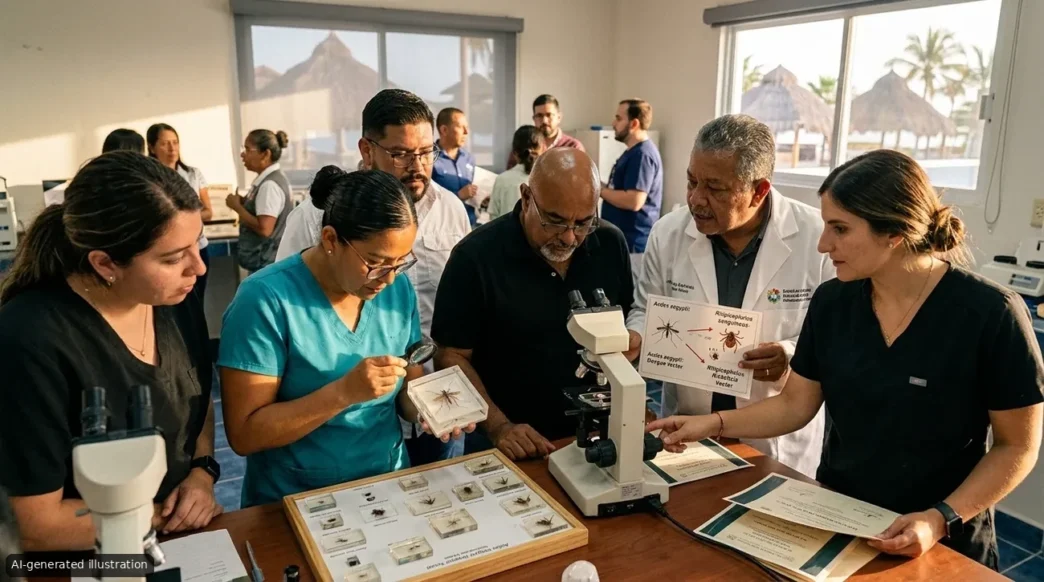
Health officials in Baja California Sur have launched a series of specialized training sessions for doctors and nurses focused on recognizing and treating dengue and rickettsia — two vector-borne diseases that can turn deadly if not caught early.
The courses, organized by the state health department with support from the federal Center for Disease Prevention and Control of Diseases (CENAPRECE), took place in Cabo San Lucas, La Paz and Ciudad Constitución over the past week.
State Health Secretary Ana Luisa Guluarte Castro said the training is designed to help frontline medical staff identify warning signs quickly, run the right diagnostic tests and provide timely care that can prevent cases from becoming severe.
Why These Diseases Matter Now
Both illnesses are transmitted by common pests — dengue by the Aedes aegypti mosquito and rickettsia by ticks found on dogs and in overgrown yards. With summer heat creating ideal breeding conditions, early detection becomes critical.
Dengue has no specific cure. Treatment focuses on managing symptoms like fever, dehydration and pain, but without proper medical monitoring, patients can develop hemorrhagic complications that are life-threatening. According to state health officials, timely intervention makes the difference between recovery and severe outcomes.
Rickettsia, on the other hand, can be cured with antibiotics — but only if treatment starts within the first few days of infection. Delayed diagnosis can lead to irreversible organ damage.
What Residents and Pet Owners Should Know
Guluarte Castro emphasized that prevention starts at home. Eliminating standing water, clearing overgrown vegetation, removing unused containers from yards and regularly treating pets for ticks can dramatically reduce exposure risk.
The training sessions included staff from public clinics, health centers and hospitals across the state. Participants reviewed updated protocols for distinguishing between the two diseases, which share some overlapping symptoms like fever and body aches but require different treatment approaches.
For expats and part-time residents, understanding these risks is especially important during months when outdoor activity increases and pest populations surge. The state has worked to improve public health infrastructure in recent years, and these training efforts are part of a broader push to ensure medical professionals across the region can respond quickly to emerging cases.
Officials are urging anyone experiencing sudden fever, severe headaches, joint pain or unusual rashes to seek medical attention immediately rather than waiting to see if symptoms resolve on their own.