


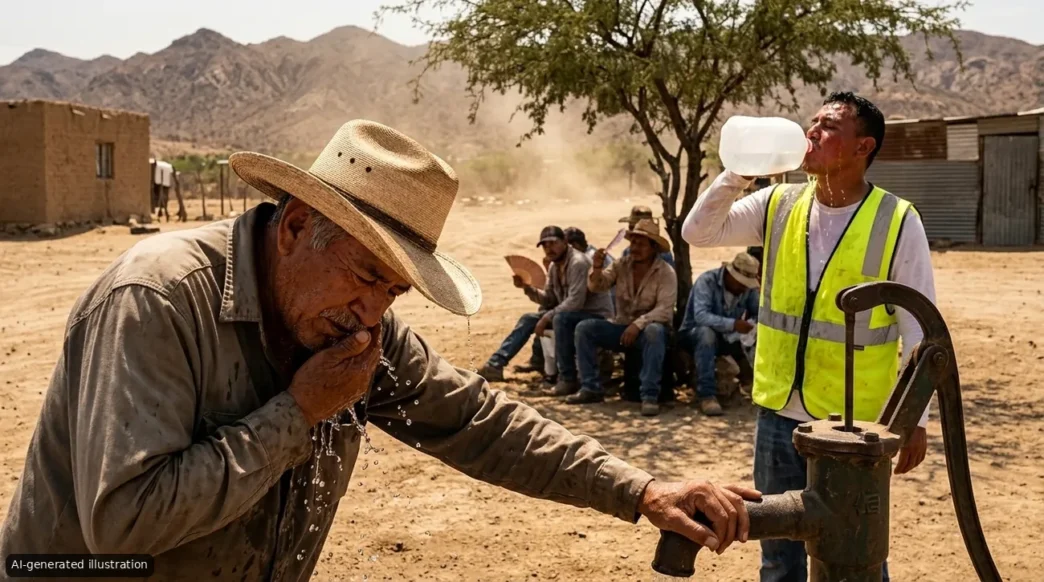
State health authorities confirmed two heat-related deaths so far this season and are investigating a third possible case following an incident in La Paz on July 23.
The pending case involves a 31-year-old worker who was transported to Hospital de Especialidades “Juan María de Salvatierra” without vital signs. Although the patient showed symptoms consistent with heat exposure, officials have not yet determined the official cause of death.
According to state health data, Baja California Sur has recorded 41 heat-related medical cases through epidemiological week 28. That total includes 37 heat stroke cases, two dehydration cases, and two burn cases.
Where the Risk is Highest
Temperatures across La Paz, Los Cabos, and the desert zones of Comondú and Mulegé have consistently exceeded 40°C, creating severe public health risks for vulnerable populations. The extreme heat follows power grid warnings issued earlier this summer as infrastructure struggles to keep pace with cooling demand.
Health officials are urging residents to avoid outdoor physical activity between 11:00 a.m. and 4:00 p.m., when solar radiation peaks. Public health doctors warn that gaps in awareness campaigns can lead to a sharp increase in hospital admissions for heat-related complications.
The most vulnerable groups include elderly adults, infants, young children, and construction or agricultural workers who spend extended hours in direct sun exposure.
National Context
Mexico has reported 1,315 cases and 52 deaths from extreme temperatures so far this year, with 94 percent linked to heat stroke. The national figures underscore the broader climate pressure affecting much of the country during the extended summer heat wave.
Baja California Sur’s two confirmed deaths this season place the state among the regions most affected by the ongoing thermal crisis.
What Residents Should Watch For
Medical specialists emphasize that critical symptoms requiring immediate attention include excessive sweating followed by hot, dry skin—a sign that the body’s cooling mechanisms are failing. Prolonged exposure to solar radiation without adequate protection can cause everything from heat exhaustion to severe neurological damage.
Authorities recommend staying hydrated throughout the day, seeking shade or air-conditioned environments during peak heat hours, and monitoring vulnerable family members and neighbors. Those experiencing dizziness, confusion, rapid heartbeat, or nausea after sun exposure should seek medical attention immediately.
The state health department continues to monitor the pending La Paz case and has pledged to release findings once the investigation is complete. For now, officials are focusing on prevention and public education as temperatures remain dangerously high across the region. Residents can find additional guidance on coping with summer heat stress through local health resources.