


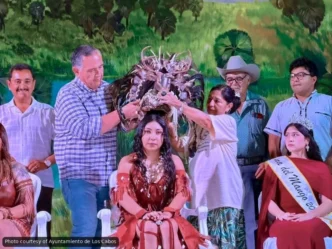
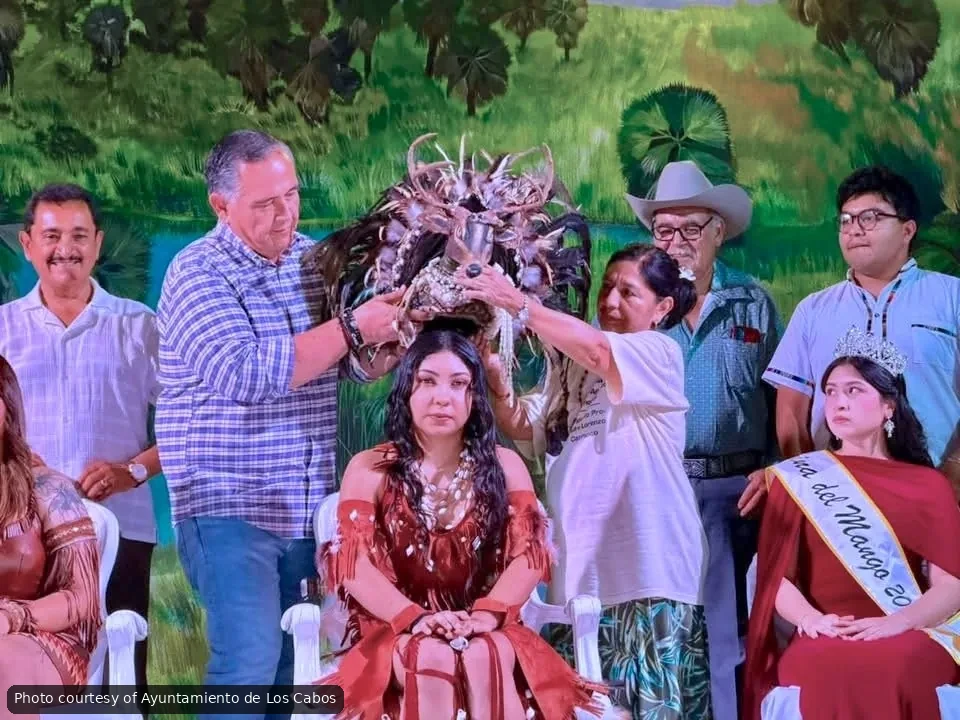
The community of Santiago marked 305 years since the founding of Misión de Santiago with a weekend celebration that blended history, art and tradition. The centerpiece of the festivities was the coronation of Daniela as Reina Pericú, honoring the indigenous heritage that shaped the town long before Spanish missionaries arrived.
The Los Cabos municipal government organized the commemoration, which drew residents and visitors to the historic town nestled in the foothills of the Sierra de la Laguna. Cultural events ran through the weekend and continued into Monday with civic ceremonies and exhibitions.
What Happened
The coronation ceremony took place Saturday evening in Santiago’s central plaza, attended by municipal officials including Carlos Castro Ceseña, the director of social development, and Aracely Cota Ruiz, Santiago’s municipal delegate. According to the Los Cabos government, the event also featured the unveiling of a new mural in Plaza General Francisco J. Múgica depicting the flora and fauna of the Sierra de la Laguna.
A tribute honored past delegates who have led Santiago over the years, recognizing their role in preserving the town’s identity as Los Cabos has grown around it.
Why the Pericú Matter
The Pericú were the indigenous people who inhabited the southern tip of the Baja California peninsula before Spanish contact. The coronation of a Reina Pericú is a symbolic gesture that keeps that memory alive, even as most direct cultural traces of the Pericú vanished centuries ago.
Santiago itself was founded in 1721 as a Jesuit mission, part of the Spanish colonial effort to establish settlements and convert indigenous populations. The town later became an agricultural center known for its mangoes, sugarcane and fruit orchards fed by springs flowing from the nearby mountains.
Monday’s Events
The celebration wrapped up Monday, August 24, with a civic ceremony in the delegation plaza and the presentation of a book titled La memoria castigada, los libros de bautismo de la Iglesia de Santiago, which explores the history recorded in Santiago’s church baptismal records.
An exhibition of sculptures and pottery from local workshops was also on display, alongside a photo exhibition documenting Santiago’s evolution. Officials said the goal was to connect younger generations with the town’s heritage and remind residents and visitors that Los Cabos history extends well beyond the resort corridor.
What It Means for Residents and Visitors
Santiago remains one of the few places in Los Cabos where visitors can experience a slower, more traditional side of Baja California Sur. The town is roughly 45 minutes north of San José del Cabo and offers a glimpse of rural life, colonial architecture and natural springs that have sustained the community for three centuries.
For expats and tourists interested in local history, events like the anniversary celebration provide context for understanding how the region developed before tourism reshaped the coast. Castro emphasized the importance of preserving these traditions as Santiago continues to grow and modernize.
The festivities are part of a broader municipal effort to recognize the cultural heritage of Los Cabos communities beyond the beachfront. Similar founding celebrations take place annually in other Baja California Sur towns, each marking milestones in the state’s colonial and indigenous history.
