


Dear Editor
A Ten-Dollar Fee Isn’t Sinking Cabo’s Cruise Season.
I read your recent piece on the new federal fees with real interest, because cruise traffic is something those of us who live here watch pretty closely. Ships in the harbor mean a busy malecón, full restaurants, and a good season for everyone from the tour operators to the guys selling silver on the dock. So when I see an article warning that Baja Sur is about to lose all that, I pay attention. I went through the piece claim by claim, and honestly, the math doesn’t hold up.
Start with New Zealand, since the article holds it up as the model Mexico should be copying. Here’s the thing. New Zealand charges international visitors NZ$100, which works out to about US$60. Mexico’s proposed non-resident tax, at 1,334 pesos, comes to roughly US$75 or 80. Those numbers are in the same ballpark. And New Zealand didn’t just introduce that fee gently. It tripled the thing in October 2024, jumping it from NZ$35 to NZ$100, and its visitor economy shrugged it off. Travelers spent a record NZ$11 billion there in the year after, and New Zealand’s own government says the levy works out to under 3% of what a visitor spends on the whole trip. Rounding error. So the example the article uses to show what Mexico should do actually proves the opposite point. A fee like this doesn’t scare anyone off when the destination is worth it, and anybody who’s watched whales off the Arch knows this destination is worth it.
Then there’s the Dominican Republic comparison, which I have to admit left me scratching my head. The article warns that ships will abandon Mexico for the DR. But Dominican ports serve Caribbean itineraries out of Miami and Port Canaveral. Cabo is a Pacific port, served by Mexican Riviera routes sailing out of Los Angeles, Long Beach, and San Diego. A ship homeported in San Diego cannot swap a Dominican port call in for a Cabo one. It’s a different ocean. The Dominican Republic’s real competition in Mexico is Cancún and Cozumel, and whatever fight is happening over there has nothing to do with Baja Sur.
What about the fee itself? Yes, it doubled. It went from about US$5 per passenger to about US$10. That’s one Starbucks coffee on a ticket that runs anywhere from $800 to $2,000. It’s also charged once per itinerary, not at every port, and the schedule was published in Mexico’s federal register on June 30, 2025, after the cruise lines’ own trade association signed off on it. The industry has known exactly what was coming for over a year. Nobody likes a fee increase, but let’s keep some perspective on what we’re actually talking about.
Now the part that bothered me most. The article says the non-resident tax revenue is earmarked for the Migration Institute “and to subsidize the Tren Maya.” I went looking for that Tren Maya line item, because it sounded odd. It isn’t there. Reporting on the actual budget proposal puts the split at roughly 50% to the Defense Ministry, 26% to the Migration Institute, and 24% to general spending, with the President citing digitalization of the migration system. If someone has a document showing Tren Maya money in this tax, I’d love to see it, because none of the budget reporting does.
The currency argument is where the article really loses me. It quotes industry warnings that a strengthening peso is pricing Mexico out of reach for American and Canadian travelers. Somebody should tell the currency markets. Over the past month, the exact window this story ran in, the peso has slid roughly 7% against the US dollar and about 4% against the Canadian dollar (Yahoo Finance daily closes, Sept 7 to Oct 7, 2026). Mexico just got around 7% cheaper for Americans and 4% cheaper for Canadians. That’s the opposite of pricing yourself out of the market. For a place like Baja Sur, where Canadian snowbirds and West Coast Americans drive the off-season, a softening peso is a tailwind, and it makes a $10 head tax even more of a footnote.
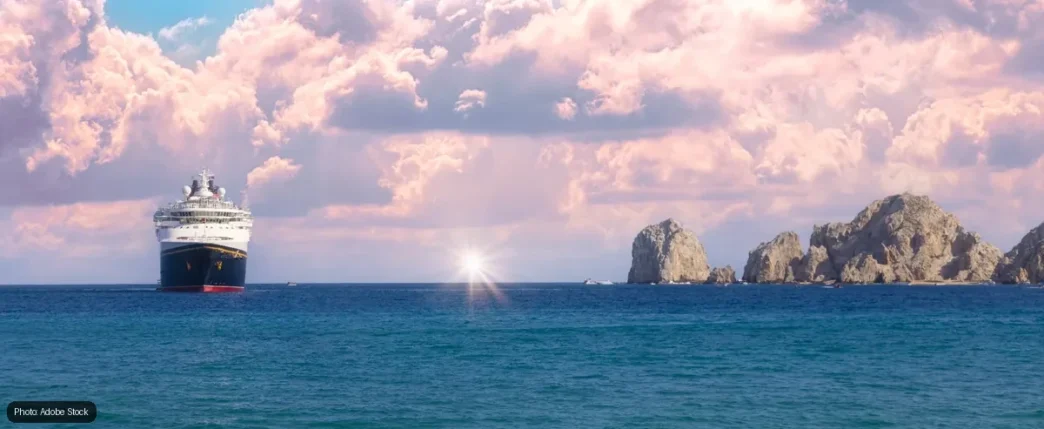
But forget all the arithmetic for a second, because the ships are the only poll that matters here. Mexico’s Tourism Secretariat counted 8.2 million cruise passengers between January and August of this year, with Pacific coast numbers up 29.8%. Cabo closed its high season up 30%, with 76 ships and more than 264,000 passengers, and October alone has 47 calls on the schedule. Some days you’ll see four ships anchored at once. Up the coast, San Diego, which is the gateway for the Baja itineraries, just opened its biggest cruise season in 15 years: 183 voyages versus 109 last year, a 68% jump, with Royal Caribbean homeporting there for the first time and Disney committed through at least 2031. And remember, the $5 version of this fee went into effect in July 2025. The schedules grew anyway.
The cruise lines are not charities, and I’m not pretending a tax hike is welcome news to anyone. But this market runs on things no Caribbean port can offer: the Arch, the whale calves in the Sea of Cortez, an itinerary people book years in advance. Ten dollars doesn’t change any of that. The ships keep coming. I can see them from my terrace.
-Jason Spooner
Sources: Mexico Tourism Secretariat (gob.mx, Oct 5, 2026); UnoTV federal budget reporting (Sept 2026); Diario Oficial de la Federación (June 30, 2025); El Sudcaliforniano (Apr 16, 2026); El Sol de México (Oct 8, 2026); The Log / Port of San Diego (Sept 24, 2026); New Zealand MBIE and Beehive statements; Yahoo Finance daily closes Sept 7 to Oct 7, 2026.
Editor’s Note
We thank Jason Spooner for sharing his perspective and contributing to an important discussion about the future of cruise tourism in Baja California Sur.
Our original article reported concerns expressed by representatives of Mexico’s cruise and hospitality industries regarding proposed federal fee increases. Those concerns, including comparisons with other destinations and potential effects on tourism competitiveness, were attributed to the industry representatives who expressed them.
Mr. Spooner offers a different interpretation of the available data, particularly regarding cruise traffic growth, currency fluctuations, and the significance of increased passenger fees.
The discussion also continues to evolve. On October 12, the Chamber of Deputies Finance Committee approved revisions to the proposed legislation, including changes to the fee amount and the allocation of revenue to a Defense Ministry trust involved in operating Tren Maya and the Felipe Ángeles International Airport. The legislation has not yet completed the approval process. La Jornada
We believe our readers benefit from hearing different perspectives on issues affecting their communities. We welcome informed debate and appreciate those who take the time to contribute.
— Gringo Gazette Editorial Team