


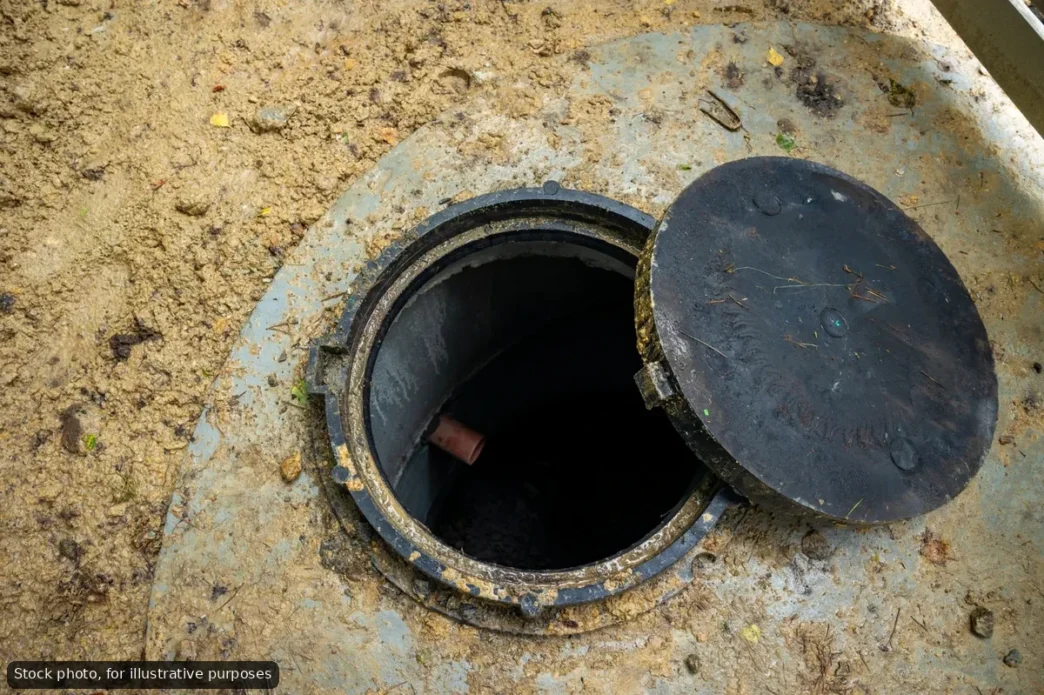
Twenty-five days is a long time to smell sewage every time you step outside your own front door. That’s how long residents of La Paz’s El Esterito neighborhood say a wastewater leak has gone unaddressed, according to a complaint posted publicly on social media this past Thursday. A resident filed the issue through the municipal reporting app, got a case number, 294756, and then watched nearly a month pass without so much as a crew showing up.
The complaint, as these things tend to go, is polite right up until it isn’t. Neighbors describe daily exposure to foul odors, worry about children in nearby homes, and a general sense that a problem this basic shouldn’t require a public callout to get attention. There’s also a not-so-subtle warning in there about residents considering protests if nothing changes soon, which in La Paz has become something of a recurring civic ritual.
Here’s the part that makes this story less about one slow work order and more about the plumbing underneath the whole neighborhood: this isn’t actually a new problem, and everyone involved seems to already know it.
Just three days before that public complaint went up, Abimael Ibarra Abúndez, director of OOMSAPAS (the municipal water and sewer utility), told reporters at the city’s weekly briefing that El Esterito’s pumping station, or cárcamo, has had its capacity exceeded for some time and continues to generate wastewater spills as a result, according to local reporting on the utility’s briefing. In other words, the leak residents are reporting now is very likely a symptom of infrastructure the city has already flagged as failing.
The actual fix isn’t cheap or quick. Ibarra explained that a comprehensive rehabilitation project, covering not just the pumping station but the drainage network stretching out to a second facility known as Cárcamo Tres, carries a price tag of roughly 320 million pesos, or somewhere in the neighborhood of $17 million USD. City officials met with residents back in April to walk them through the project, but as Ibarra put it, they never gave anyone a start date, and according to municipal statements reported this week, that’s still the case.
The holdup, per OOMSAPAS, isn’t a lack of a plan. It’s a lack of money. Mayor Milena Quiroga Romero, currently on a leave of absence, has reportedly been in Mexico City lobbying for state and federal funding to get the project moving, but as of this week no budget allocation has been confirmed, which means no construction start date exists either.
For residents, that leaves an uncomfortable gap between what’s promised and what’s happening on their street right now. A 320-million-peso overhaul is the long-term answer, but it does nothing for the family dealing with sewage smells this week, or the one after that. This is the same tension that showed up in La Paz’s ongoing water delivery complaints, where residents kept paying their bills while service lagged behind. It’s also part of a broader pattern across the city’s water and sanitation infrastructure, one OOMSAPAS has been working to address in other neighborhoods through separate hydraulic upgrade projects.
What residents and visitors passing through the area should actually watch for: whether the individual leak tied to report 294756 gets a response in the coming days, separate from the larger cárcamo project, and whether Quiroga’s Mexico City trip produces any funding news. OOMSAPAS has not announced a timeline for either. Until it does, El Esterito’s problem is likely to remain exactly what it’s been for nearly a month: reported, acknowledged, and unresolved.
