


La Paz will not be getting an underground storm drainage system anytime soon. The city’s water agency says the infrastructure would cost too much and provide too little benefit given Baja California Sur’s rainfall patterns.
Tatiana Davis Monzón, director of the State Water Commission (CEA), told local media this week that underground systems work best in cities with steady, moderate rainfall — not the short, intense downpours that hit the region a few days each year.
“It’s really not cost-effective,” Davis Monzón said. “We get very high-intensity rainfall, sometimes 30 or 40 millimeters in a very short time. To handle that, we would need pipes with very large diameters to carry the enormous volumes of water. That would be extremely expensive, and it would only be useful a few days a year, because it doesn’t rain much here.”
Two Types of Storm Systems
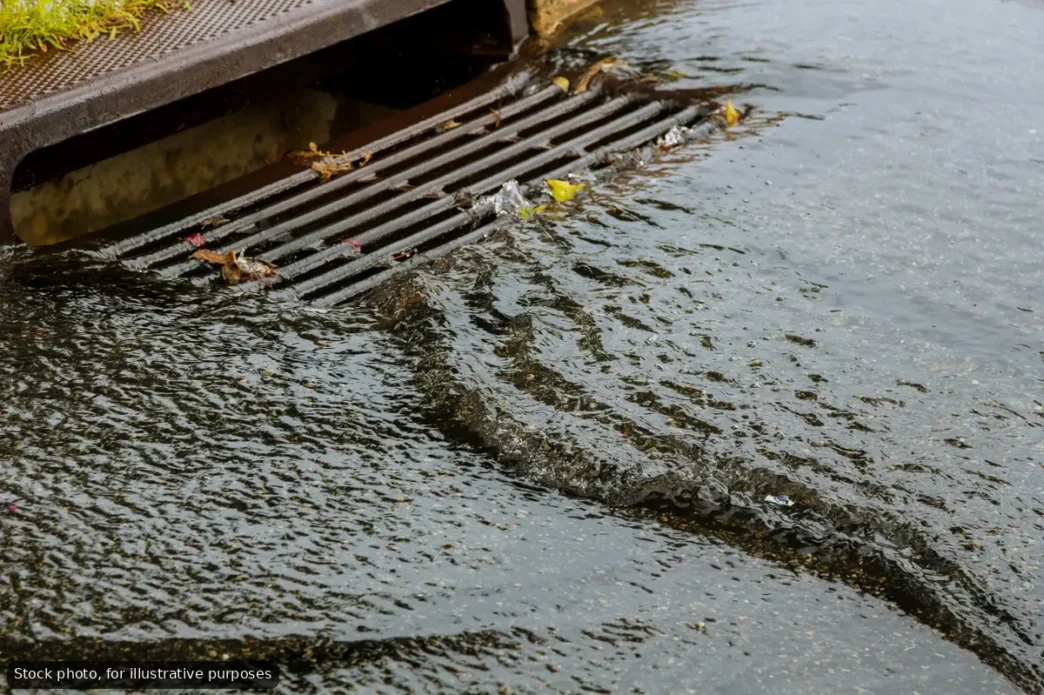
Davis Monzón explained that there are two approaches to stormwater management. Surface drainage — the kind used throughout Baja California Sur — relies on street design and open channels to direct water toward the ocean. Underground drainage uses buried pipes to carry runoff away from city centers.
Surface systems cost less to build and maintain. But they depend on smart street planning, which hasn’t always been a priority in La Paz’s rapid growth, according to the CEA director.
“Many times in subdivisions or urban areas, streets are designed with other priorities in mind — architectural concerns or traffic flow,” she said. “When it hasn’t rained in a while, it’s easy to make the mistake of not considering how storm drainage should work.”
Some Neighborhoods Get It Right
Davis Monzón pointed to a few examples of good planning. Villas del Encanto took street direction and drainage flow into account during development. Camino Real included a large drainage channel, known locally as the canalecón.
Those neighborhoods handle rainfall better because planners thought about where water would go before the first house was built.
Not Just a La Paz Problem
The drainage conversation isn’t limited to the state capital. Residents in Los Cabos — where San José del Cabo and Cabo San Lucas have also grown rapidly — face flooding every rainy season. One longtime resident told local reporters that even medical facilities are affected year after year, with no meaningful response from municipal or federal authorities.
The problem is decades old. Fonatur, the federal tourism development agency that built much of modern Los Cabos, left surface drainage largely unaddressed in its original plans, according to residents who have lived in the area since the 1970s.
What It Means for Residents
For now, La Paz and other Baja Sur cities will continue relying on street-level drainage. That means flooding risk remains highest in areas where developers cut corners on planning or where older streets were never designed with stormwater in mind.
Residents should expect standing water and limited mobility during heavy rains. The silver lining: those events are rare. The catch: when they do happen, there’s no underground backup system to keep streets clear.
Officials say the focus moving forward should be on improving surface drainage through better street design in new developments and retrofitting problem areas where possible — a more practical approach than installing expensive pipes that would spend most of the year empty.
Source Note: This story is based on original reporting by El Sudcaliforniano, meganoticias.mx. It has been independently rewritten and adapted by the Gringo Gazette for our English-speaking readers, with additional context where appropriate.
