


Oyster production in Baja California Sur is growing under the blue economy model, which promotes economic development while protecting the environment.
During the Sustainability Symposium held as part of the Oyster Festival, speakers highlighted aquaculture’s potential to strengthen the regional economy without harming natural resources. The festival was organized by the Mexican Association of Oyster Farmers (AMEXO) and Veleros Beach Club.
The blue economy has emerged as an alternative for the responsible use of marine resources, combining productive activities in coastal areas and bodies of water with principles of sustainability.
Ivonne Pintor, a marine sciences specialist at the Autonomous University of Baja California Sur (UABCS), explained the role of small-scale aquaculture within that model.
She said the approach looks not only to generate income, but also to protect the environment and promote social equity.
To qualify as part of the blue economy, productive activities must apply sustainable practices, support environmental conservation, encourage social equity and cooperation, and promote economic growth through good governance, innovation and technology.
Within that framework, small-scale oyster farming stands out as an activity that meets those standards, offering versatile production with limited environmental impact.
Pintor said sustainable aquaculture differs from practices such as bottom trawling, which often prioritize production over conservation. She added that aquaculture can balance economic growth with environmental protection.
Although industrial models can supply products on a larger scale, she said there is an opportunity to transition to more responsible systems through technology and innovation.
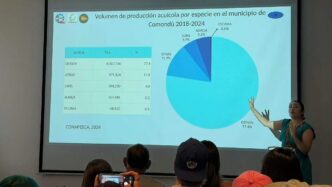
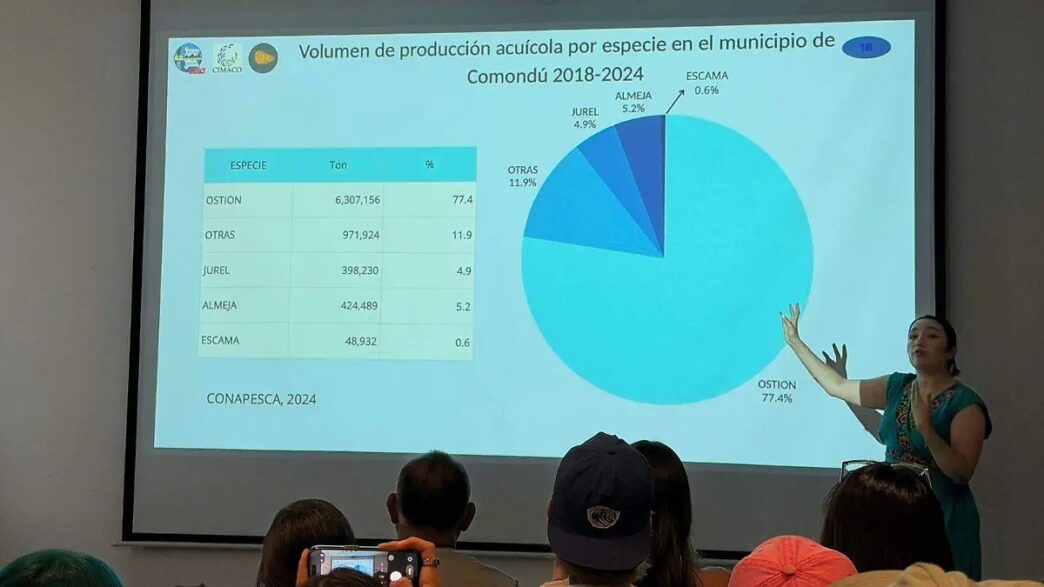
According to records from the National Aquaculture and Fisheries Commission (CONAPESCA), more than six million oysters were produced in the municipality of Comondú between 2018 and 2024.
The oyster accounted for 6,307,000 units, representing 77% of total production. Other commonly farmed species include yellowtail, horse mackerel and clams.
In Baja California Sur, the municipality of Mulegé has become a leader in small-scale aquaculture, not only in oyster production but also in other areas of the sector.
Pintor said the main challenge is to strengthen these practices and consolidate the transition to a blue economy, where economic development advances alongside environmental conservation and social well-being.