


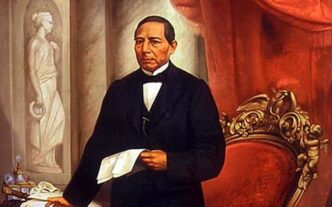

Every March, Mexico pauses to remember one of the most important figures in the country’s history: Benito Juárez. His birthday (March 21) is a national holiday because he is considered the pillar of the modern Republic, a secularist and defender of national sovereignty, and was enshrined as the “Benemérito de las Américas” (“Bene meritus,” Latin for “well-deserved”). It is often used to describe something or someone highly meritorious, deserving of praise, or awarded as a prize for exceptional merit, due to his fight against the French invasion. His role in consolidating the nation after the Reform is commemorated, making him a key symbol of Mexican identity and collective memory.
Mexico’s labor law also helps turn Juárez’s birthday into a long weekend for many workers and students. Although Benito Juárez was born on March 21, the official day off is observed on the third Monday of March, as established by Article 74 of the Federal Labor Law. The rule moves several national holidays to Mondays to create long weekends and encourage domestic travel and family activities. In 2026, that means the day off from school and work will be Monday, March 16, even though the historical date of Juárez’s birth remains March 21.
Why Juárez and not others?
Although there are many relevant figures, Juárez represents the transition from monarchical/dictatorial Mexico to republicanism, establishing fundamental laws of equality.
His indigenous origins and his rise to the presidency, as well as his fight against French intervention, gave him a mystical status and that of an “undefeated apostle” within the construction of the 20th-century historical narrative.
Benito Juárez García was born on March 21, 1806, in San Pablo Guelatao, Oaxaca. His childhood was impoverished, and for several years he studied on his own, but his life took a significant turn when he arrived in the city of Oaxaca, where he entered the Seminary of Santa Cruz. There, he completed his studies in Latin, philosophy, and theology.
This important indigenous Mexican politician and lawyer was a key figure in a major shift in Mexican history, thanks to the Constitution of 1857 and the Reform War. Among the positions he held were in 1831, he was a councilman in the Oaxaca City Council; in 1833, he was a local deputy; in 1841, he became a civil judge; and when General Paredes Arrillaga was overthrown from the presidency, Juárez was elected federal deputy. Upon returning to Oaxaca, Juárez briefly served as governor following the resignation of José Simeón Arteaga. At the end of his term in August 1848, he ran for reelection and was reelected. He worked to stabilize the economy and oversaw several public works projects: roads, reconstruction of the Government Palace, the founding of teacher training colleges, the creation of a geographical map, and the development of a city plan for Oaxaca. He reorganized the National Guard and left a budget surplus. His term ended in 1852.
In 1855, Benito Juárez was appointed Minister of Justice and Public Instruction. From this position, he promulgated the “Juárez Law,” an instrument that abolished ecclesiastical and military privileges and their special courts. The law consists of 77 articles and four transitional provisions. It abolishes special courts, except for ecclesiastical and military courts. Ecclesiastical courts will cease to hear civil cases and will continue to hear cases concerning common crimes committed by individuals under their jurisdiction until a law is enacted to address this matter. Military courts will also cease to hear civil cases and will hear only cases concerning purely military or mixed crimes committed by individuals subject to military jurisdiction. The provisions of this article apply throughout the entire Republic, and the states may not alter or modify them. This law sparked numerous clashes between liberals and conservatives, and during Comonfort’s presidency, many citizens were imprisoned, including Benito Juárez.
In 1872, while planning his reelection, he died of a heart attack in his rooms at the National Palace, where he resided. It was July 18th, and he was 66 years old. Much has been said about his death, and little has been verified, but there are records of how much he was respected and honored during his life and after his passing. His body was taken to the palace’s grand hall, and the people were allowed to pay their respects. His successor, Sebastián Lerdo de Tejada, immediately decreed national mourning. Cannon shots were fired every fifteen minutes. The last one was on the 23rd at two in the afternoon, when the burial of Juarez concluded in the San Fernando Pantheon.
Here are some of his most important actions:
- Reform Laws (1859-1860): He nationalized the property of the clergy, separated Church and State, and secularized institutions.
- Defense of the 1857 Constitution: He upheld the liberal constitution against the Plan of Tacubaya during the Reform War.
- Creation of the Civil Registry (1859): He established state control over births, marriages, and deaths.
- Freedom of worship: He proclaimed freedom of belief, allowing the practice of religions other than Catholicism.
- Victory against the French Intervention: He led the resistance that defeated the Second Mexican Empire and executed Maximilian of Habsburg.
- Juárez Law (1855): He abolished military and ecclesiastical privileges, seeking equality before the law.
- Secularization of cemeteries: They were transferred from the Church to civil administration.
- Promotion of public education: He founded the National Preparatory School and promoted teacher training colleges.
- Establishment of the Federal Republic: He consolidated the secular and federal state in the face of conservative centralism.
- Infrastructure and modernization: He promoted the construction of roads, the telegraph, and the creation of the port of Huatulco.
Morena, the current party in power, claims a strong link to the philosophy of Benito Juárez, adopting his 19th-century liberal ideals as the foundation of its national project, known as the “Fourth Transformation.” The party seeks to emulate his defense of sovereignty, the separation of church and state, social justice, and republican austerity, using his figure as a moral pillar.
Key points of this connection include:
- Austerity and the Republic: Morena adopts the motto of republican austerity, seeking to “abolish privileges” of the political class, a central value in Juárez’s discourse.
- Defense of Sovereignty: Morena’s discourse resonates with the protection of national interests against foreign interference, just as Juárez did during the French intervention.
- Social Justice and Reforms: The spirit of the Reform Laws is revived to promote structural changes that, according to the party, seek equality and social progress, focusing on the most disadvantaged sectors.
- “Juarism” as a Symbol: Juárez is elevated to a symbol of popular unity, representing order and the defense of the Republic.
Although it is a symbol used by various political forces, the current government has made intensive use of this figure to legitimize its actions.