


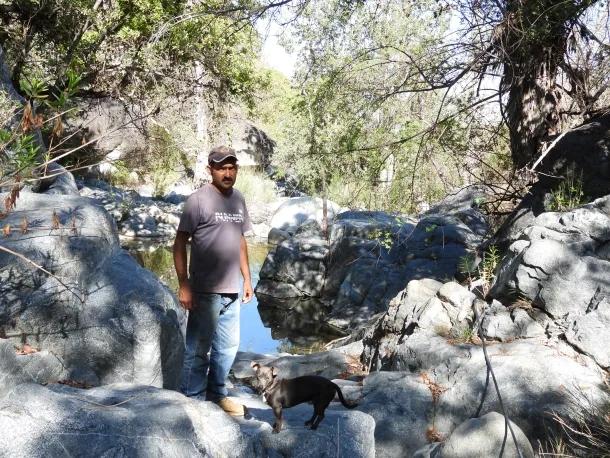
Before becoming a major tourist attraction, the Sierra de la Laguna was already one of the most important natural areas in Baja California Sur.
Located between Los Cabos and La Paz, the Sierra de la Laguna Biosphere Reserve covers 112,436 hectares and serves as the primary water catchment and recharge area for the southern part of the Baja California Peninsula. It is estimated to supply water to approximately 90% of the population of La Paz and Los Cabos.
The reserve’s economy is based largely on small-scale agriculture aimed at minimizing environmental impact, as well as intensive and extensive livestock production. Beekeeping, the manufacture of local products and low-impact ecotourism also contribute significantly to the region’s economy.
Tourism Strains Protected Area Resources
However, growing tourism is creating new challenges.
According to Benito Bermúdez, regional director of the National Commission of Natural Protected Areas (CONANP) in Baja California Sur, more than 60,000 visitors, both Mexican and foreign, were officially registered in the reserve during 2025. He acknowledged that the reserve’s management plan is outdated and that visitor numbers have exceeded the ecological limits recommended for a protected area, raising concerns about environmental impacts.
The information was shared during a meeting between Bermúdez and members of the Cabo San Lucas Early Risers Group, led by President Jesús Flores Romero.
The increasing number of visitors to Sierra de la Laguna is placing pressure on both natural resources and local infrastructure within the protected area. Environmental authorities warn that some tourist sites are already running at maximum capacity, making it necessary to establish control measures to prevent long-term damage.
Bermúdez said that while more than 60,000 visitors were recorded through the reserve’s access-bracelet system, the actual number could exceed 100,000. At one point, as many as 400 people were observed simultaneously at the Agua Caliente natural pool.
Officials Propose Community-Led Solutions
“The issue of tourism has already had an impact on us,” Bermúdez said. “We must establish limits and determine carrying capacities. The springs and water sources are already at their maximum capacity because local communities depend on that water for their gardens, livestock and households.”
To address the issue, Bermúdez proposed expanding training programs and support for residents so they can play a greater role in providing tourism services.
“Tourism must benefit the communities,” he said. “We have to train them, provide resources and offer more support so they can truly be the beneficiaries.”