


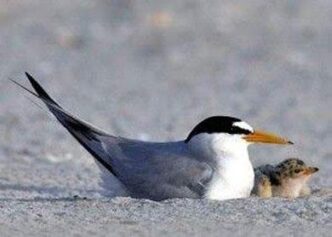
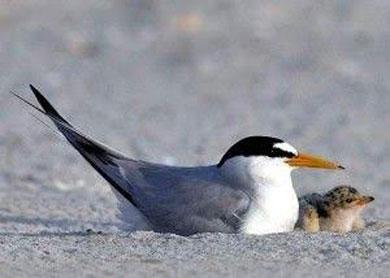
The nesting season for the least tern has officially begun in Baja California Sur, bringing renewed conservation efforts to protect one of the region’s most vulnerable coastal bird species.
According to Graciela Tiburcio, the first protection measures were launched in La Paz at the end of March. In Los Cabos, least terns (Sternula antillarum) nest along both the Pacific coastline and the Gulf of California. To date, researchers have identified seven nesting colonies in the municipality.
Recent studies have documented a continuing decline in six of those colonies and the loss of another due to hotel development. Conservationists warn that the species could face endangered status if current trends continue.
One of the most significant and closely monitored colonies is located on the sandbar of the San José del Cabo Estuary. Its location within a densely populated area exposes the birds to increasing human pressures.
Threats During Nesting Season
The nesting season, which runs from April through August, presents many challenges for the species. Vehicle traffic on beaches, free-roaming cats and dogs, horseback riding, and pedestrian activity pose significant risks because the birds’ eggs and chicks are well-camouflaged and easily overlooked. Natural threats, including coyotes, gulls, crows, birds of prey, storms, and high tides, further reduce nesting success.
The least tern is a small seabird measuring about 23 centimeters (9 inches) in length and weighing between 43 and 58 grams. It is considered an “umbrella species,” meaning that protecting its habitat also benefits a wide range of other wildlife and ecosystems.
Conservation Benefits Beyond the Tern
Conservation efforts aimed at safeguarding the least tern also help protect the San José Estuary Reserve, sea turtle nesting areas, and resting grounds used by more than 20 species of shorebirds and waterfowl. Scientists view the presence of least terns as an indicator of healthy or relatively undisturbed coastal ecosystems where conservation measures can still be effective.
Research on the species has been conducted across the Baja California Peninsula since 2000. The work is part of a long-term project led by Edgar Santiago Amador Silva, a researcher at the Northwest Biological Research Center (CIBNOR), focused on monitoring population structure, survival rates, and movement patterns among tern colonies throughout the region.
Authorities are urging the public to help protect nesting sites by avoiding vehicle use on beaches, keeping pets leashed, cleaning up after them, and respecting designated conservation areas.

Hi! We are camping in Punta arena right beside a sizable nesting colony. Any chance someone can come up and put up some fencing? We’ve seen chicks all day!