


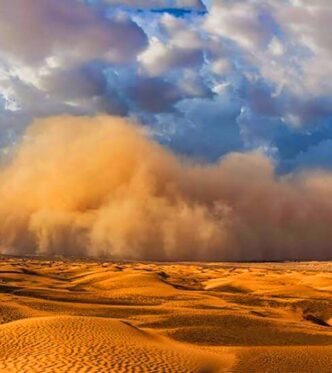
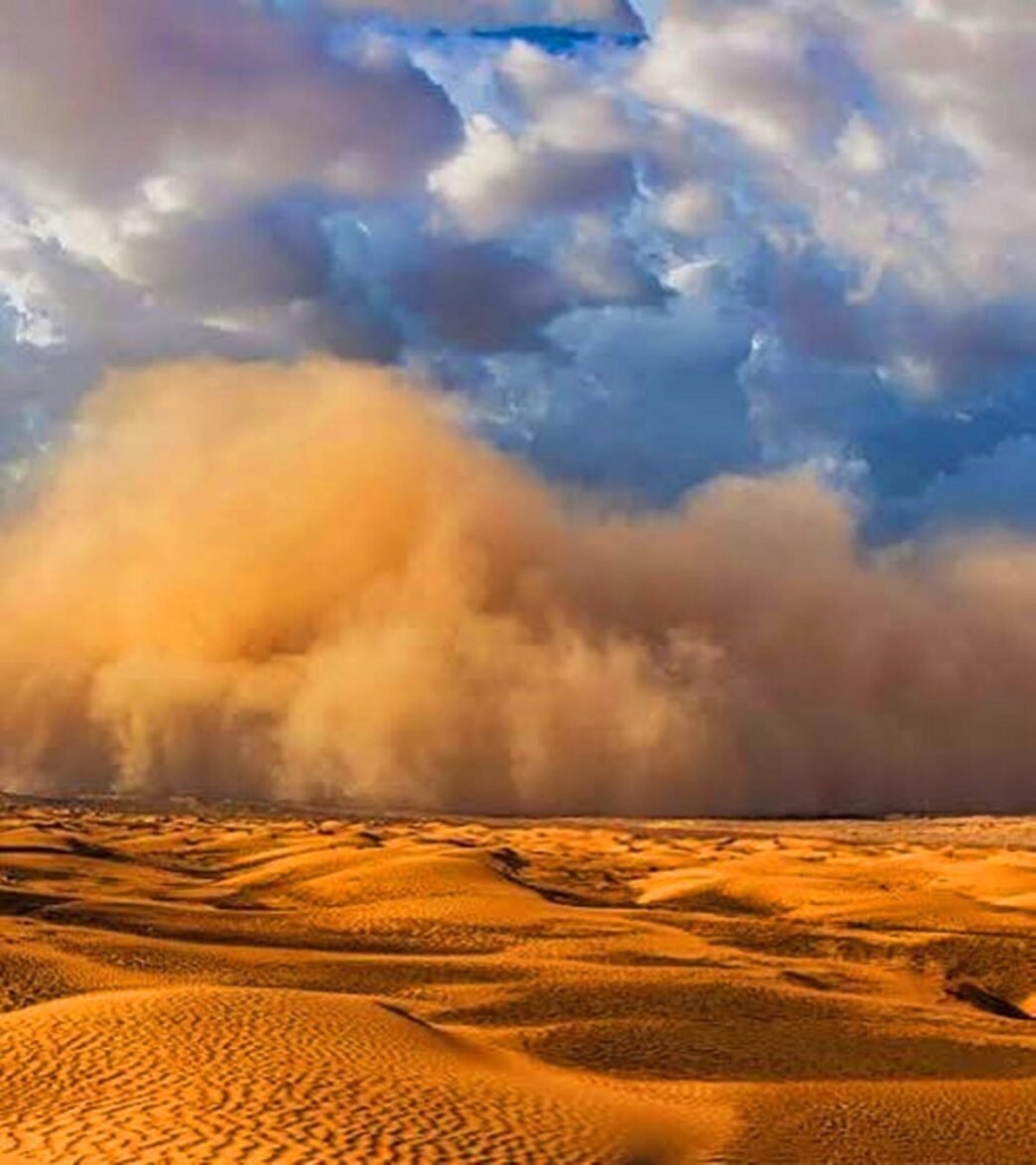
Every summer, millions of tons of dust from the Sahara Desert are carried by strong winds across the Atlantic Ocean, reaching the Caribbean, Central America, the Gulf of Mexico, and eventually mainland Mexico. As the dry air mass arrives, it alters atmospheric conditions by increasing temperatures, lowering humidity, and reducing cloud formation.
The Sahara dust plume is expected to reach Mexico again in July this year. Although forecasts indicate relatively low dust concentrations, the phenomenon is expected to influence weather patterns across much of the country.
The dry air mass from North Africa will interact with tropical waves and a high-pressure system, creating contrasting weather conditions. While some regions will experience heavy rainfall, others are expected to see hotter, drier weather accompanied by hazy skies.
Although the dust concentrations are not expected to pose a significant health risk, the event will reduce atmospheric humidity, suppress cloud development, and alter the normal pattern of summer rainfall.
Dust Expected to Reach Yucatán First
According to current satellite imagery, the highest concentrations of Sahara dust are expected to arrive over the Yucatán Peninsula before spreading across southeastern and southwestern Mexico. According to forecasts from Meteored, the primary effects will include a gradual decline in rainfall across several regions and higher temperatures as warm, dry air accompanies the dust plume.
The result will likely be hotter days, less rainfall, and higher heat index values across northern, northeastern, Gulf Coast, and southeastern Mexico. Meteorologists caution, however, that when storms do develop, they may become more intense, producing thunderstorms, strong wind gusts, frequent lightning, and possible hail.
Drier conditions, along with hazy skies and a temporary reduction in rainfall, are expected across the Yucatán Peninsula, the Gulf Coast, and areas stretching from Chiapas to Michoacán.
The greatest potential for heavy rainfall is forecast in:
Puebla, Tlaxcala, State of Mexico, Mexico City, Hidalgo, Querétaro, Guanajuato, Guerrero, Michoacán, Jalisco and Nayarit
Rainfall totals of 20 to 40 millimeters are expected in these states, with localized accumulations approaching 80 millimeters. Thunderstorms and isolated hail are also possible.
Extreme Heat Alert for Northern Mexico
Meanwhile, extreme heat is forecast across much of northern and southeastern Mexico, including Los Cabos. Maximum temperatures between 35°C and 46°C (95°F to 115°F) are expected in: Baja California, Sonora, Sinaloa, Chihuahua, Durango, Coahuila, Nuevo León, Tamaulipas, Tabasco, Campeche, Yucatán and Quintana Roo.
Health officials recommend that residents limit prolonged sun exposure, stay well hydrated, and check children, older adults, and people with chronic health conditions, who are most vulnerable to heat-related illnesses.
While Sahara dust concentrations are expected to remain relatively low, suspended particles may still cause minor health effects, including eye and throat irritation, nasal congestion, and coughing, particularly among people with respiratory conditions.