


A proposal to build one of the largest recent social housing developments in La Paz has been submitted to Mexico’s Ministry of Environment and Natural Resources (SEMARNAT) for approval.
The project, titled Housing for Well-being Program, INFONAVIT, Bahía Real, would cover 38.86 hectares in the Olas Altas neighborhood, about 11.22 kilometers southwest of the city center.
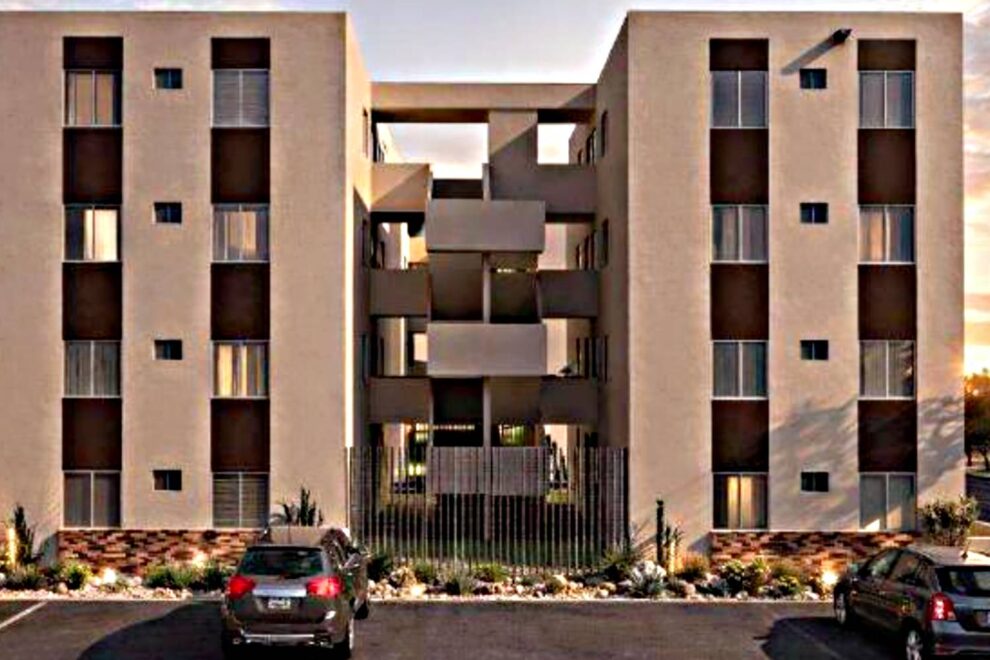
Plans call for the construction of 4,304 housing units in 269 four-story buildings, each having 16 apartments. The units would follow a standardized model known as “Cedro,” with each apartment measuring 60 square meters.
According to the environmental filing, 66.11% of the site would be designated for residential use. The rest would be divided among roads (19.84%), green areas (7.49%), commercial space (4.01%), and urban amenities (2.55%). The project aims to expand access to housing for low-income residents through higher-density vertical development.
The Environmental Impact Statement acknowledges that the project would create negative environmental effects during land preparation and construction. During the first phase, the study identified 33 negative impacts and 17 positive impacts. During construction, that balance rises to 40 negative impacts and 15 positive impacts.
The main concerns include soil disruption, loss of vegetation, dust and noise pollution, and temporary displacement of wildlife.
The site has desert scrub vegetation adapted to arid conditions and habitat for protected wildlife. The report specifically identifies the zebra-tailed lizard (Callisaurus draconoides), listed as Threatened under Mexico’s NOM-059-SEMARNAT-2010 standard. To reduce ecological damage, the developer proposes moving plants and animals before clearing the land.
For utilities, the study states that water service during operation would be provided by OOMSAPAS La Paz, the municipal water and sanitation agency, and says the development would not place added pressure on the La Paz 0324 Aquifer. Wastewater would be needed to meet limits established under NOM-001-SEMARNAT-2021, with no direct discharge into national waterways.
The proposed timeline includes six years for preparation and construction, followed by 44 years of operation and maintenance, for a projected total lifespan of 50 years.
While the study concludes the project is environmentally viable, approval would depend on strict compliance with mitigation and prevention measures. It warns that impacts considered localized and temporary could worsen in an area already facing pressure from rapid urban growth.