


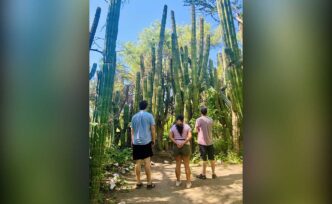

I recently visited the Cactus Sanctuary next to El Triunfo to take advantage of the unusual greenery we are experiencing, and you should too.
Greenery from multiple varieties of plants has paradoxically dotted our dry, arid, cacti-filled desert landscape with vines, pretty flowers, and even grass, generously sponsored by the rainfall that we’ve been blessed with over the last few weeks.
If you are like me, you’ve experienced a shift in mood or a deep sense of well-being when surrounded by lush green nature. The Biophilia Hypothesis provides the scientific foundation for why green elements, particularly trees and lush foliage, exert such a profound, positive effect on human mood and cognitive function when set against a visually and ecologically barren backdrop.
The Biophilia Hypothesis proposes that humans possess an inherent, intrinsic desire to connect with nature, a desire deeply rooted in our evolutionary history. This connection is considered crucial for enhancing overall human well-being, particularly mental health and emotional stability. From an evolutionary perspective, natural settings, specifically, lush green vegetation, act as powerful signals of safety, abundance, and survival potential.
When I moved to Baja in November 2023, I knew that I was leaving the lush, vibrant, humid jungles of the Riviera Maya for a much drier climate. Despite the abundance of nature and incredible biodiversity of this region, moving here meant not being surrounded by the same greenery, and that was acceptable to me. What I was not aware of, upon moving here, was that I was to experience an 18-month-long drought. Even though every day was perfectly sunny and beautiful, there was no rain. The landscape around me became drier, grey, and less vibrant. Until recently …
Exposure to sunlight, green natural spaces, extreme heat, and extreme cold can all have a profound effect on both our physical and mental health. If you’ve spent full winters in the colder parts of the world, you might have experienced or known someone with Seasonal affective disorder (SAD). This tends to happen where extended winters are paired with the lack of sunlight and can cause mild to severe depression, among other symptoms. Similarly, living in a desert environment with extreme heat takes its toll on both physical and mental health. A simple solution to combat this, offered for free by Mother Nature, is the ability to restore one’s mental and physical health through exposure to green natural spaces, and is referred to as the “Oasis Effect”.
When living in Canada, I used to get my fix of greenery during the never-ending winters by visiting indoor botanical gardens; my favorite was the Allan Gardens in downtown Toronto, which offered five greenhouses filled with healthy, lush plants, including tropical plants and even a cactus and desert plant section. This type of exposure to greenery amidst harsh, dark, gloomy winter correlates with lower anxiety and depression, greater well-being, and healthier cortisol levels.
Seasonal affective disorder (SAD) can also happen in long, extreme summer seasons, and it can be triggered by heat, humidity, and longer daylight hours. Symptoms include depression, irritability, insomnia, agitation, and a decreased appetite. Beyond our evolutionary preference to be in nature, the restorative function of nature facilitates a shift to an alternative cognitive mode known as “soft fascination.” This is a form of effortless, involuntary attention that allows for mental recovery without demanding new cognitive energy. In my practice, I refer to these soft fasciations as “glimmers”, which have the opposite effect of triggers. Viewing a real forest, for example, generates psychological benefits associated with comfort and reduced psychological stress compared to a non-natural view.
The restorative efficacy of an environment is often assessed based on four qualities: fascination, where the environment is attractive and requires no deliberate focus; being away, which allows individuals to psychologically and physically detach from their normal routine; size, providing richness and continuity for exploration; and compatibility, where the activities provided match the individual’s preferences, four qualities that the Cactus Sanctuary fulfilled for me, especially right now, since the abundant rain.
To me, a stroll in the sanctuary felt more like being in a jungle with cacti, rather than a cactus garden in the desert, and it is an absolute must-see. Besides the health benefits you’ll receive, the star of the show at the sanctuary is undoubtedly the Cardón cactus, which is the world’s biggest cactus, and not the Saguaro, as per popular belief. These prickly giants can grow up to 70 feet high, and here at the sanctuary, they average between 30 and 40 feet high.
The recent rains and greening are giving our minds and bodies in Baja a well-deserved psychological break, reversing some of the chronic stress caused by the preceding long period of dryness and extreme heat. However, if you want to take advantage of the full spectrum of what this natural abundance can offer, try spending a few hours hiking in nature, and often. – Naailah Auladin for more on my work: www.naailahauladin.com or reach me on WhatsApp at: +52 612 141 8002
Naailah Auladin is a life and relationship doula in La Paz, specializing in guiding individuals and families during periods of emotional trauma, crisis, and mental unrest. She focuses on teaching and inspiring individuals to take responsibility and ownership in participating in their civic duties, prioritizing the well-being of the self-first, as she believes that fostering and maintaining well-managed emotional, mental, and physical health is our primary civic duty.