


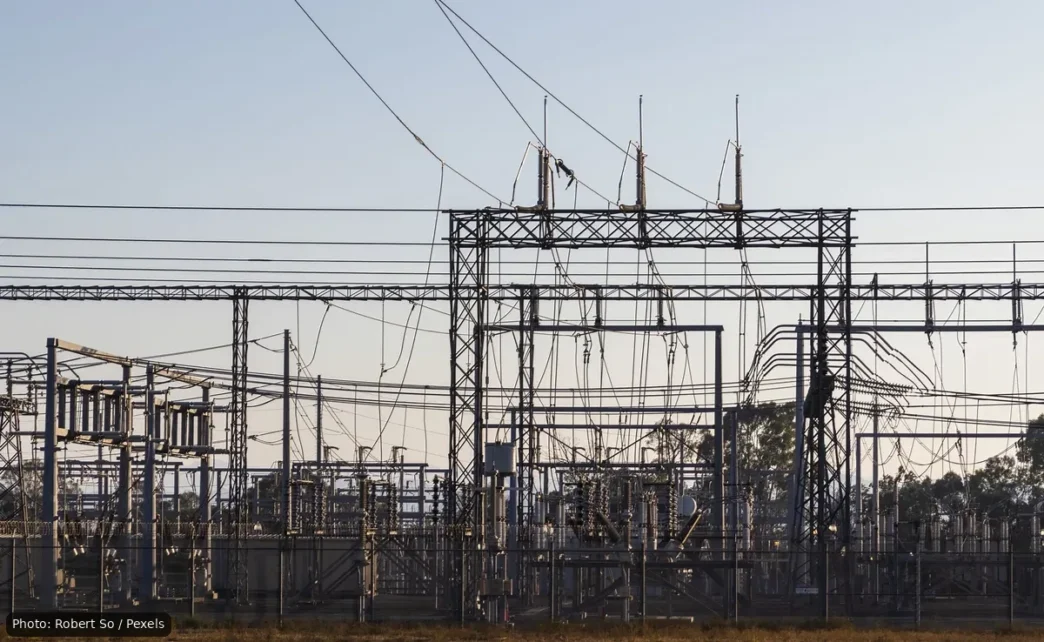
Mexico’s federal power utility CFE announced this week it will spend 2.87 billion pesos upgrading and expanding the electrical grid across Baja California Sur — one of the largest infrastructure investments the state has seen in years. The move follows a summer in which the peninsula logged 77 outages, most of them tied to surging demand in Los Cabos and La Paz.
The utility says the money will buy new transformers, substations, kilometers of cable and 367 separate electrification projects. According to CFE’s official figures, 1.76 billion pesos will go to transmission projects alone, adding 400 megavoltamperios (MVA) of new capacity and more than 108 kilometres of transmission infrastructure. Another 939 million pesos will fund distribution work — two new substations, three expansions and 37 grid-modernization projects. A final 158 million pesos is earmarked for 367 electrification works in rural and underserved communities.
For most residents, the question isn’t whether the project looks good on paper. It’s whether the pavement actually reaches their street — or in this case, whether the power actually stays on during the next heat wave.
CFE says the single largest project is already under construction: a capacity increase at the Los Cabos transformer station, scheduled to come online December 12, 2027. That work is aimed squarely at accommodating the wave of new hotels, housing developments, commercial centers and private investment that has pushed the corridor’s electrical demand past what the existing grid was built to handle. Three more projects — Loreto MVAr, Camino Real MVAr in La Paz, and a capacitive compensation system in Los Cabos — are all slated to go live in mid-2027.
The distribution investments will add 150 MVA of capacity, which CFE notes is equivalent to the combined electrical capacity of the municipalities of Comondú and Loreto. That upgrade is meant to keep pace with growth not just in the resort zones but in the state’s smaller towns and outlying neighborhoods, where grid extensions have long lagged behind population increases.
CFE says the 367 electrification projects will push statewide coverage to 99.99 percent — a near-universal figure that sounds impressive until you remember Baja Sur’s population is spread across a vast, sparsely settled peninsula where the last fraction of a percent can mean entire ranchos still running on diesel generators.
The announcement lands at a moment when CFE’s credibility with the public depends less on budget announcements and more on whether the lights stay on. Residents in both Los Cabos and La Paz have lived through repeated outages tied to equipment failures, maintenance backlogs and summer peak loads. The utility has promised improvements before, including an app-based alert system meant to give advance notice of planned outages. Whether this round of investment finally delivers measurable reliability will likely depend on how quickly the new infrastructure goes online and how well CFE maintains it once the ribbon-cutting photos are filed away.
In Baja, a project is never just a project. It is a promise, a budget, a ribbon-cutting photo and, eventually, a test of whether anyone remembered the maintenance plan.
Source Note: This story is based on original reporting by MILENIO. It has been independently rewritten and adapted by the Gringo Gazette for our English-speaking readers, with additional context where appropriate.