


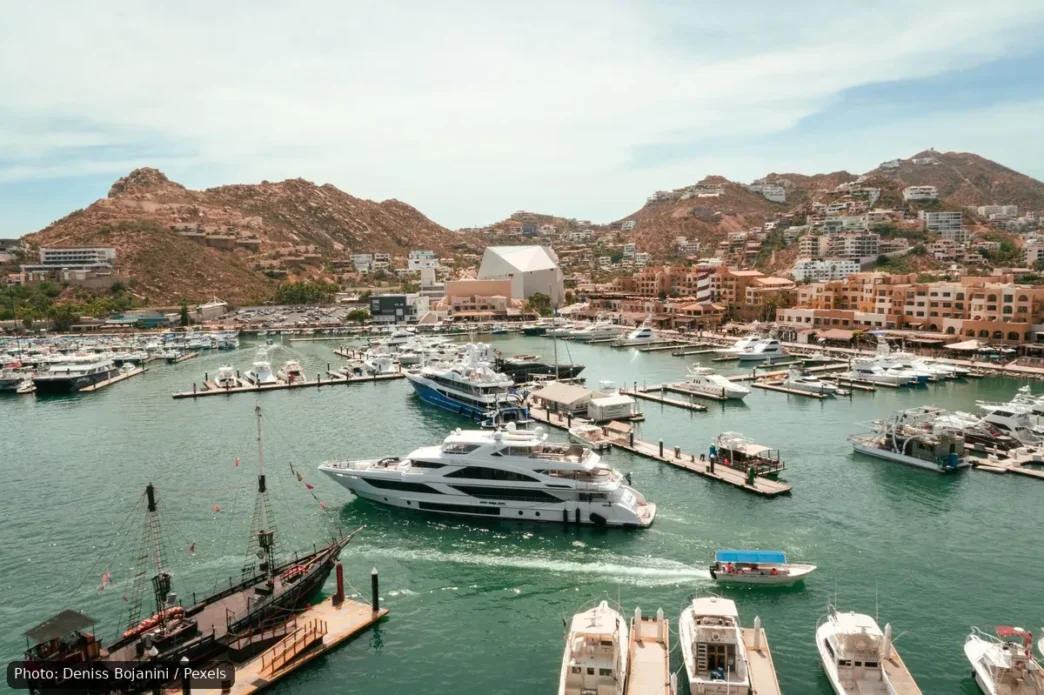
If you keep a boat in Los Cabos, fish out of Cabo San Lucas, or plan to arrive on a cruise ship during hurricane season, sooner or later you’ll run into a port closure. It’s a routine part of life on the water here from June through November, and understanding how it works can save you a wasted trip to the marina or a canceled fishing charter.
The most recent example came this week, when the Capitanía de Puerto ordered a closure at both Puerto Cabo San Lucas and Puerto Los Cabos in San José as Hurricane Polo churned roughly 790 kilometers offshore. The order applied to all embarcaciones menores, or small vessels, starting at midnight, giving boat owners just hours to secure their craft.
What Triggers a Port Closure
Port closures aren’t limited to hurricanes. High surf, strong sustained winds and dangerous swell can all be enough for authorities to suspend navigation, even when a storm is nowhere close to making landfall. Readers may remember when high surf alone shut down the Cabo port and flagged beaches red without a named storm anywhere on the map.
During tropical systems, the Capitanía de Puerto works off forecasts from Mexico’s national weather service, tracking wind speed, projected rainfall and the storm’s distance from the peninsula. In the case of Polo, forecasters expected 25 to 50 millimeters (roughly 1 to 2 inches) of rain on Friday and up to 75 millimeters (about 3 inches) by Sunday, numbers that factored directly into the closure decision, according to Colectivo Pericú.
Who Makes the Call
The Capitanía de Puerto is Mexico’s federal port authority, similar in function to a harbor master’s office combined with a coast guard. It has final say over whether a port opens or closes to navigation. But the decision typically comes out of coordinated meetings with the municipal Consejo Municipal de Protección Civil, Mexico’s version of a civil protection or emergency management agency.
Ahead of Polo, that coordination happened during an emergency session chaired by the municipality’s secretary general, Alberto Rentería Santana, with officials from federal, state and municipal government all weighing in, according to Colectivo Pericú. The Mexican Navy’s Plan Marina and the Army’s DN-III-E emergency protocol are also placed on preventive alert at this stage, even if they’re never fully activated.
What Actually Gets Closed
Not all closures are created equal. Most start with a ban on embarcaciones menores, meaning small private boats, pangas and sportfishing charters. Fleets are usually given advance notice to pull vessels from the water or move them to protected moorings before the deadline hits, as reported by Tribuna de México.
Larger commercial traffic, including cruise ships, falls under a separate call. The Capitanía de Puerto can restrict or reroute bigger vessels independently of the small-craft closure, which matters for the growing number of ships calling on Los Cabos each season, a trend covered in Gringo Gazette’s report on record cruise ship visits. During Polo, the Los Cabos International Airport continued operating normally under technical monitoring, a reminder that a port closure doesn’t automatically mean flight disruptions.
How to Check Real-Time Status
There’s no single public dashboard that tracks port status around the clock, so boat owners need to check a few places. Marina operators in Cabo San Lucas and Puerto Los Cabos post closure notices directly to slip holders, and the municipal Protección Civil office shares updates through its official channels once a decision is made. Charter captains and fishing cooperatives are usually among the first to know, since a closure means canceled trips and lost bookings.
Gringo Gazette also tracks closures as they’re announced, including past coverage of port closures ahead of Hurricane Marie. If you’re planning a fishing trip or boat outing during storm season, it’s worth checking those updates the morning of, not just the night before, since forecasts can shift quickly.
What Boaters and Visitors Should Know
Private boat owners should keep vessel registration current, since unregistered or abandoned boats have become enough of a problem that port authorities in La Paz have specifically asked owners to register their craft. It’s also worth reviewing the safety resources highlighted in Gringo Gazette’s piece on new safety options for Cabo boaters, since having a plan before a storm arrives beats scrambling once a closure is announced.
For visitors, a port closure mostly means canceled fishing charters, sunset cruises and some water sports, rather than a threat to flights or hotel stays. Cruise passengers should check with their line directly, since itinerary changes are handled by the cruise operator in coordination with the port authority. Anyone booking a Los Cabos trip during peak hurricane season, roughly August through October, should build a little flexibility into their plans, a point covered in more detail in Gringo Gazette’s guide to navigating hurricane season in Baja Sur.
Closures typically lift within a day or two once conditions improve, and the Capitanía de Puerto announces reopenings the same way it announces closures: through official notices to marinas and Protección Civil. Until then, patience is the only real strategy. The water isn’t going anywhere.
