


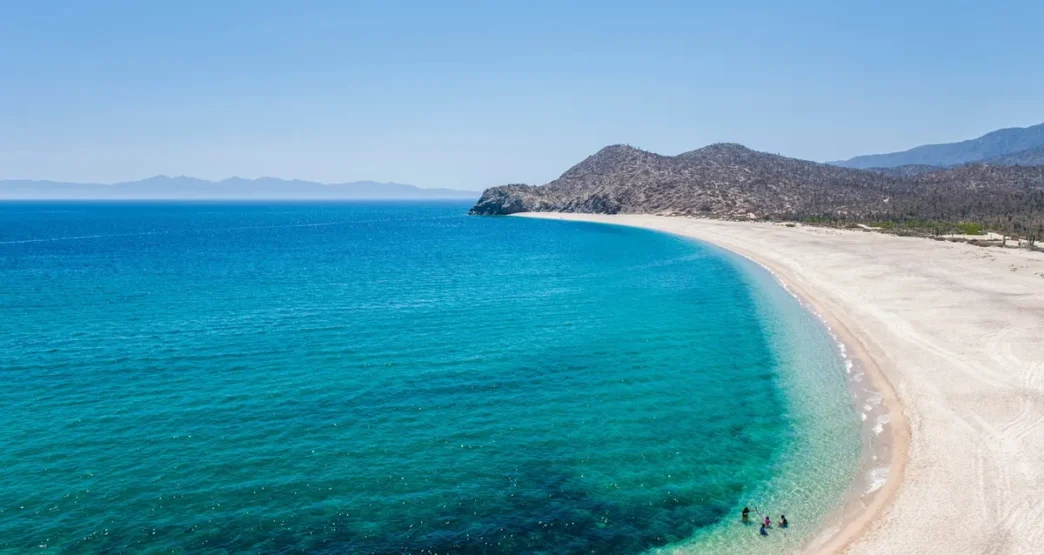
More than 11,000 people have signed a citizen petition asking Mexico’s environmental authority to reject a proposed resort development at El Saltito, a desert area less than 20 kilometers from La Paz. The project would clear 110 hectares of native vegetation to make room for residential lots, a hotel, and part of a golf course.
The petition, hosted on Change.org, targets the Secretaría de Medio Ambiente y Recursos Naturales (SEMARNAT), which is currently reviewing a land-use change request for the site. If approved, the permit would allow developers to remove an estimated 110,000 plants, including more than 31,000 cacti and approximately 17,000 cardones — the towering columnar cactus that can take decades to reach full size.
The El Saltito project is not new. It has been moving through administrative channels for nearly two decades, and the current application represents what developers call the “Second Stage” of a much larger development. According to environmental groups, the full build-out would eventually cover around 708 hectares and include a golf course, artificial water features, a private beach club, roads and infrastructure designed to support construction over the next 20 years.
Opponents of the project say the 110-hectare clearing would affect protected species, including around 880 biznagas listed as threatened under Mexico’s NOM-059 environmental standard, as well as two species of lizards with some level of legal protection. They also question whether the developer’s proposed mitigation measures — restoring 30 hectares and supplementary work on another 5 — would be enough to offset the loss.
The petition raises doubts about the feasibility of relocating tens of thousands of cacti to “areas currently devoid of vegetation,” noting that no survival data has been provided. Critics argue that Mexican forestry law allows land-use changes in forest areas only under exceptional circumstances and when biodiversity can be guaranteed.
For residents and expatriates, the El Saltito case is part of a broader pattern. The state has seen repeated battles over large-scale developments near fragile ecosystems, particularly in areas where water supply is already under pressure. The Sierra de la Laguna, a UNESCO Biosphere Reserve, lies nearby, and many locals worry that unchecked development in the foothills could degrade the aquifer that feeds much of the southern part of the state.
The petition calls on SEMARNAT to deny the application, known formally as file “El Saltito Segunda Etapa.” It was submitted by Banco Ve Por Más, acting as trustee for a development trust. Nine environmental organizations and collectives have formally requested that the agency reject the land-use permit, arguing that the developer has not met the legal requirements to justify clearing more than 109 hectares of native desert.
A protest march took place on Saturday, July 25, as part of a growing public campaign to block the project. The formal public comment period for a related development proposal near the Sierra de la Laguna ran from July 23 to August 19, giving residents a narrow window to submit observations.
The question now is whether SEMARNAT will approve the permit or side with the thousands of citizens who say the project threatens one of the most representative coastal ecosystems in the municipality of La Paz. The decision will set a precedent for how future golf and resort developments are evaluated in areas adjacent to protected reserves.
For expatriates and tourists who value Baja’s desert landscapes, the outcome will determine whether El Saltito remains a stretch of wild cardonales or becomes another example of what happens when development pressure meets environmental limits. In Baja, a project is never just a project. It is a promise, a budget, a ribbon-cutting photo and, eventually, a test of whether anyone remembered the maintenance plan — or the water.