


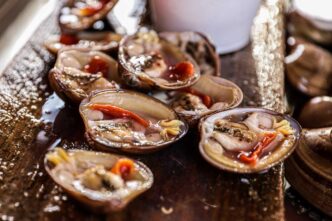
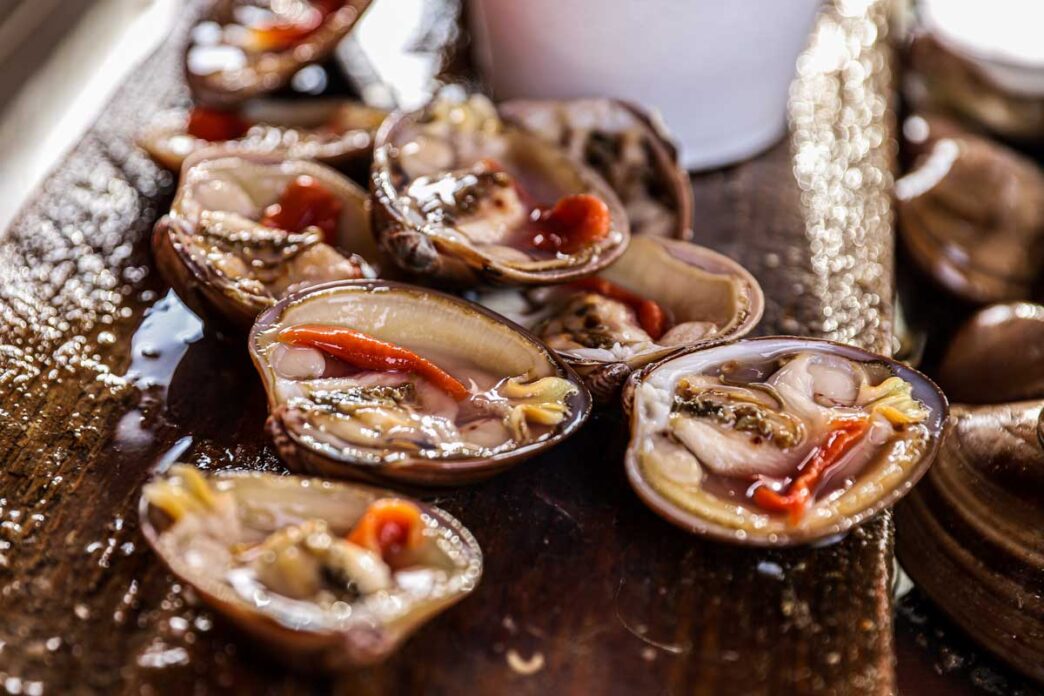
From January 1, 2026, to December 31, 2027, a total ban on the chocolate clam is in effect throughout the marine area of the municipality of Loreto. The measure was decreed by CONAPESCA/SADER (Comisión Nacional de Acuacultura y Pesca) in Los Cabos which is the local branch of the Mexican federal agency responsible for regulating, managing, and promoting sustainable fishing and aquaculture activities. It operates under SADER (Secretaría de Agricultura y Desarrollo Rural) and is responsible for enforcing fishing laws, managing permits, and implementing programs in Baja California Sur.
Due to an alarming reduction in the mollusk’s populations, where 300-gram specimens were once easily found, orders are now fulfilled at only 50%, with pieces weighing just 80 grams.
The ban prohibits the capture, transport, and sale of the mollusk. The impact is real and painful for the community; fishermen who have dedicated their lives to the trade have had to find other jobs, and local restaurants have had to completely redesign their menus. But it is also an urgent and necessary measure to ensure that future generations of Loreto residents can continue to tell this marine story. The magical town in Baja California Sur had to change its traditional cuisine to save a unique marine species.
It is a destination where time moves differently. The mornings smell of sea salt and coffee, the afternoons are lost among kayaks and islands, and evenings gather around a table with flavors steeped in centuries of history.
Loreto is a small coastal municipality that has spent centuries building its identity amid colonial missions, volcanic islands, and the unmistakable flavor of a clam that is now at the heart of a story of love, overexploitation, and hope.
Loreto is the oldest city on the entire Baja California peninsula. It was founded on October 25, 1697 by the Jesuit missionary Juan María de Salvatierra, who established the first permanent mission there: Nuestra Señora de Loreto. For decades, Loreto was the capital of the Californias (both Alta and Baja), and from here the expeditions that colonized what is now the state of California in the United States began.
Visiting its historic center today is like opening a history book. The cobblestone streets, the 17th-century mission church, and the Mission Museum hold centuries of memories. If you venture out of town, about 37 km into the mountains, you’ll reach the Mission of San Javier, nestled in a canyon of the Sierra de la Giganta and considered one of the best-preserved missions in all the Americas.
It’s no coincidence that Jacques Cousteau called the Sea of Cortez the “Aquarium of the World.” Loreto overlooks this natural wonder, and the Loreto Bay National Park, a UNESCO World Heritage Site, protects five volcanic islands: Coronado, del Carmen, Danzante, Monserrat, and Santa Catalina. Its waters are home to dolphins, sea lions, manta rays, whale sharks, and, between November and April, humpback and blue whales.
But the Chocolate Clam defines Loreto.
If there’s one ingredient that encapsulates the culinary essence of this magical town, it’s the Megapitaria squalida, better known as the chocolate clam for its dark, glossy shell. For decades, it was the economic engine of the municipality’s fishing families, the star ingredient in more than 20 dishes, and the reason for the Chocolate Clam Gastronomic Festival, which ran for nine years and was a national tourism landmark.
The most iconic dish is Loreto-style escabeche. This slightly thick sauce has been passed down through generations. It consists of briefly cooking the clams (just one minute in boiling water to preserve their texture) and marinating them in olive oil, vinegar, carrot, white onion, pepper, bay leaf, oregano, mustard, and a touch of cream. Though simple in appearance, it has a flavor that is part of the town’s DNA.
The good news is that traditional cuisine doesn’t disappear with the fishing ban. It transforms. Local chefs and the culinary community are proposing to maintain the spirit of Loreto’s escabeche with these sustainable options:
- Pismo Clam with its mild flavor and firm flesh, perfect for escabeche, respecting official sizes and seasons
- Local Octopus or Squid: the aromatic base of escabeche (bay leaf, vinegar, oregano, olive oil) works just as well, and the result is surprisingly true to the original
- Baja California Sur Shrimp: an alternative already used in previous versions of the festival; it lends itself to the same marinating technique and results in a fresh and flavorful dish
- Red Mussel: with a more intense flavor and meaty texture, with currently healthy populations; excellent for marinades with spices and vinegar
The key is to respect the technique and flavors of escabeche, not just the ingredient.
Chocolate clams may be off the menu this year, but Loreto is still a magical destination to visit.
The most practical option is to fly to Loreto Airport (LTO).
- From Mexico City, the direct flight takes 2 hours and 45 minutes.
- From Tijuana: the shortest flight, taking just over 90 minutes.
- From Los Angeles, Phoenix, or San Francisco: international routes are available depending on the season.
If you decide to travel by car, you’ll enjoy incredible views along the Transpeninsular Highway (MEX-1) and can visit other towns along the way.
From La Paz, the trip takes approximately 4 hours, while from Los Cabos, you should allow at least 6 hours.
