


More than 6,000 tons of trash never reached Cabo San Lucas beaches after Hurricane Marie — proof that the municipality’s pre-storm cleanup campaign worked.
Officials say the volume of debris washed onto local beaches dropped 80% compared to previous storm events, thanks to months of neighborhood cleanups that removed mattresses, appliances and even abandoned vehicles from arroyos and drainage zones before the rains came.
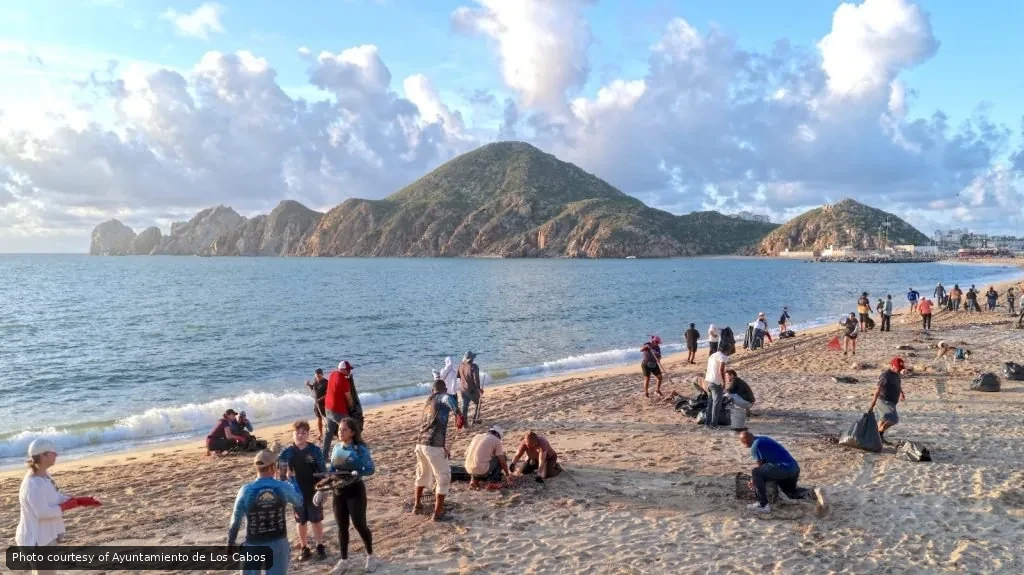
The municipality’s Cabo San Lucas delegation and the federal coastal authority ZOFEMAT (Zona Federal Marítima Terrestre) conducted early-morning beach sweeps at El Médano, 8 Cascadas and El Corsario between 6 a.m. and 8 a.m. following the storm.
What Washed Up This Time
Instead of the couches, refrigerators and car parts that marked past cleanup efforts, crews found mostly micro-plastics, driftwood and tires.
“In previous years we would pull entire living room sets and appliances off the sand,” said Héctor Hugo Agúndez Cota, municipal coordinator for ZOFEMAT Los Cabos. “This time it was almost entirely micro-debris and tires.”
Crews removed more than 2,500 tires from the coastal strip during the post-Marie sweeps — a reminder that certain waste categories still make their way into the ocean during heavy rains.
Why the Numbers Dropped
The difference comes down to what the municipality calls descacharrización — large-scale junk removal campaigns in neighborhoods throughout Cabo San Lucas.
Over the past year, municipal crews have hauled away more than 6,000 tons of bulky waste from residential areas, targeting items stored near drainage channels and natural runoff routes that feed into the ocean during storms.
“That preventive work is now reflected in cleaner beaches with far fewer large items,” said Karina de la O Uribe, the municipal delegate for Cabo San Lucas.
The Tire Problem
While progress is clear, tires remain a persistent issue. Officials are calling on tire shops, construction companies and material handlers to dispose of waste properly instead of dumping it near arroyos.
Beyond the visual pollution, tires create public health risks by collecting standing water and becoming breeding grounds for dengue-carrying mosquitoes — a concern that intensifies after any storm event in Baja California Sur.
Beach Conditions Now
El Médano, the region’s busiest tourist beach, is clear and open following the cleanup. The same applies to 8 Cascadas and El Corsario, where most of the storm debris has been removed.
Visitors should expect normal beach conditions, though small amounts of organic material — driftwood and seaweed — may still wash in over the coming days as ocean currents settle.
For residents and property managers, the takeaway is simple: keeping trash out of drainage zones before the rainy season saves beaches during it. The 6,000-ton haul proves the point — and sets a standard for storm prep across Los Cabos.
