


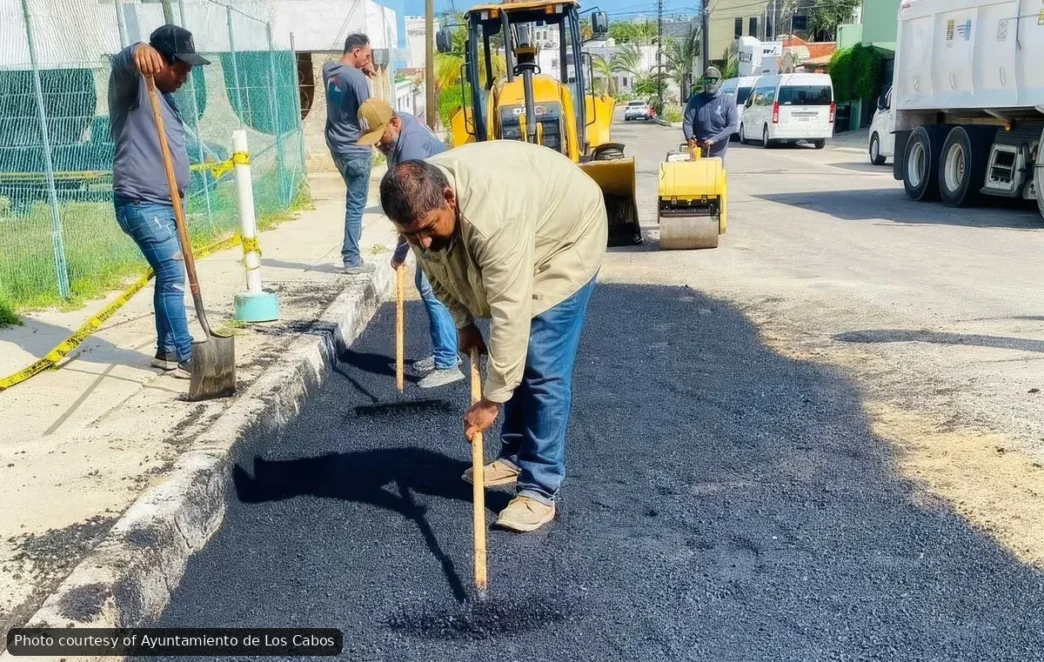
Potholes in Los Cabos are not a seasonal surprise. They are a year-round fact of life, and the city’s Public Works department treats them that way. According to the municipality, the 15th City Council’s General Directorate of Public Works and Human Settlements runs ongoing patching operations across the municipality, not a one-time campaign that wraps up and disappears until the next rainy season exposes new craters.
The work falls under Christopher Enríquez González, the director general of Public Works, who has been personally checking in on crews in the field, according to city officials. That matters for anyone wondering whether a pothole report disappears into a bureaucratic void. The stated process is straightforward: crews prioritize the stretches with the worst asphalt deterioration first, based on a combination of citizen reports and direct field inspection, not a random rotation through neighborhoods.
Where the Reports Actually Go
Los Cabos has moved pothole reporting toward a digital reporting platform rather than relying purely on phone calls or walk-ins at a city office, which is good news for anyone used to the old method of honking and hoping. The practical move is to check the current reporting channel listed on the municipality’s official site, loscabos.gob.mx, since contact points and apps tend to shift between administrations. When filing a report, the street name, nearest cross street or landmark, and the colonia matter more than a general description — “near the Costco” works better in theory than it does in practice when a crew is trying to locate one bad stretch among dozens.
A photo helps too, even though it is not always required. Crews are working from a list, and a clear location shortens the gap between “reported” and “repaired.” This is also the point where it is worth setting expectations honestly: the city’s own description of the process emphasizes prioritization by severity, which means a minor dip on a quiet residential street is realistically going to wait behind a crater swallowing cars on a main avenue.
What a Realistic Timeline Looks Like
There is no published guarantee of a 48-hour fix or a specific response window, and anyone promising one is guessing. Turnaround depends on how many crews are deployed that week, whether materials are on hand, and how many higher-priority complaints are already in the queue. Weather is also a factor worth remembering, since a freshly patched stretch can reopen after a hard rain, which is part of why the city has had to go back and repatch San José roads more than once this year.
None of this is new territory for Los Cabos drivers, who have watched pothole repair crews come and go across multiple budget cycles without the problem fully disappearing. The more useful mindset is treating it like a maintenance relationship rather than a one-time fix: report the bad stretch, note the location precisely, and drive it cautiously until the crew shows up. In Baja, patience and a decent set of shocks tend to outperform frustration every time.