

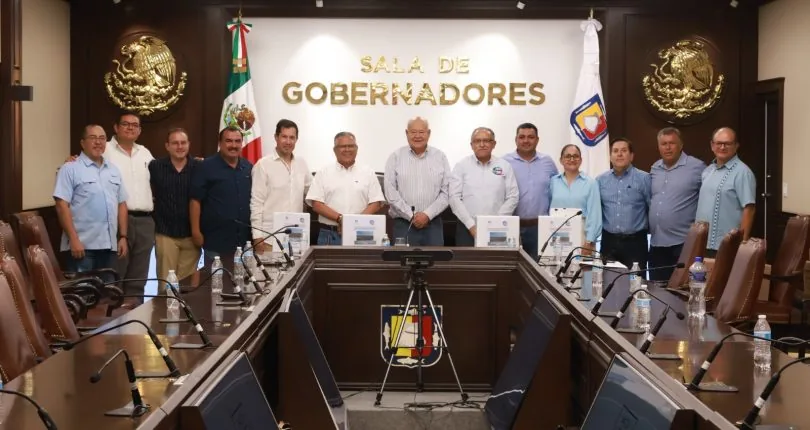
Governor Víctor Manuel Castro Cosío attended the formal handover of environmental and technical feasibility studies for a proposed desalination plant in the ejido of Matancitas, Comondú municipality, marking a significant milestone in the project’s timeline toward potential federal approval.
The studies — an Environmental Impact Statement (Manifestación de Impacto Ambiental, or MIA) and a Technical Justification Study — were prepared by the Universidad Autónoma de Baja California Sur (UABCS) for Grupo ARBA and formally delivered in a ceremony attended by UABCS rector Dante Arturo Salgado González, Comondú municipal president Roberto Pantoja Castro, local ejidatarios and business representatives.
The governor emphasized that water and energy are vital elements for sustainable development in rural communities and said the project represents a scientifically grounded alternative designed to minimize environmental impact. He noted that the studies were prepared by 60 university researchers using a multidisciplinary approach to analyze local conditions and potential effects of the proposed facility.
What Happens Next
The submission of these studies represents a formal step toward evaluation and possible authorization by the federal environmental authority, the Secretaría de Medio Ambiente y Recursos Naturales (SEMARNAT). The governor said the project will be reviewed under current environmental regulations with priority given to ecosystem protection and community well-being.
The technical documentation runs to more than 2,000 pages and includes a proposal for integrated desalination infrastructure as well as the use of clean energy sources to reduce the project’s carbon footprint and mitigate environmental effects.
Why It Matters for Baja Sur
Comondú is part of a broader state effort to address water scarcity challenges across Baja California Sur. While most desalination conversation in recent years has focused on Los Cabos and La Paz, rural municipalities face their own infrastructure gaps, and access to reliable freshwater remains a limiting factor for development and quality of life.
Governor Castro said the state government maintains a policy of coordination with communities, all levels of government and productive sectors to generate alternatives that improve living conditions and promote sustainable development. He described linking scientific knowledge with social perspective as essential to meeting the needs of rural communities.
For expats and visitors, the project is another indicator of how water infrastructure — and the regulatory process around it — remains a central issue in Baja Sur planning. The state has been working to balance tourism growth, real estate development and local water supply, and projects like this one in Comondú will help determine whether smaller municipalities can sustain expansion without depleting groundwater or depending entirely on truck deliveries.
The timeline for SEMARNAT review and potential approval has not been announced, and there is no confirmed date for construction to begin if the project is greenlit.