


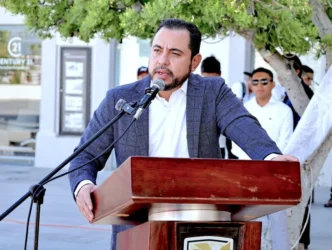
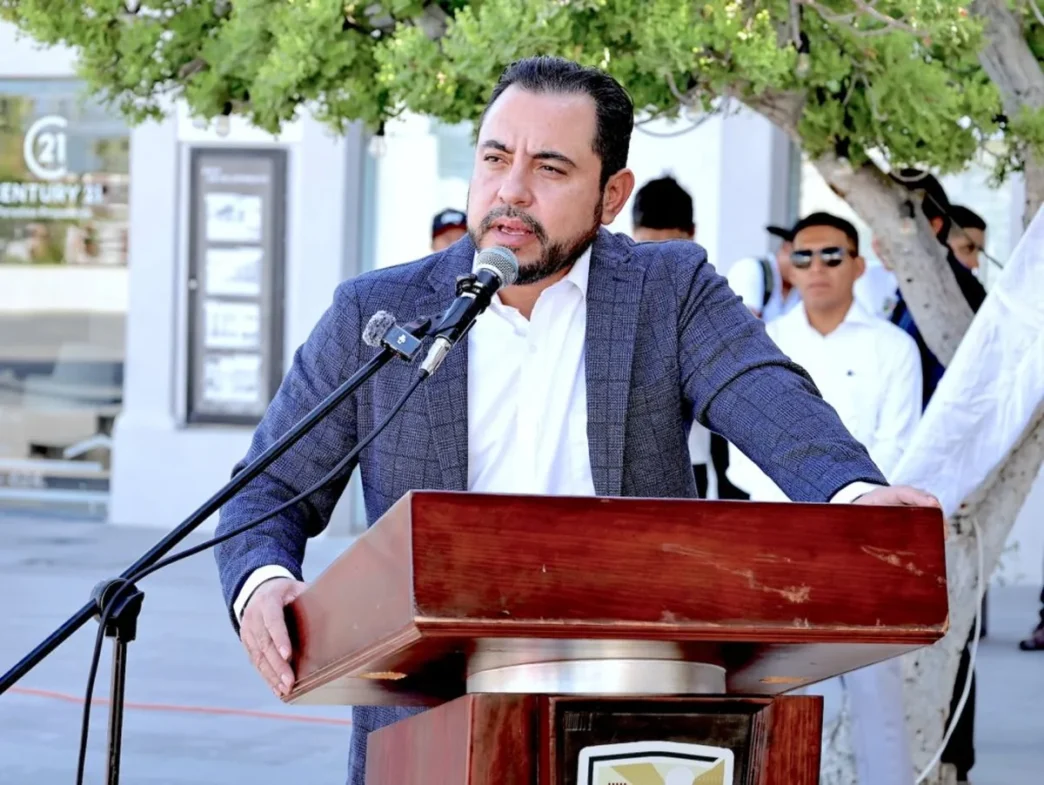
If municipal garbage pickup has felt a little more reliable lately, or if you’ve noticed more orange cones and actual asphalt going down on your street, there’s a budget story behind it. Los Cabos Mayor Christian Agúndez says his administration has spent roughly 1.2 billion pesos — about $65 million USD — over the past two years simply paying off debts the city owed to its own tax and social-security obligations, some of them left over from administrations before his.
That is not new spending. That is old spending, finally settled. According to a statement from the municipality of Los Cabos, the city also recovered administrative control of the Zona Federal Marítimo Terrestre (ZOFEMAT) — the federally owned beachfront strip that generates permit revenue for things like beach clubs and palapa concessions — and regularized a 30% matching contribution to the federal government that had gone unpaid for years, routed through the state government of Baja California Sur.
Why Old Debt Shapes Today’s Services
In Baja, a municipality that owes money on payroll taxes or social-security contributions isn’t just behind on paperwork. It is a municipality with limited room to borrow, to negotiate with contractors, or to qualify for federal matching funds on anything from highways to hospitals. Clearing that backlog is less a headline achievement than a prerequisite — the dull plumbing work that has to happen before anyone can talk seriously about new infrastructure.
Agúndez’s office points to concrete results on the other side of that ledger. The city has bought 20 garbage trucks, 45 patrol vehicles, 20 water tanker trucks, eight backhoes, eight motor graders and two industrial Vactor trucks for drain and sewer maintenance, along with 120 additional vehicles for the general municipal fleet. City officials say that hardware is what allowed pothole repair crews to double in size just last week, and it’s the same fleet behind the street paving push reported earlier this year, which the city says has now covered more than 65 road projects.
The administration also points to the salary increases given to the fire department and municipal police as evidence that the fiscal cleanup has translated into better-paid, better-equipped public safety staff rather than disappearing into a budget black hole.
The Obvious Follow-Up Question
None of this answers the question every longtime resident eventually asks about any Baja budget announcement: what does the balance sheet look like now, and is this actually sustainable, or is it a two-year sprint timed to a political calendar? The city’s statement doesn’t include an independent audit figure or a breakdown of what debt, if any, remains outstanding, so residents curious about the full fiscal picture will want to watch for the municipality’s next public finance report rather than take this announcement as the final word.
What is clear is that the city is using the debt cleanup as the foundation for a longer pitch. Agúndez also listed a string of projects now moving forward, including the relocation of wastewater treatment plants in San José del Cabo and the Lagunitas neighborhood of Cabo San Lucas, a desalination plant reported at 70% complete, seven strategic road projects including the Eje Interurbano connector, and groundwork for the region’s first medical school. Whether any of that lands on schedule is, as always in Baja Sur, a separate question from whether the money shows up to pay for it — and that’s the story worth watching over the next two years, not just this one.