


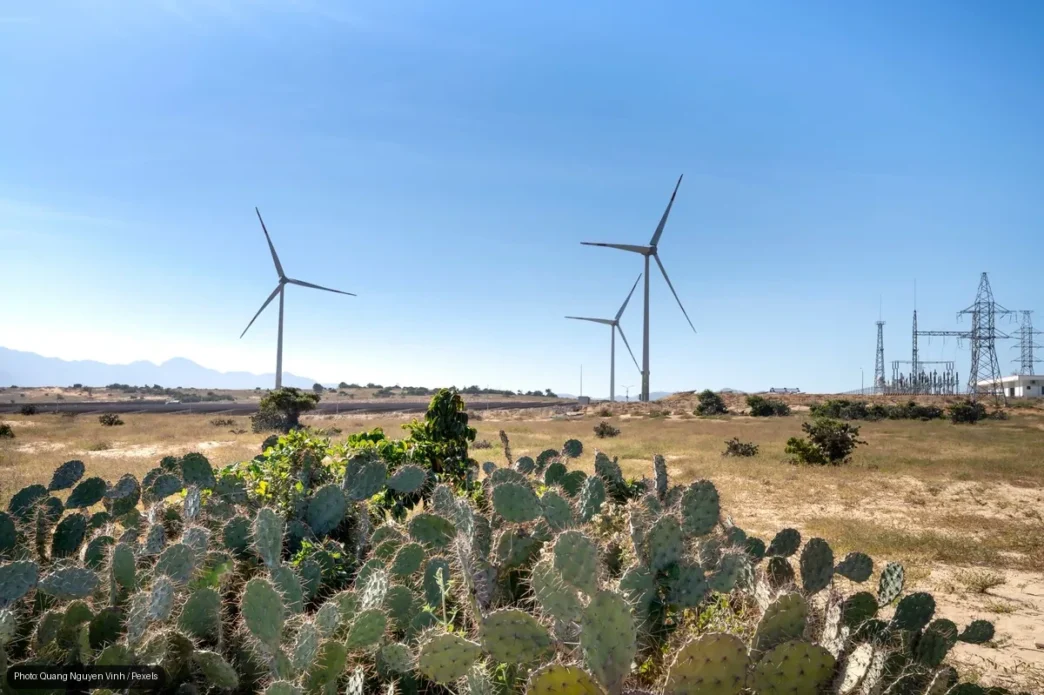
Mexico’s wind energy sector is on track for major expansion over the next four years, with federal planners forecasting an 84% jump in capacity by 2030, according to the country’s Secretaría de Energía (Sener).
The government projects total wind capacity will reach 15,000 megawatts (MW) within six years, up from roughly 8,140 MW today. That increase would involve adding 6,860 MW of new wind generation, most of it already allocated to specific projects.
What’s Planned and Where
Officials say 4,701 MW have been assigned to 17 wind farms currently in development, while an additional 2,159 MW are awaiting project assignments. The bulk of new capacity is slated for northern states including Nuevo León and Tamaulipas, where the federal utility CFE has awarded eight wind projects with a combined capacity of 2,949 MW.
Those projects, operating under mixed public-private arrangements, are expected to come online between 2029 and 2030. They will include battery storage systems totaling nearly 890 MW to help smooth out wind’s variable output.
Broader Renewable Energy Push
Wind’s growth is part of a wider federal plan to increase renewable energy’s share of Mexico’s electricity mix from 24.61% this year to more than 38% by 2030, according to subsecretariat officials. That would represent a jump from 82 terawatt-hours (TWh) in 2025 to 170 TWh in 2030.
Sener’s planning office notes more than 74% of new capacity additions during the current administration will come from clean sources. Officials say the strategy relies on pairing solar and wind generation with hydroelectric flexibility to keep the grid stable as intermittent renewables expand.
Offshore Potential and Industrial Demand
Government planners are also studying offshore wind opportunities along Mexico’s coasts, with details expected in the coming months. Subsecretariat officials say offshore turbines could help meet ambitious transition targets while tapping wind resources not available on land.
The push comes as Mexico’s industrial base expands — a trend drawing manufacturing investment and raising electricity demand. Industry groups say wind can supply the reliable, cost-effective power needed to support growth without locking in fossil fuel dependence.
Jobs and Manufacturing Opportunities
Sener officials highlighted opportunities across the wind supply chain: turbine manufacturing, blade and tower production, electrical controls, construction, installation and long-term maintenance. Repowering older wind farms with modern equipment is also expected to create specialized jobs.
Gerardo Pérez Guerra, president of the Mexican Wind Energy Association (AMDEE), called wind “a fundamental pillar” for meeting Mexico’s rising electricity needs while supporting industrial development. The association co-hosted this week’s industry forum in Mexico City with the Global Wind Energy Council.
For Baja California Sur, the federal plan’s focus on northern wind farms means most immediate development will happen elsewhere. But the broader renewable energy strategy could influence power pricing and grid stability across the country, including in regions where solar and hydroelectric resources are more prominent than wind.
Source Note: This story is based on original reporting by latinus.us. It has been independently rewritten and adapted by the Gringo Gazette for our English-speaking readers, with additional context where appropriate.
