


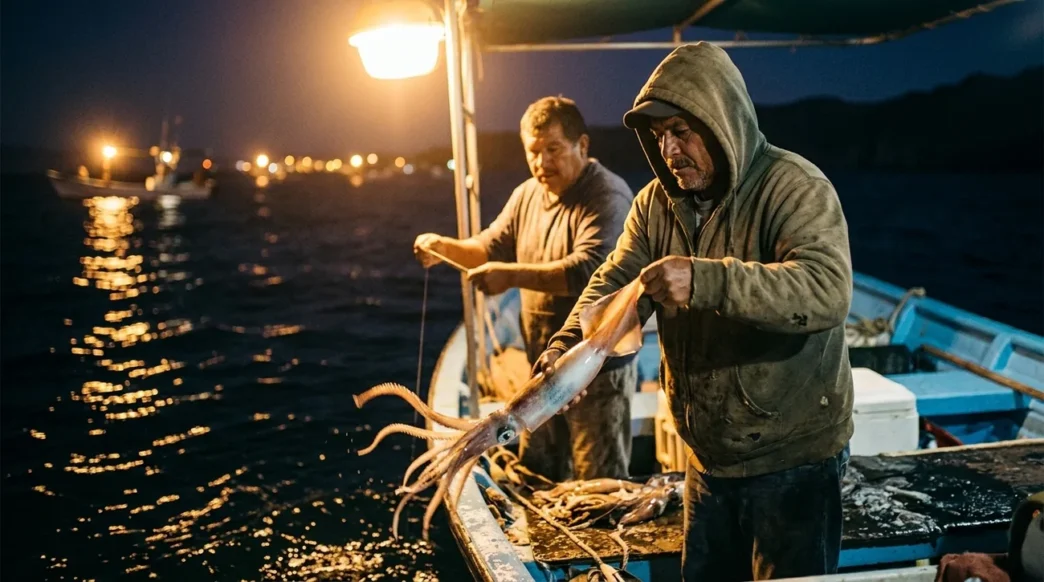
The state government announced this week that it will help local squid fishermen reach new markets and improve income, part of a broader effort to strengthen Baja California Sur’s small-scale fishing economy.
Governor Víctor Manuel Castro Cosío met with squid fishermen from Mulegé and pledged support for direct sales, consumer campaigns and electricity-rate negotiations with the federal power company. The goal, officials say, is to add value to the catch, expand distribution channels and raise household earnings for fishing families.
For many residents, the question is not whether the project sounds good on paper. It is whether the state can deliver the permits, refrigeration capacity and logistics that independent fishermen need to sell locally without middlemen.
What the State Promises
José Alfredo Bermúdez Beltrán, Secretary of Fisheries, Aquaculture and Agricultural Development, said his agency will conduct a market-behavior study and work with federal authorities to meet the legal requirements for direct sales. He also noted that the current administration has channeled 2.25 billion pesos into the state’s primary sector since taking office.
The announcement comes as Baja California Sur continues to lead the nation in giant squid production, a category that has long defined the local fleet but has struggled with price volatility and limited marketing infrastructure.
Officials say they will also promote consumption campaigns to build awareness of Baja Sur squid in restaurants, hotels and homes. The hope is that tourists and residents will choose local seafood more often, especially as farm-to-table and ocean-to-table dining trends gain traction.
Why This Matters to the Local Economy
Squid fishing supports hundreds of families in Mulegé and other coastal municipalities. But independent fishermen often lack cold storage, processing facilities and retail connections, forcing them to sell at lower prices to larger buyers or exporters.
If the state can help fishermen meet food-safety standards and access direct markets, the impact could ripple beyond the docks. Restaurants in La Paz, Todos Santos and Los Cabos have shown interest in locally sourced seafood, and initiatives like the BCS quality badge have helped build consumer confidence in regional products.
The challenge is execution. Baja has seen fishery-support announcements before, and the gap between meetings and measurable results can stretch long. Fishermen will be watching for follow-through on permits, electricity relief and cold-chain investments.
What Comes Next
The state plans to begin federal permit discussions soon and will launch marketing efforts aimed at both domestic and international buyers. Bermúdez indicated that a market study will guide the timing and scope of those campaigns.
For expats interested in sustainable seafood and supporting the local economy, this effort signals a potential shift toward more transparent, shorter supply chains. Whether that translates into fresher squid at the neighborhood pescadería or a broader selection of Baja-caught products in local supermarkets remains to be seen.
In the meantime, the state has made its pitch. Now it will need to deliver the infrastructure, permits and market access that turn a good idea into daily income for fishing families.