


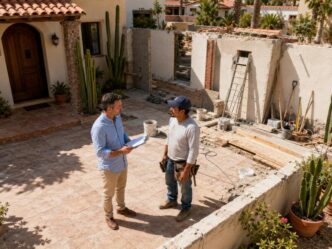
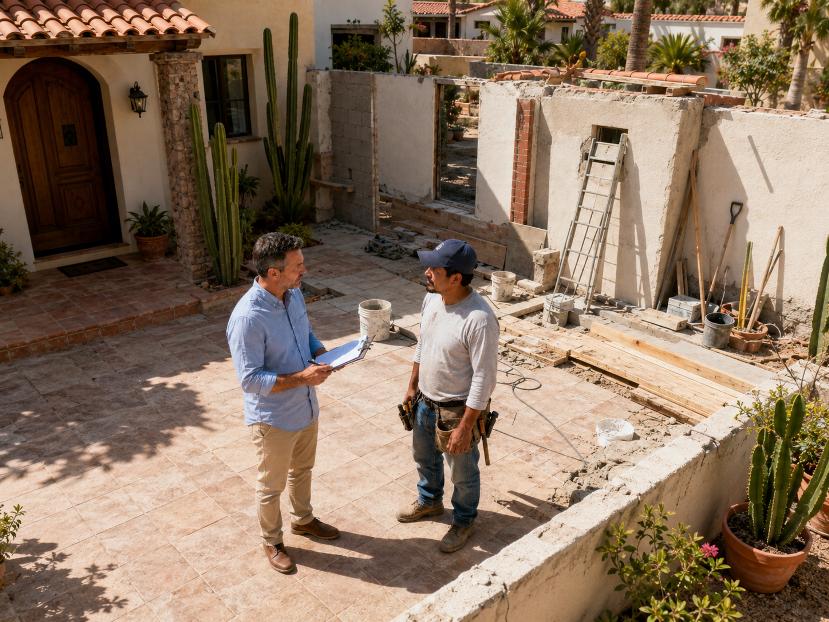
Foreign homeowners in Cabo San Lucas and other parts of Mexico can face costly legal and financial problems when hiring construction workers or contractors without proper documentation. Attorneys and consumer advocates say many disputes stem from misunderstandings of Mexican labor laws, weak contracts, and aggressive tactics used by dishonest contractors or fake unions.
Common Construction Scams in Mexico
One of the most common schemes involves exploitation of Mexican labor laws, which strongly favor employees. Workers may later claim they were long-term employees entitled to severance pay, bonuses, or other benefits, even if they were hired only for short-term work. Without a written contract, homeowners often have little protection against such claims.
Another common scam involves so-called “Sindicato” shakedowns. In these cases, aggressive or fraudulent unions appear at construction sites demanding dues or fees while using legal terminology to intimidate foreign property owners. Even when no union labor is involved, some homeowners pay simply to avoid confrontation or delays.
Contractors may also request large upfront deposits or repeated payments for materials, only to abandon the project or stop responding once substantial money has been collected. Legal experts recommend that homeowners avoid paying large sums in advance and to withhold final payment until all work has been completed satisfactorily.
Vetting Contractors and Documentation
Attorneys also recommend researching contractors through local expat communities and online forums before hiring anyone. Facebook groups and Reddit discussions often have warnings and firsthand accounts involving suspected scams or unreliable workers.
Under Mexican law, construction agreements may fall under civil or commercial law depending on the nature of the contract. A written agreement should clearly outline the scope of work, materials, timelines, payment schedules, and quality standards. If a contractor fails to meet those terms, the homeowner may have grounds for a breach-of-contract claim.
To pursue such a claim, homeowners must provide evidence including contracts, receipts, photographs, inspection reports, and written communications. Documentation is critical when seeking compensation for defective workmanship or unfinished construction.
Legal Remedies and Filing Complaints
Consumers who believe they have been defrauded can file a complaint with Profeco, Mexico’s federal consumer protection agency. Profeco handles disputes between consumers and service providers, including contractors, and offers conciliation services aimed at resolving conflicts without litigation.
During the conciliation process, both sides present evidence while Profeco attempts to negotiate a resolution. Contractors often prefer to settle disputes through Profeco rather than face further legal action.
If conciliation fails, homeowners may pursue a lawsuit for breach of contract and seek damages for repair costs, additional expenses, and, in some cases, punitive damages. Legal proceedings in Mexico can be lengthy and expensive, particularly for non-citizens, making prevention and documentation especially important.
Construction inspectors can also play a key role in disputes by providing independent evaluations of poor workmanship. Detailed reports, photographs, and repair estimates may strengthen a homeowner’s legal case.
Members of local community groups often warn newcomers about dishonest operators in the region. Some residents describe Cabo as “a sunny place for shady people,” cautioning that attempts to cut costs often result in larger financial losses later.
Real estate professionals advise homeowners to thoroughly vet contractors, verify references, and insist on signed contracts before any work begins.