


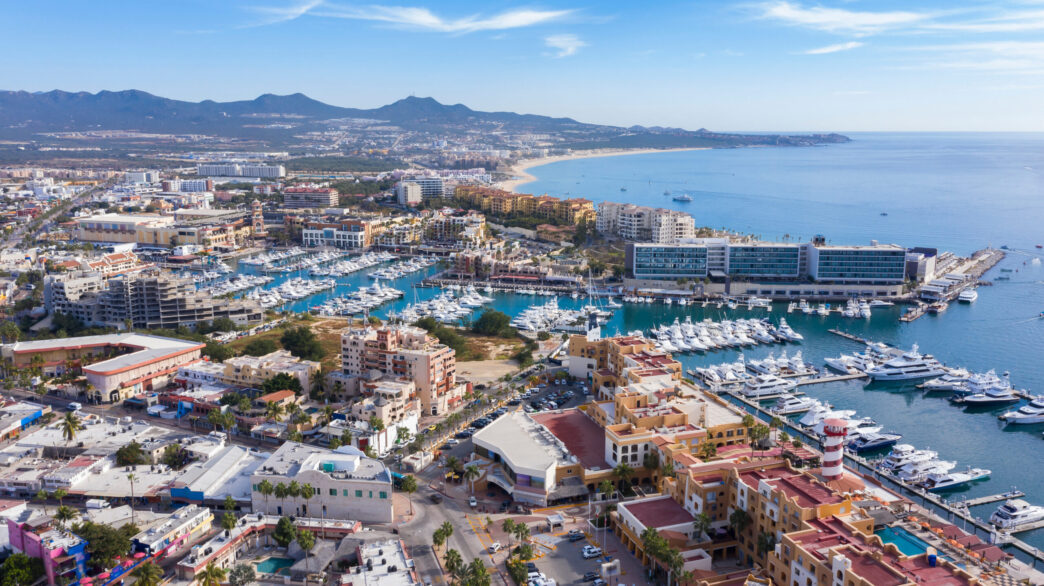
Maribel Collins Sánchez, director of the Ministry of Tourism and Economy (Setue) reported that at the end of June, Baja California Sur remains the leader in Foreign Direct Tourism Investment (FDI), according to national numbers. According to Collins Sanchez, in the first quarter of 2026 Baja California Sur maintained first place in FDI, with $191.5 million dollars, representing 31% of the total inflow in the country, followed by Quintana Roo and Nayarit.
If this trend continues, Maribel Collins explained that if in five years our BCS region receives more than one billion dollars in investment, of which $5.843 billion would represent what is generated by the tourism market. The Mexican government reported that Baja California Sur ranks as the fourth state with the highest amount of tourism investment.
Distinguishing Investment Metrics
Evaluating the first four months of the year, BCS appears with 9% of the national collection with investments falling below Quintana Roo, Nayarit and Jalisco. The Tourism Investment Portfolio and Foreign Direct Investment in Tourism (FDI) are distinct measurement tools. The Portfolio is an inventory of tourism projects under development, in the planning stage, or under construction, and all the numbers depend on reports submitted to the Ministry of Tourism by state and municipal governments, as well as by the business industry.
In contrast, FDI reflects the money that enters the country from foreign investors for tourism-related activities. Maribel Collins explained that there are several examples of how this can be perceived, such as the fact that BCS currently has the highest hotel rates for beach and sun destinations in the country, as well as a high-end market.
Occupancy Rates Exceed National Average
“We have exceeded the average annual hotel occupancy rate, reaching almost 70 percent of our lodging capacity. In Baja California Sur, between 40,000 and 50,000 people stay each month. We have grown 7% more than the previous administration, and at this time there are nearly 1,000 additional rooms available,” said Collins.
Between January and March of this year, the Mexican government reported the arrival of $617.2 million dollars, while from October to December, $787.6 million was received, being a decrease of 21.6%. The president of the Hotel and Tourism Companies Association (Emprhotur), Agustín Olachea, stressed that Baja California Sur reports extraordinary conditions in this context, since while the IEDT falls in the mainland Mexico, in BCS it remains steady.
FDI Remains Steady Amid National Decline
More than 21 million passengers have arrived in BCS in four years. “Unfortunately, there has been a drop in foreign investment in our country, but here it is steady because this area has ideal conditions for investors, both national and foreign, mainly in the tourism market,” added Collins. The industry leader emphasized that tourism has a particular characteristic. Once investments materialize, they generate jobs. “Of course, any investment that comes to the state or our country brings benefits, especially investment that follows all regulatory guidelines and has the intention of helping the community, because these investments obviously activate the entire economic chain and involve builders, suppliers, transporters, restaurant owners, and businesses,” explained Collins.
Competitive Advantages Drive Regional Growth
Emphasizing that once the economic benefits of the IEDT reach a community, with tourism or real estate projects, it boosts the arrival of visitors from other places, whether national or international. Olachea said that the state supports conditions that allow for this atypical scenario in Mexico, mainly due to a combination of security, quality of life, and a unique natural environment that gives Baja California Sur an advantage over other tourist states.
“We have marinas, golf courses, nautical activities, gastronomy, nature tourism, and proximity to the United States and Canada. I mentioned security at the beginning; it is one of the safest states in the country, and La Paz is among the three safest places. All of that brings in the investment that, it must be said, is important,” said Olachea.
Tourism’s Economic Impact in Baja California Sur
The president of Emprhotur emphasized that Baja California Sur has a competitive advantage in tourism, since over 60% of the Gross Domestic Product (GDP) is dedicated to this industry. In addition, according to the United Nations, tourism is one of the economic activities with the greatest cross-cutting impact on the flow of resources in the regions.