


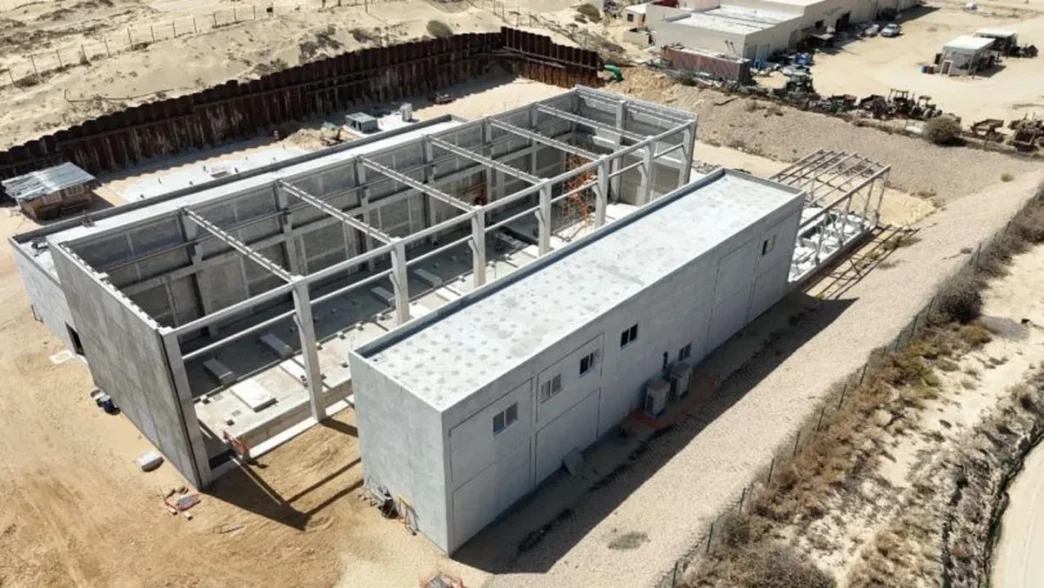
If you have ever stood in a Corridor shower wondering whether the trickle coming out of the showerhead counts as water pressure, there is now an official number attached to the fix. Baja California Sur Governor Víctor Manuel Castro Cosío announced this week that Cabo San Lucas’s second desalination plant is 75 percent complete, and that once it comes online it will pump an additional 250 liters of fresh water per second into the system — roughly 5.7 million gallons a day.
Castro Cosío made the announcement during a review of the project, calling the expansion of hydraulic infrastructure necessary to address what he described as a historic shortfall in drinking water for Los Cabos. It is the kind of line officials have said before, usually right before a project stalls, so the actual percentage this time is worth paying attention to. Three-quarters finished is a real milestone for a plant that, not long ago, was still just steel and concrete rising out of the ground near the Diamante/Los Cangrejos area south of town, as covered when construction of the new desalination plant first got underway.
What 250 More Liters a Second Actually Means
Once finished, the new plant will push the combined output of Cabo San Lucas’s two desalination facilities to 655 liters per second, or close to 15 million gallons a day. State officials estimate that will be enough to serve more than 200,000 residents, a number that matters given how fast the municipality’s population — and its thirst — keeps growing.
That context matters because the existing plant has not exactly had a flawless run. It has repeatedly been forced to reduce output or shut down during power failures and maintenance work, and was knocked offline entirely earlier this year after a line break forced a shutdown. A second plant does not just add volume to the system; it adds redundancy, so a single pipe failure or maintenance shutdown no longer means the whole supply takes a hit.
The governor also set a timeline, which is the part residents will want to hold officials to. He said the remaining 25 percent of construction is expected to wrap up in 2027, before the current state administration leaves office, and that he wants the plant up and running as soon as possible rather than sitting finished and unused. That urgency is notable given how often infrastructure here gets built and then waits, sometimes for years, for the pumps, permits or power hookups that make it actually functional.
Desalination is only one piece of the water puzzle in Los Cabos, which also leans on wells, the Santiago aquifer and plants like La Sanluqueña to fill the gap between demand and supply. The state has framed the second desalination plant as part of a broader push, detailed in an earlier update on how the municipal water plan is moving across five separate projects at once. None of that changes the fact that the system still runs tight during the hottest, busiest months of the year, when hotels, pools and irrigation all draw on the same pipes as everyone else.
For now, the number to remember is 75 percent, with a 2027 target for the rest. The Gringo Gazette will keep tracking the plant’s progress, since in Baja a construction percentage is only useful once it turns into water actually reaching the tap. If the timeline holds, Cabo San Lucas gains a meaningful cushion against the low-pressure days that have become a familiar seasonal complaint; if it slips, residents will have heard this story before.