


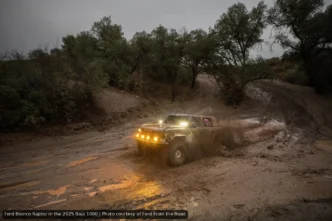
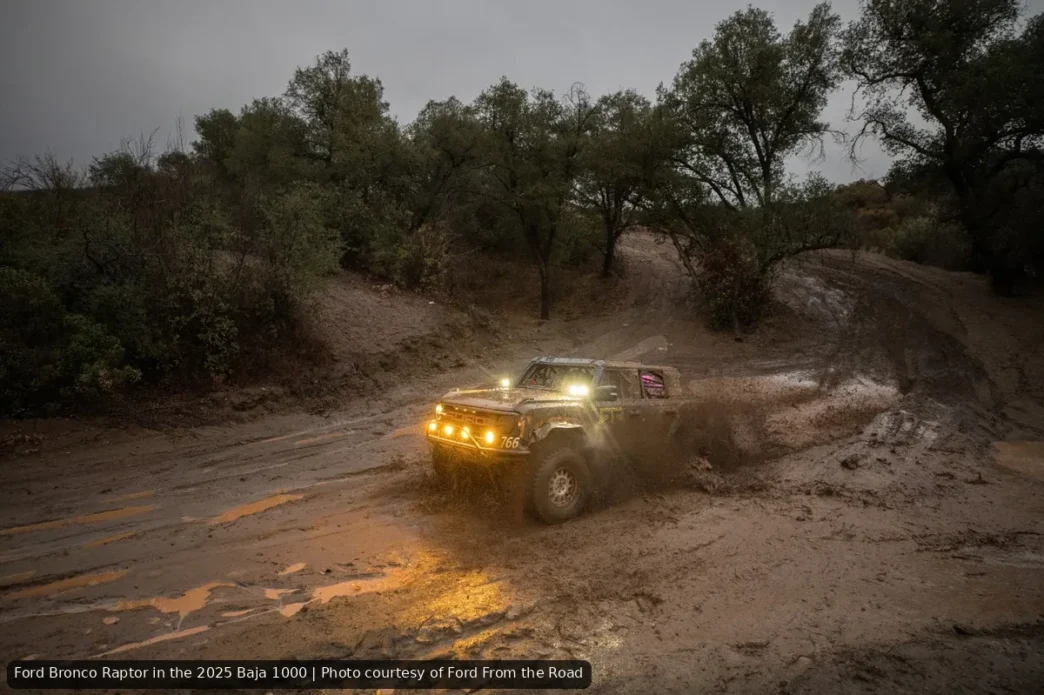
The organization behind the Baja 1000 off-road race has submitted a 16-year environmental permit application to Mexico’s federal environmental agency, seeking authorization to hold the annual event across 1,939 kilometers of Baja California Sur territory through 2041.
SCORE International filed a Manifestación de Impacto Ambiental (MIA) with the Secretaría de Medio Ambiente y Recursos Naturales (Semarnat) — Mexico’s environment ministry — requesting authorization to operate the legendary desert race annually, primarily in November, through routes spanning four municipalities: Mulegé, Comondú, La Paz and Los Cabos.
What the Permit Would Cover
The proposal envisions approximately 400 vehicles participating each year across 36 categories, including cars, trucks, motorcycles and ATVs. According to the environmental study, roughly 85 percent of the route uses existing dirt roads and trails, with the remainder on paved highways.
Organizers say no new roads or permanent infrastructure would be built. The application emphasizes that the 16-year term would provide legal certainty while allowing coordination of long-term environmental mitigation programs and securing the tourism revenue the race generates for the peninsula.
Protected Areas and Environmental Concerns
The route crosses environmentally sensitive zones, including 205.5 kilometers — about 11 percent of the course — inside the El Vizcaíno Biosphere Reserve. The race would also pass through the Sierra de la Giganta y Guadalupe Flora and Fauna Protection Area, Ramsar wetland sites and priority conservation regions.
The environmental assessment identified 21 negative impacts and seven positive ones. The vehicle race itself is listed as the activity causing the most harm across soil, atmosphere, fauna and vegetation. Recognized risks include dust generation, noise, vehicle emissions, soil erosion and potential wildlife strikes. Stream crossings, riparian vegetation zones and roads within or near protected areas require particular attention, according to the filing.
What Organizers Are Proposing
SCORE International states the permit application includes comprehensive plans for road restoration and waste management designed to reduce damage to desert ecosystems. Representatives argue the long-term authorization would allow stricter mitigation protocols and soil restoration across the nearly 2,000-kilometer route.
The project estimates annual water consumption at 3,371 cubic meters and fuel use at 161 cubic meters. While the assessment concludes most impacts would be temporary, it acknowledges significant effects on soil compaction, vegetation disturbance and wildlife disruption during race days.
What Happens Next
Semarnat will now review the application through its National Procedures System. The process typically includes a public consultation period before the agency issues a decision. Off-road racing in Baja California Sur has historically drawn both strong support from tourism advocates and criticism from conservation groups concerned about long-term ecological damage in fragile desert and coastal habitats.
Residents and environmental organizations can submit comments on the permit during the public review phase. The outcome will determine whether one of North America’s most famous desert races secures guaranteed access to BCS routes for the next decade and a half.
