



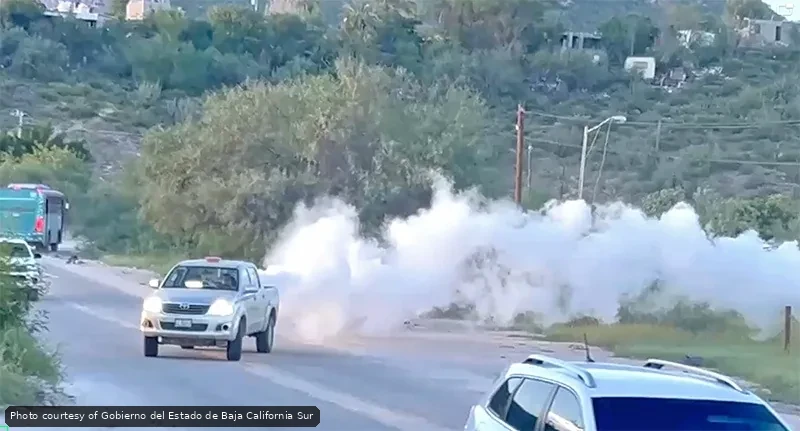
Baja California Sur has fumigated more than 23,000 hectares across the state as part of an expanded dengue prevention campaign, with most of the effort concentrated in La Paz and Los Cabos.
The fumigation work, which began in August ahead of the season when dengue cases typically rise, is part of a broader strategy to reduce mosquito populations and limit transmission of the virus. State Health Secretary Ana Luisa Guluarte Castro said the effort focuses on the municipalities with the highest case counts.
Where the Work Is Happening
More than 53 percent of the fumigated area is in La Paz, while Los Cabos accounts for 28 percent. The two municipalities together represent 88 percent of the state’s confirmed dengue cases so far this year.
As of mid-September, Baja California Sur has recorded 231 confirmed dengue cases in 2026, according to state health officials. That figure is significantly lower than some neighboring states, several of which have reported more than 1,000 cases.
Beyond Fumigation
Fumigation crews are working alongside larvicide brigades, which visit homes and intervene in areas where probable or confirmed cases have been identified. The goal is to eliminate standing water and other breeding sites before mosquitoes can reproduce.
The state is also continuing its Wolbachia program, which releases mosquitoes carrying a naturally occurring bacteria that limits their ability to transmit dengue. That effort is underway in urban areas of Cabo San Lucas and La Paz.
Health officials have also been training medical staff across the state to recognize and treat dengue and other mosquito-borne illnesses.
What Residents Should Watch For
Guluarte Castro urged anyone experiencing fever, general malaise, muscle pain, eye pain or abdominal discomfort to seek medical attention promptly. Early diagnosis can prevent complications, particularly in cases of severe dengue.
The state’s prevention campaign comes as Baja California Sur enters the period historically associated with higher dengue transmission. While case counts remain relatively low compared to other regions, officials say sustained fumigation and community cooperation are essential to keeping the virus in check.
Residents and visitors are encouraged to eliminate standing water around homes and businesses, use insect repellent and ensure window screens are intact.
